

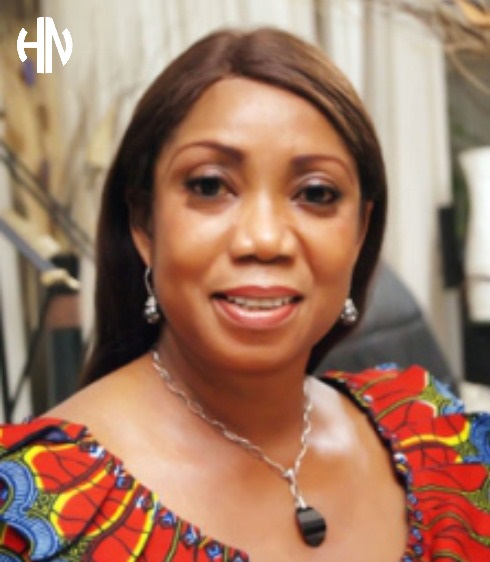
By Ameeda Fraser, MFR
Professor Is’haq Oloyede’s recent call for the modernisation of Madrasa education should not end as an appeal to Muslim parents, Islamic scholars and school proprietors alone. It should become the foundation of a national education policy capable of unlocking the enormous intellectual potential of millions of young Nigerians educated through Arabic and Islamic schools.
His reported recommendations—strengthening the National Board for Arabic and Islamic Studies (NBAIS), promoting scholarships, embracing science and technical education, and encouraging Muslim students to pursue professional careers—offer a practical roadmap for reform. However, lasting transformation cannot depend solely on individual communities. It requires a structured partnership between Muslim stakeholders and the Federal and State Ministries of Education.
The objective is neither to secularise Madrasas nor to interfere with Islamic teachings. Rather, it is to ensure that pupils who receive sound religious instruction also acquire the scientific, technological and vocational skills needed to compete in a rapidly changing global economy.
Government Should Regulate Educational Standards, Not Religion
There is an important distinction that must be clearly understood.
The Ministry of Education should not regulate Islam. It should regulate educational standards.
Questions relating to Qur’anic interpretation, Islamic jurisprudence, worship and religious doctrine belong exclusively to recognised Islamic authorities. Government has no business interfering in those matters.
Its responsibility begins where children’s educational rights, curriculum standards, teacher quality, examination integrity and nationally recognised qualifications are concerned. That principle already governs public schools, private schools and faith-based institutions across Nigeria.
Supporting educational quality is not religious interference; it is good governance.
Nigeria Already Has a Working Model
Nigeria does not have to invent an entirely new system.
Many of the country’s oldest and most respected schools were established by Christian missions. Those schools retained their religious identities while teaching mathematics, English, sciences, history and other subjects required for national examinations.
Government gradually introduced curriculum standards, teacher qualifications, inspections and examination regulations without dictating Christian doctrine.
The same principle can successfully apply to Madrasas.
Islamic schools should remain authentically Islamic, while also preparing students for careers in medicine, engineering, law, journalism, accounting, agriculture, information technology, education and entrepreneurship.
Faith and professional excellence are complementary, not contradictory.
Why the Ministry Must Become a Partner
Professor Oloyede’s recommendations are timely, but communities alone cannot provide science laboratories, teacher certification, curriculum development, technical workshops or nationwide examination recognition.
These are responsibilities that naturally fall within the mandate of government.
The Federal Ministry of Education already supervises educational standards, examination bodies and curriculum implementation. NBAIS already provides an institutional platform for Arabic and Islamic education. What is required now is stronger coordination rather than the creation of another bureaucracy.
A partnership involving the Ministry of Education, NBAIS, State Ministries of Education, the Nigerian Educational Research and Development Council, universities and recognised Islamic organisations would provide the structure needed to modernise Madrasa education without compromising its religious identity.
A Seven-Point Framework for Reform
The Ministry of Education should establish a National Madrasa Education Partnership Framework built on consultation rather than control.
First, undertake a nationwide registration and mapping of Madrasas to determine enrolment, staffing and infrastructure needs. Such data would improve planning and resource allocation.
Second, develop an integrated curriculum that combines Arabic and Islamic studies with English, mathematics, sciences, information technology, civic education and entrepreneurship while preserving each school’s religious character.
Third, invest in teacher development. Many Arabic teachers possess exceptional religious knowledge but require additional training to teach science, mathematics and digital subjects effectively. Government-supported certification and professional development programmes would address this gap.
Fourth, strengthen nationwide recognition of NBAIS qualifications. Universities and other tertiary institutions should apply transparent admission guidelines based on academic standards rather than unfamiliarity with the examination body.
Fifth, provide access to science laboratories, digital learning facilities and technical workshops. Smaller Madrasas could share community-based facilities instead of each building expensive infrastructure independently.
Sixth, complement community scholarship initiatives with government educational support for outstanding NBAIS graduates pursuing priority disciplines such as medicine, engineering, agriculture, computing, education and technical professions.
Seventh, establish an independent quality assurance mechanism that evaluates academic performance, child welfare and teacher competence while leaving matters of religion entirely to Islamic authorities.
Protecting Religious Independence
Some Muslim organisations may fear that greater government involvement could eventually lead to interference in religious affairs.
Those concerns deserve respect.
For that reason, any reform framework must include clear safeguards.
Government should inspect classrooms—not sermons.
It should assess science teaching—not Qur’anic interpretation.
It should evaluate teacher competence—not religious allegiance.
A joint advisory council comprising respected Islamic scholars, education experts, school proprietors, parents and government representatives should oversee implementation to ensure transparency and mutual confidence.
The objective must always remain educational excellence, never religious control.
Investing in Nigeria’s Future
Modernising Madrasa education is not simply an educational reform; it is a national development strategy.
Nigeria needs more doctors, engineers, architects, scientists, software developers, teachers, entrepreneurs and innovators. Among the millions of pupils enrolled in Arabic and Islamic schools are future leaders capable of making significant contributions to national development if given access to broader educational opportunities.
Professor Oloyede’s vision recognises that Islamic education should no longer be viewed as preparing every graduate solely for traditional clerical roles. Religious scholarship remains indispensable, but it can exist alongside excellence in science, technology, medicine and industry.
Countries that successfully combine religious education with modern academic training have consistently produced graduates who are intellectually competitive, ethically grounded and socially responsible.
Nigeria should aspire to the same model.
The Way Forward
Professor Is’haq Oloyede has opened an important national conversation. The next step belongs to policymakers.
The Federal and State Ministries of Education should convene a national implementation committee comprising NBAIS, Islamic organisations, university administrators, curriculum experts and education professionals to develop a comprehensive framework for integrating Madrasa education into Nigeria’s broader educational system.
The goal is not to diminish Islamic identity but to expand opportunity.
Government should not interfere with Islam, but neither should it neglect the educational development of millions of children whose future will help determine Nigeria’s future.


By building a partnership based on respect, quality and shared responsibility, Nigeria can preserve the rich heritage of Islamic education while equipping a new generation of Muslim professionals to excel in every field of human endeavour.
That would not only fulfil Professor Oloyede’s vision—it would strengthen the nation’s human capital, promote social inclusion and contribute meaningfully to Nigeria’s long-term economic and educational development.
The National Patriots commends Professor Is’haq Oloyede for championing a modern vision of Islamic education. We urge Muslim leaders, governments and education stakeholders to build a partnership that preserves Islamic values while expanding access to science, technology and technical education. Empowering Madrasa graduates with globally competitive skills will strengthen Nigeria’s economy, national unity and future prosperity.
Princess Gloria Ameeda Adebajo-Fraser. MFR
President, The National Patriots.
Special Adviser to the Former President Goodluck Jonathan.



