

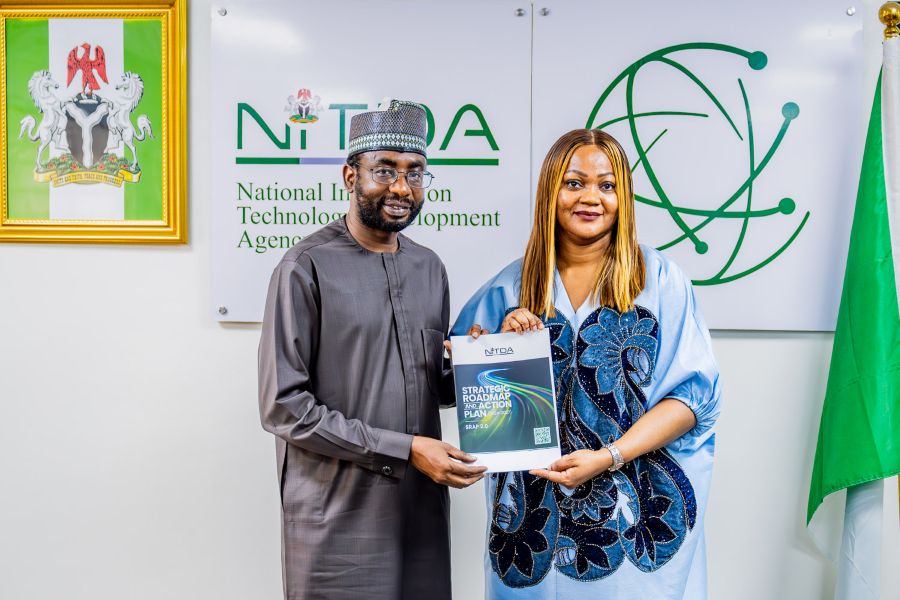
The National Information Technology Development Agency (NITDA) has officially transferred its Public Key Infrastructure (PKI) framework to the National Identity Management Commission (NIMC) as part of efforts to strengthen the security of Nigeria’s digital identity system.

The handover took place during a ceremony at NITDA’s headquarters in Abuja and is expected to enhance the secure verification of citizens’ identities as the Federal Government expands digital public services under the newly amended NIMC Act.
Speaking at the event, NITDA Director-General Kashifu Inuwa Abdullahi said the agency remains committed to supporting government institutions with technology-driven solutions that promote national development.
He explained that NITDA had laid the groundwork for both the Public Key Infrastructure and Digital Public Infrastructure (DPI), adding that the agency would continue working closely with NIMC to ensure a smooth transition and successful implementation.

According to Abdullahi, digital public infrastructure is as critical to national development as physical infrastructure and must remain secure, reliable and accessible to every Nigerian.
The transfer follows the signing of the NIMC Act 2026, which expands the commission’s responsibilities by making it the Root Certification Authority for Nigeria’s National Public Key Infrastructure and Digital Public Infrastructure.
Under the new law, NIMC is also tasked with harmonising identity databases across government agencies while establishing the National Identification Number (NIN) as the primary means of identity verification for public services.

NIMC Director-General Abisoye Coker Odusote described the amended Act as a major step forward in Nigeria’s identity management system, noting that it provides the legal framework for moving from traditional identity records to a secure digital identity ecosystem.
She said the new system is designed to improve interoperability, enhance security and support seamless digital services across both the public and private sectors.

According to her, the transition will introduce secure digital credentials based on the principle of “one person, one identity,” while implementation will be carried out in phases to ensure the protection of citizens’ data.
Both agencies said the partnership would accelerate Nigeria’s digital transformation by strengthening identity management, improving electronic trust and supporting wider adoption of digital technologies across the country.




