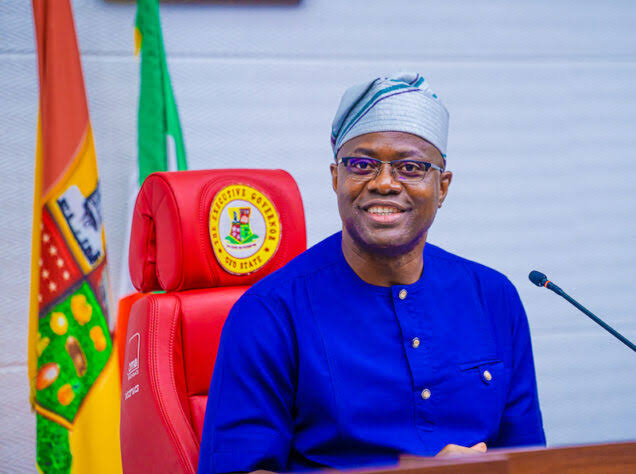
The Oyo State Government says it now spends over ₦18 billion every month on payment of workers’ salaries, a figure it described as an increase of more than 800 percent compared to what was spent in 2019.
The Commissioner for Information, Dotun Oyelade, disclosed this during a courtesy visit to the Nigeria Labour Congress (NLC) Secretariat in Ibadan as part of activities marking the 2027 Workers’ Day celebrations.
Oyelade recalled that in 2019, Governor Seyi Makinde had promised during his inaugural address to ensure that workers’ salaries would be paid on or before the 25th of every month—a pledge many initially doubted.
According to him, that promise has been consistently kept for 84 months, alongside additional reforms such as the introduction of a 13th-month salary and multiple salary increases. He added that the state workforce has also expanded significantly due to ongoing recruitment.

He noted that Oyo State now has over 130,000 government workers, making it one of the largest public sector employers in southern Nigeria. He also linked the rising wage bill to improved internally generated revenue, which he said now exceeds ₦103 billion monthly, driven by infrastructure development and economic reforms.
Oyelade praised the Oyo State chapter of the NLC, describing it as one of the most cooperative and forward-looking labour unions in the country, adding that the relationship between government and workers had remained largely stable under the current administration.
He also referenced his long history covering labour activities in the state, noting that the current era has witnessed one of the strongest government-labour relationships since the return of democracy in 1999.

In his remarks, the Chairman of the Oyo State NLC, Kayode Martins, commended the state government for reforms aimed at improving workers’ welfare and supporting retirees.
He highlighted the gradual increase in gratuity payments from ₦1 billion to ₦3 billion annually, following engagements with the union, as well as a government pledge to clear outstanding arrears by 2027 if necessary.
Martins also noted improvements in pension payments, reinstatement of some previously disengaged workers, and approval of backlog promotions, all of which he said have boosted morale in the public service.
He further commended the state for implementing a minimum wage above the federal benchmark, saying it had significantly improved workers’ welfare and raised Oyo’s ranking in labour-related indicators.
According to him, these reforms have strengthened confidence among workers and improved productivity across the state civil service.