

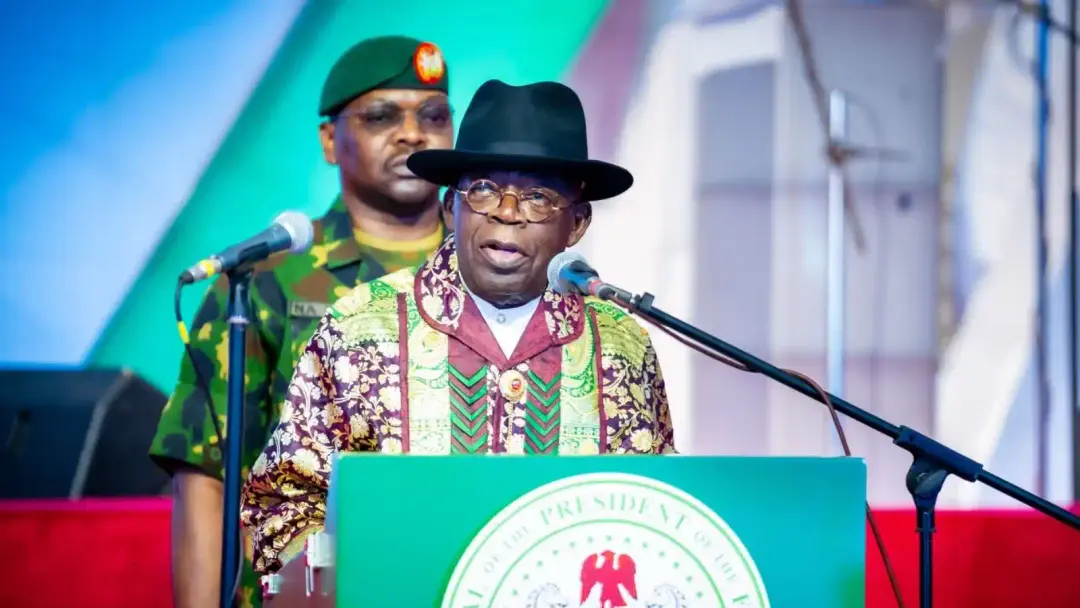
President Bola Ahmed Tinubu has stated that Nigeria’s outdated tax structure, largely influenced by colonial-era policies, played a significant role in deepening poverty and weakening economic efficiency.
Speaking in Abuja at the commissioning of the new headquarters of the Nigeria Revenue Service (NRS), the president outlined his administration’s ongoing efforts to reform the country’s tax system and strengthen fiscal management.

He explained that the previous framework was marked by fragmentation, overlapping taxes, and inconsistencies, which discouraged investment and reduced public trust in government processes.
Tinubu noted that his administration’s newly introduced tax system, which took effect in January 2026, is designed to simplify tax procedures, eliminate inefficiencies, and create a more business-friendly environment.

According to him, the reforms are focused on promoting fairness in revenue collection, improving transparency, and supporting economic growth by encouraging enterprise.
The president emphasised that the initiative goes beyond infrastructure, describing it as part of a broader plan to rebuild confidence in public institutions and strengthen Nigeria’s financial foundation.
Recent changes include the implementation of the Nigerian Tax Act and the Nigerian Tax Administration Act, both aimed at restructuring the country’s fiscal framework. However, the rollout has faced some scrutiny from lawmakers over concerns about discrepancies in official documents.

In response to increased taxpayer activity, the Lagos State Internal Revenue Service extended the deadline for filing personal income tax returns to April 21, allowing more time for compliance.
Tinubu further highlighted that the restructured system will rely on data-driven processes to improve efficiency and better serve citizens, particularly vulnerable groups.
He added that taxpayers should begin to see tangible benefits from their contributions through improved governance and service delivery.

The completion of the NRS headquarters, achieved within 30 months, was also described as a key milestone in the government’s effort to modernise institutions and enhance operational capacity.




