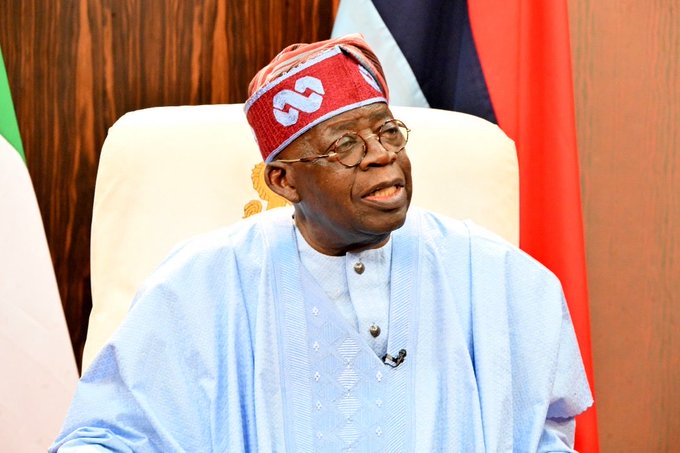
TINUBU’S CLAIM THAT NORTH BENEFITS MOST FROM REFORMS SPARKS FRESH DIVISION
President Bola Ahmed Tinubu’s assertion that Northern Nigeria stands to gain the most from his administration’s economic reforms and major infrastructure projects has triggered contrasting reactions among Northern interest groups.
The President had argued that the North was strategically positioned to benefit significantly from the removal of fuel subsidy and other economic reforms because of its proximity to several neighbouring countries.
Tinubu made the statement while addressing the second edition of the Asiwaju Scorecard Series organised by the All Progressives Congress (APC) Professionals Forum in Abuja. APC National Chairman Nentawe Yilwatda represented him at the event.
According to the President, increased trade with countries such as Niger, Chad, Burkina Faso, Cameroon and the Central African Republic would make Northern Nigeria a major commercial hub.
He also highlighted several infrastructure projects, including the Ajaokuta-Kaduna-Kano gas pipeline, the Lagos-Abuja-Kaduna-Kano corridor, the Sokoto-Badagry Super Highway and the proposed Calabar-Maiduguri Trans-Sahara Super Highway.

Tinubu further pointed to improvements in foreign reserves, non-oil revenue, merchandise trade and economic growth as signs that his administration’s reforms were beginning to strengthen the Nigerian economy.
However, the Arewa Consultative Forum (ACF) strongly disagreed with the President’s assessment.
The forum’s spokesperson, Professor Tukur Muhammad Baba, described the claim as unrealistic and questioned how the North could be considered the biggest beneficiary while many communities in the region continue to struggle with insecurity, poverty, poor agricultural output and inadequate infrastructure.
Baba also pointed to the region’s high poverty levels and the large number of children out of school, arguing that these challenges make the President’s assessment difficult to accept.
The Middle Belt Forum (MBF) also rejected the claim.
Its National President, Dr Bitrus Pogu, argued that policies such as fuel subsidy removal and the introduction of Compressed Natural Gas (CNG) affect Nigerians across the country and should not be presented as benefits meant specifically for one region.
Pogu questioned whether the reforms had produced enough positive impact for ordinary Nigerians, particularly those facing rising living costs.
However, not all Northern groups shared the criticism.
Chairman of the Northern Christian Association, Rev. John Hayab, said it would be unfair to claim that the North had received no benefits from the Tinubu administration.
Hayab cited several ongoing road projects, including the Akwanga-Maiduguri, Jos-Jalingo and Kaduna-Birnin Gwari-Mokwa-Lagos corridors, as evidence of significant federal investment in the region.
He also pointed to the representation of Northerners in key positions within the Federal Government and cited developments in Southern Kaduna, including federal institutions, as examples of projects that he believes have brought tangible benefits to the region.
While acknowledging that the government should continue to be held accountable, Hayab maintained that Northern leaders should also recognise areas where progress has been made.
The conflicting reactions have highlighted the growing debate in Northern Nigeria over the impact of Tinubu’s economic policies, with some groups demanding greater results for ordinary citizens while others argue that the region is already benefiting from the administration’s investments.