

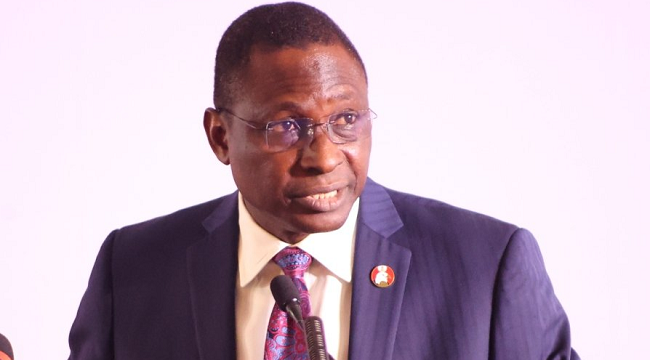
The Executive Chairman of the Economic and Financial Crimes Commission (EFCC), Ola Olukoyede, has raised concerns over the rising cost of winning elections in Nigeria, warning that some governorship aspirants reportedly spent between ₦20 billion and ₦30 billion during recent primary elections.

Speaking at a lecture organised by the Centre for Peace and Strategic Studies at the University of Ilorin, Olukoyede said the excessive financial demands of Nigeria’s political process are encouraging corruption and undermining democratic governance.
He explained that politicians who spend huge sums to secure electoral victory often face pressure to recover their investments once in office, a situation that can lead to the diversion of public funds.

The EFCC boss warned that the commercialization of elections weakens the political system by prioritising wealth over competence, adding that leaders who “buy their way into office” are more likely to misuse public resources.
He noted that the commission has made several arrests related to vote-buying and electoral offences, with convictions already recorded against some politicians, electoral officials, and citizens involved in such practices.
Olukoyede also revealed that the EFCC plans to deploy advanced technology, including drones, to monitor elections ahead of the 2027 general elections and curb financial inducements at polling units.

He called for stronger collaboration among political parties, the Independent National Electoral Commission (INEC), security agencies, civil society organisations, and the media to ensure peaceful and credible elections.
The EFCC chairman stressed that electoral corruption poses a serious threat to national stability and democratic development, urging all stakeholders to support reforms that promote issue-based campaigns and transparency in the political process.

Earlier, the Vice-Chancellor of the University of Ilorin, Professor Wahab Egbewole, described electoral corruption as a major challenge to democratic stability and national progress, calling for stronger institutional cooperation to safeguard election integrity.
The Director of the Centre for Peace and Strategic Studies, Professor G.A. Animasawun, said the lecture series aims to build proactive strategies for addressing threats to Nigeria’s electoral process ahead of the 2027 elections.




