

HeadlineNews.News Special Report.
“The Fujimori Paradox: Lessons for Tinubu from Peru’s Strongman”
By Dr. Fraser. MFR.
The National Patriots.
HeadlineNews.News Investigative Desk
Abuja, Nigeria – May 2025
As Nigeria’s President Bola Ahmed Tinubu presses forward with his bold reform agenda amid economic hardship and rising political tensions, a sobering historical analogy has emerged from a perhaps unlikely place—Peru. Renowned Nigerian political analyst and former presidential adviser Dr. Usman Bugaje recently warned in an interview that Tinubu must be cautious not to “end up like Alberto Fujimori.”

But who was Fujimori, and does the comparison hold water?
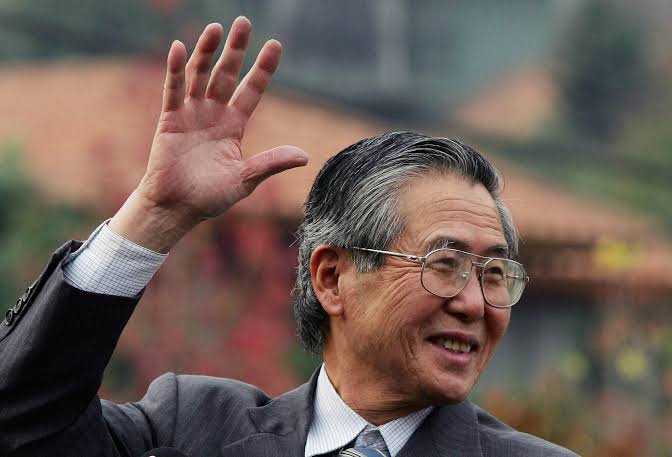
Who Was Alberto Fujimori?
Alberto Fujimori, a mathematics professor of Japanese descent, unexpectedly won Peru’s presidency in 1990, defeating famed novelist Mario Vargas Llosa. At the time, Peru was gripped by hyperinflation, guerrilla insurgencies (notably the Shining Path), and a collapsing economy.

Key achievements of the Fujimori administration (1990–2000):
Economic Stabilization: Fujimori enacted drastic neoliberal reforms under IMF guidance, ending hyperinflation (which had reached over 7,000%) and restoring investor confidence.
Counter-Insurgency Success: His administration broke the back of the Maoist Shining Path insurgency through controversial but effective military and intelligence operations.
Privatization and Infrastructure: He privatized numerous state companies and invested in rural infrastructure, improving access to health and education.

Key failures and authoritarian descent:
Autogolpe (Self-Coup) of 1992: Dissolved Congress and suspended the Constitution to centralize power—a move many feared was the end of democracy.
Corruption and Human Rights Violations: Fujimori’s regime used death squads, carried out forced sterilizations of indigenous women, and became mired in scandals involving embezzlement and surveillance.
Downfall and Conviction: In 2000, he fled to Japan amid growing scandals. He was later extradited, convicted, and imprisoned for human rights abuses and corruption. As of 2023, he remains a symbol of both order and repression in Peruvian history.
“Democracy is not only about results; it is about rights and process.”
— Mario Vargas Llosa, Nobel Laureate and Fujimori’s 1990 opponent.

Tinubu’s Reform Path: A Fujimorian Echo?
President Bola Tinubu has pursued bold economic measures since taking office in May 2023, including:
Removal of fuel subsidy
Floating the naira
Aggressive tax reform and revenue generation
Centralization of fiscal policy decision-making
Like Fujimori, Tinubu inherited an economy on the brink—crippled by subsidy debts, fiscal leakages, and insecurity. His “Renewed Hope” agenda promises to rebuild through painful but necessary reforms.

Yet, Dr. Usman Bugaje’s caution is not without merit. The similarities—economic emergency, ambitious reforms, centralization of power, weakened legislative resistance, and rising public anger over living costs—warrant scrutiny.
“When strongmen think they can outsmart institutions, they often become victims of their own short-term victories.”
— Dr. Usman Bugaje, Political Historian

Is the Comparison Valid?
Yes, but only partially. While there are surface parallels—economic emergency and a reformist President with a firm political grip—the structural differences between Peru under Fujimori and Nigeria under Tinubu are significant.
Key Differences:
1. Democratic Safeguards:
Nigeria’s Constitution, federal structure, and active civil society remain relatively intact. The judiciary and legislature, though imperfect, continue to assert relevance—unlike in Fujimori’s Peru where the president dissolved Congress.
2. Nature of Insecurity:
Tinubu faces a multi-faceted security crisis—banditry, terrorism, secessionist agitations—not an ideological insurgency like the Shining Path.
3. International Standing:
Fujimori’s Peru was a recipient of IMF bailouts and American anti-terror backing. Nigeria, under Tinubu, faces a more skeptical global audience wary of governance and corruption issues.
4. Ethnic and Federal Complexity:
Nigeria’s ethno-religious diversity and federal system prevent the kind of executive overreach Fujimori achieved in a unitary Peru.

Cautionary Lessons for Tinubu
Avoid Executive Overreach: Centralizing power or circumventing democratic checks—as Fujimori did in his self-coup—would backfire in Nigeria’s pluralistic setup.
Prioritize Human Rights and Accountability: The memory of Lekki Tollgate, police brutality, and rising arrests under Tinubu’s watch calls for a rights-sensitive approach.
Inclusive Reforms: Fujimori’s reforms were technically effective but socially exclusionary. Tinubu must avoid alienating the poor while targeting macroeconomic gains.
Transparent Communication: Tinubu’s administration must explain reforms, mitigate short-term pain, and build trust—something Fujimori initially achieved but later lost.
“The ends do not justify the means. Governance must be both effective and just.”
— Kofi Annan, former UN Secretary-General

Conclusion: Nigeria is Not Peru, But History is a Mirror
While the Fujimori analogy offers valuable lessons, Nigeria’s complex federalism, vocal citizenry, and vibrant press serve as natural safeguards against authoritarian relapse. However, the temptation to rule by decree, bypass institutions, or stifle dissent is always present when reforms are unpopular.
President Tinubu must reform boldly—but democratically. History’s mirror warns not just of what went wrong in Peru, but how quickly power, unrestrained, can erode even the noblest agenda.
Video: An interview with Usman Bugaje warning that President Tinubu should be careful not to end up like Fujimori of Peru.
Headlinenews.news produced an opinion piece to analyze Bugaje’s warning on its merit or otherwise. Full report on www.headlinenews.news.
“Tinubu Must Avoid the Fujimori Trap”
—HeadlineNews.News
Peru’s ex-President Alberto Fujimori defeated terror, tamed inflation, and built infrastructure—but ended up in prison for corruption, authoritarianism, and human rights abuses.
Political thinker Usman Bugaje warns: “Tinubu must tread carefully or risk repeating Fujimori’s mistakes.”
Similarities:
Bold economic reforms
Strong political grip
Public frustration over hardship
But Nigeria isn’t Peru:
Stronger civil society
Federal checks & balances
More complex ethnic realities
Lesson: Reform with democracy, not at its expense.
#Tinubu #Fujimori #NigeriaPolitics #Democracy #HeadlineNews
Editor’s Note:
What happens in Nigeria reverberates across Africa. As one of the continent’s largest democracies, Nigeria must reform without sacrificing democratic integrity.
For more geopolitical insights, economic analysis, and political commentary, stay with www.headlineNews.News.
For comments, email: editor.headlinenews@gmail.com




