


Hour 72 of the Iran Conflict: Strategic Trap, Financial Warfare and the Rising Risk of a Regional Collapse
By Global Affairs Desk
Seventy-two hours into what analysts are calling one of the most dangerous escalations in the Middle East in decades, the conflict between the United States, Israel and Iran is rapidly evolving beyond a conventional military confrontation.
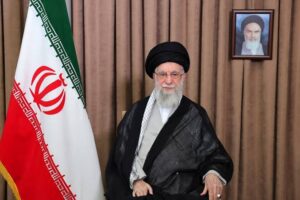
While Western media coverage has largely focused on precision airstrikes and tactical battlefield developments, security analysts say the deeper strategic picture reveals a far more complex and potentially destabilizing scenario.
Behind the missile strikes and drone interceptions lies a broader geopolitical contest involving financial warfare, strategic infrastructure targeting, and the risk of a wider regional collapse.

Diplomacy That Nearly Happened
One of the most controversial aspects of the current crisis revolves around the diplomatic developments that occurred immediately before hostilities began.
On February 27, 2026, Oman’s Foreign Minister Badr Al-Busaidi appeared on CBS’s Face the Nation and stated that negotiations between Iran and Western powers had reached what he described as a historic breakthrough.
According to Al-Busaidi, Iran had agreed to:
• Zero stockpiling of enriched uranium
• Full unrestricted inspections by the International Atomic Energy Agency (IAEA)
• Conversion of existing enriched material into non-weaponizable fuel
The Omani diplomat stated during the broadcast:
“A peace deal is within reach.”
Technical negotiations were reportedly scheduled to continue in Vienna, while a fourth round of talks involving U.S. representatives was expected shortly afterward.
Observers noted that Oman rarely makes such diplomatic announcements publicly unless negotiations have reached an advanced stage.
Within hours of that interview, however, military strikes began.

The sudden shift from diplomacy to military escalation has fueled intense debate among foreign policy experts about whether a diplomatic breakthrough was pre-empted by strategic calculations.
A Conflict Some Analysts Predicted
Long before the current conflict began, some geopolitical analysts had warned that a confrontation between the United States and Iran could become strategically disastrous.
Among them is Jiang Xueqin, a Yale-educated historian and geopolitical analyst who runs the YouTube channel Predictive History.
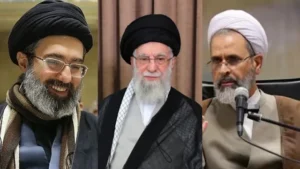
In a lecture recorded May 29, 2024, Jiang argued that structural geopolitical tensions made a U.S.–Iran war increasingly likely.
He made three major predictions:
• Donald Trump would win the 2024 election
• The United States would enter a conflict with Iran
• The war would fundamentally reshape the global order
Following the escalation in the Middle East, Jiang’s lecture resurfaced online and gained widespread attention.
In interviews cited by Newsweek and other publications, Jiang argued that Iran’s strategy is not necessarily to defeat the United States militarily but to prolong the conflict long enough to make it politically and economically unsustainable.
According to his analysis, Iran’s objective is to:
• unify its domestic population
• force the U.S. into a costly regional war
• gradually weaken American influence in the Middle East
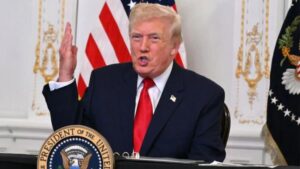

The Financial Warfare Equation
Another dimension of the conflict involves the economics of modern warfare.
Iran has reportedly deployed large numbers of low-cost attack drones.
Some models used in asymmetric warfare cost tens of thousands of dollars to produce.
By contrast, the missile systems used to intercept them can cost millions.
According to research from the Center for Strategic and International Studies (CSIS):
• THAAD interceptors cost roughly $12–15 million each
• SM-3 interceptors cost up to $27 million
• Patriot PAC-3 missiles range from $4–12 million

The result is a cost imbalance that analysts say favors Iran’s asymmetric strategy.
If low-cost drones can force expensive interceptors to be launched repeatedly, the defending side absorbs enormous financial pressure.
Military analysts sometimes refer to this as “cost-imposition warfare.”
Infrastructure as a Battlefield
The conflict is also expanding beyond traditional military targets.
Regional analysts report that Iran and allied groups have increasingly targeted economic and civilian infrastructure across the Gulf region.
Reported targets have included:
• airports
• hotels
• energy facilities
• gas terminals
Kristian Coates Ulrichsen of the Baker Institute at Rice University has warned that the next stage of escalation could involve attacks on desalination plants.
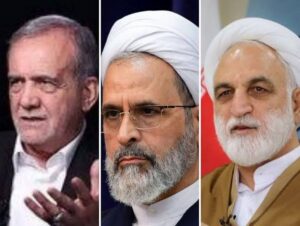
These facilities are critical for Gulf countries because they provide the majority of their drinking water.
Without desalination plants:
• cities across the Gulf could face water shortages within days
• millions of people could be displaced
• governments could face severe instability
Such a scenario could force foreign military intervention to secure critical infrastructure.
The Strait of Hormuz Crisis
Another major escalation risk involves the Strait of Hormuz, one of the most critical chokepoints in global energy trade.
According to the U.S. Energy Information Administration, roughly:
20% of global oil and LNG shipments pass through the strait.
Recent incidents involving attacks on commercial tankers have already disrupted shipping in the region.

Maritime intelligence firms report that dozens of vessels have halted transit through the waterway due to rising security risks.
If the Strait of Hormuz were fully closed, the consequences could include:
• severe oil price spikes
• global inflation
• economic shocks in fragile economies
Ali Vaez of the International Crisis Group warned that such disruption would reverberate far beyond energy markets.
A Regional Proxy War
The conflict is also expanding through Iran’s network of allied armed groups across the Middle East.
These include:
• Hezbollah in Lebanon
• Houthi forces in Yemen
• Iraqi Shia militias
The activation of multiple fronts simultaneously increases the risk that the conflict could evolve into a multi-theater regional war.
Several attacks on U.S. bases and allied facilities have already been reported.
Environmental Consequences

Beyond the military and economic impacts, environmental experts warn that the conflict could produce long-term ecological damage.
Modern munitions leave behind chemical residues that can contaminate soil and groundwater.
Environmental toxicologists note that large-scale bombing campaigns can leave land contaminated for decades, reducing agricultural productivity and threatening food security.
The Global Stakes
The broader geopolitical stakes extend far beyond the Middle East.
Some analysts argue that prolonged instability could weaken the petrodollar system, the framework through which global oil transactions are largely conducted in U.S. dollars.
If major energy transactions begin shifting toward alternative currencies, it could gradually reduce the dollar’s dominance in global trade.
While such changes would take years to fully materialize, the possibility highlights how regional conflicts can reshape the global financial system.

A Conflict With No Easy Exit
At Hour 72, the Iran conflict shows no clear path toward rapid de-escalation.
Military strikes continue, proxy forces are mobilizing across the region, and global markets are reacting nervously to the risk of wider instability.
Diplomacy that appeared possible only days before the escalation now seems distant.
Whether the conflict remains contained or expands into a broader regional confrontation may depend on decisions made in the coming days.
But one conclusion is already clear.
This crisis has the potential to reshape not only the Middle East — but the global balance of power itself.
Dr. G. Fraser. MFR




