

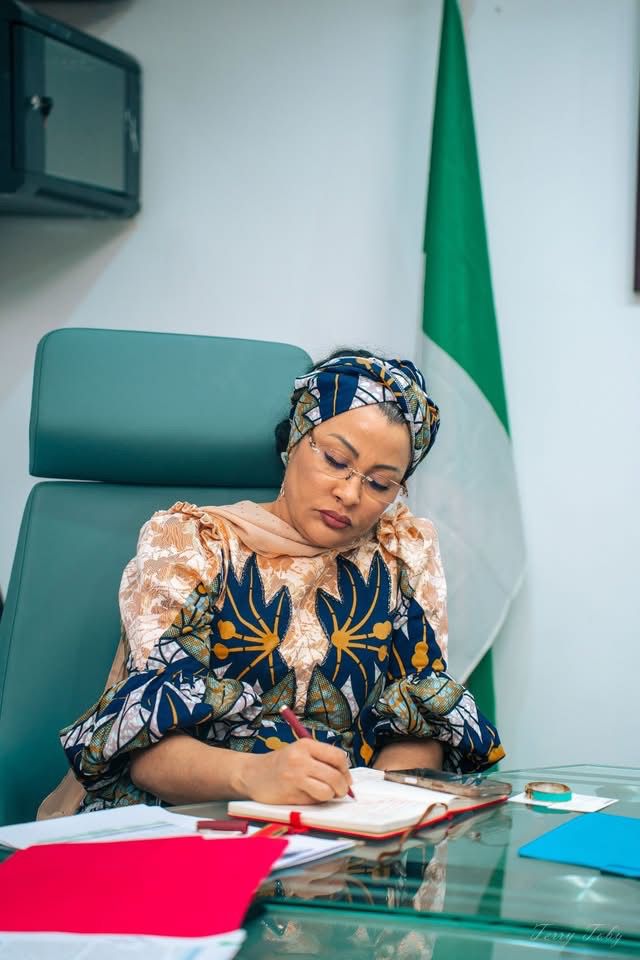
In what insiders describe as a breathtaking betrayal of public trust, the Presidency has reportedly removed Doris Uzoka Anite from her position as Minister of State for Finance following a string of alleged financial recklessness, ethical violations, and politically explosive decisions that shook the very foundations of fiscal governance.
In December, the President handed her unprecedented control of treasury functions — a move that stunned even senior figures within the Ministry of Finance. It was a bold gamble, one meant to strengthen revenue discipline and consolidate macroeconomic gains achieved in 2025. Instead, according to multiple State House sources, it triggered a cascade of alleged abuses that forced the Presidency to act swiftly — and decisively.

1. Luxury Before Liability: Allegations of Extravagance Amid Debt Distress
Barely weeks after assuming treasury authority, Anite allegedly embarked on what insiders have described as an “obscene display of entitlement.”
In a letter dated January 23, 2026, she reportedly approved three separate contracts — all awarded to the same company on the same date — for the purchase of:
* Six utility vehicles
* Two Lexus 570 (2025 model) vehicles purportedly for the Office of the Permanent Secretary
* Two Lexus LX 600 (2025 model) vehicles allegedly for herself
The contracts were valued at ₦996 million, ₦984 million, and ₦998 million respectively — each conveniently just below the ₦1 billion threshold that would have triggered stricter approval scrutiny.
Presidency sources were reportedly outraged for three reasons:
* The Permanent Secretary was allegedly used as a decoy to mask the scale of the acquisitions.
* Neither the Minister nor the Permanent Secretary is entitled to Lexus 570 or 600 models under official guidelines — yet two units were ordered for each.
* The structuring of the contracts bore the hallmarks of contract splitting — a maneuver widely viewed as an attempt to circumvent procurement limits.

What reportedly deepened the anger at the State House was the timing. While luxury vehicles were being procured, critical debt payments were allegedly delayed, and two international obligations were reportedly missed. For an administration that had fought hard to stabilize macroeconomic indicators and secure ratings upgrades in 2025, this was seen as reckless endangerment of national credibility.
2. A Shadow System of Kickbacks?
Even more disturbing are allegations that within days of taking over treasury functions, Anite established what sources describe as an “extraordinary tollgate system” for payments.
According to insiders, contractors and agencies seeking legitimate payments were allegedly required to part with 10%, 20%, or even 30% as kickbacks — or face indefinite delays. A base outside the Ministry was reportedly set up to coordinate these demands.
Sources claim the system became so brazen that even individuals within the State House were allegedly approached for upfront percentages before payments would be processed.
If true, this would not merely represent poor judgment — it would signal a systematic monetization of public finance operations at the highest levels.
3. The ₦1.15 Trillion Question
The final blow, according to Presidency insiders, was the handling of ₦1.15 trillion specifically earmarked for contractor payments tied to constituency projects.
These projects are politically sensitive, connected to members of the Senate and House of Representatives. Payments had reportedly been agreed upon to facilitate the smooth passage of the 2026 budget.
Yet the funds were allegedly not disbursed.
The political implications were immediate and severe. In a pre-election year, withholding such payments risks alienating lawmakers and destabilizing legislative cooperation. Sources within the Presidency reportedly feared that the funds may have been misapplied — a possibility that triggered alarm at the highest levels.
A Calculated Reassignment

In what insiders describe as a strategic containment move, Anite has reportedly been reassigned to the Ministry of State for Budget and Planning — a role viewed as less exposed to sensitive treasury operations.
Sources suggest that a recent approved trip to the United States may have been designed to project confidence while internal decisions about her future were already being finalized.
For the Presidency, the calculus appears clear: protect macroeconomic stability, shield the administration from further embarrassment, and prevent any repeat of what insiders describe as a “three-month fiscal freefall.”
If the allegations circulating within the corridors of power are even partially accurate, this episode represents more than a personnel reshuffle. It is a stark reminder that when entrusted with the treasury of a nation, personal ambition and public office make a dangerous mix.
And in this case, the cost may have been measured not only in naira — but in trust.
©️




