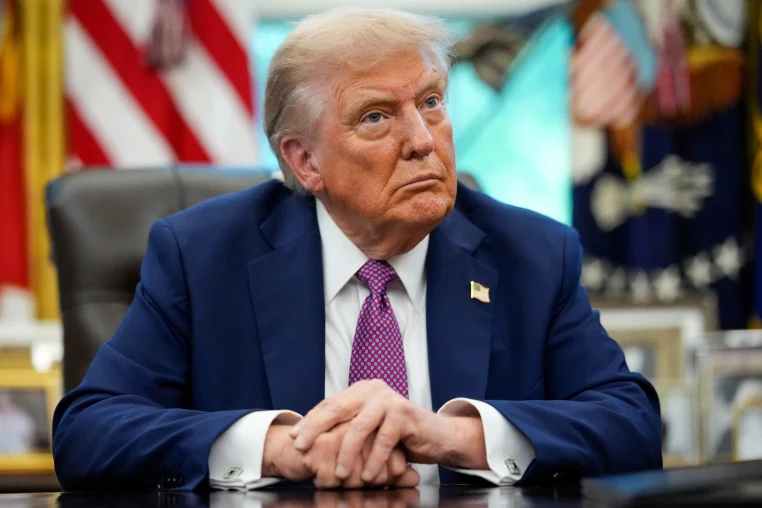
The United States government has announced a historic—and already controversial—decision to include the signature of Donald Trump on future American paper currency, marking the first time a sitting president’s name will appear on U.S. dollar bills.
The announcement, made by the U.S. Treasury Department, is part of plans to commemorate the country’s 250th anniversary, also known as the Semiquincentennial.
Treasury Secretary Scott Bessent described the move as a tribute to what he called Trump’s economic legacy.

“Under President Trump’s leadership, we are on a path toward unprecedented economic growth, lasting dollar dominance, and fiscal strength and stability,” he said.
“There is no more powerful way to recognize the historic achievements of our great country and President Donald J. Trump than U.S. dollar bills bearing his name.”
U.S. Treasurer Brandon Beach also backed the decision, calling it a fitting recognition of Trump’s influence on the nation’s economy.
“As the 250th anniversary of our great nation approaches, American currency will continue to stand as a symbol of prosperity, strength, and resilience,” he said, adding that printing Trump’s signature on the currency is both appropriate and well deserved.

The move marks a major break from long-standing U.S. tradition, where only the signatures of the Treasury Secretary and the Treasurer appear on banknotes.
Historically, American currency has featured portraits of past presidents and notable figures—such as George Washington and Abraham Lincoln—but never the signature of a sitting president.
Critics argue that the decision blurs the line between national symbolism and political identity, warning it could set a precedent for future administrations to imprint their influence directly onto state institutions.
For decades, U.S. currency has been viewed not just as legal tender, but as a reflection of national identity and institutional stability. The inclusion of a sitting president’s signature signals a significant shift—one that is likely to spark debate among lawmakers, historians, and the public as the anniversary celebrations approach.