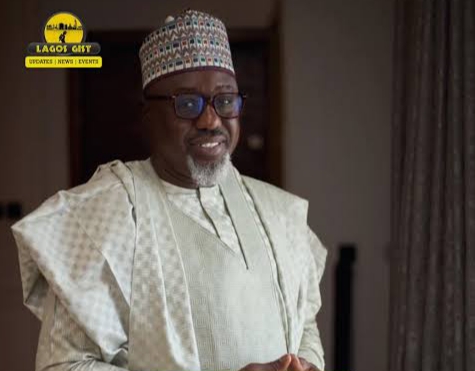
The Chairman and Chief Executive Officer of Emirate Mall Ilorin, Alhaji Yusuf Abdullahi, has said Nigeria must adopt a coordinated and multi-layered industrialisation strategy to realise its ambition of becoming Africa’s economic powerhouse.

Abdullahi warned that fragmented policies and weak implementation frameworks would continue to undermine the country’s vast economic potential if not urgently addressed.
Speaking in an exclusive interview with PUNCH Online on Thursday, the entrepreneur said industrial growth must be deliberately structured across all sectors and regions to drive inclusive national development.
“The dream of transforming Nigeria into an industrial hub that could lead Africa’s economic transformation must be approached with a multi-prong strategy that ensures industrial growth at various levels and across the country,” he said.
So This Happened (EP 389) reviews: FCT teachers begin indefinite strike0:00 / 1:01
He noted that while Nigeria is richly endowed with natural and human resources, the absence of a functional structure to convert these advantages into productivity remains a major setback.
“Nigeria’s problem is not about lack of resources, but deep structural weaknesses that hinder the productive conversion of those resources into wealth and public welfare,” he said.

Abdullahi stressed that small and medium-scale enterprises must be placed at the centre of the country’s industrialisation drive, describing them as critical to job creation and economic expansion.
He called for targeted economic policies that would support business growth, including access to affordable financing, tax incentives, and regulatory reforms.
“This could be in terms of start-up capital, low-interest loans with structured repayment plans, tax holidays, streamlined taxation, and duty-free importation of manufacturing equipment,” he said.
The business leader also identified infrastructure deficits as a key barrier to industrial growth, particularly inadequate power supply and poor road networks.
“If infrastructure like electricity and good roads are available, it would amaze you at the rate businesses would spring up and improve the macroeconomic status of Nigeria,” he added.
He further highlighted insecurity as a major disincentive to investment, noting that many businesses have either shut down or scaled back operations due to safety concerns.
“Security requires urgent and collective attention. The number of businesses abandoned and investors who have withdrawn because of insecurity is alarming,” Abdullahi said.
He added that despite prevailing challenges, Nigerians have a strong entrepreneurial spirit, which, if properly harnessed, could significantly boost economic growth.
“My experience has shown that Nigerians are willing to invest and build businesses, but many are constrained by rising costs and an unfavourable economic environment,” he said.
Abdullahi explained that his empowerment initiative, which provided start-up capital to artisans, was aimed at tackling unemployment and supporting grassroots enterprise development.
He said strengthening local businesses would not only enhance economic resilience but also reduce dependence on imports.
The entrepreneur noted that his investments, including the Ilorin Emirate Mall, were designed to stimulate local commerce, create jobs, and attract investors to the state.
“Our goal is to build platforms that support businesses, generate employment, and improve the economic ecosystem,” he said.
He urged governments at all levels to prioritise long-term economic planning and policy consistency to drive sustainable industrial growth.