

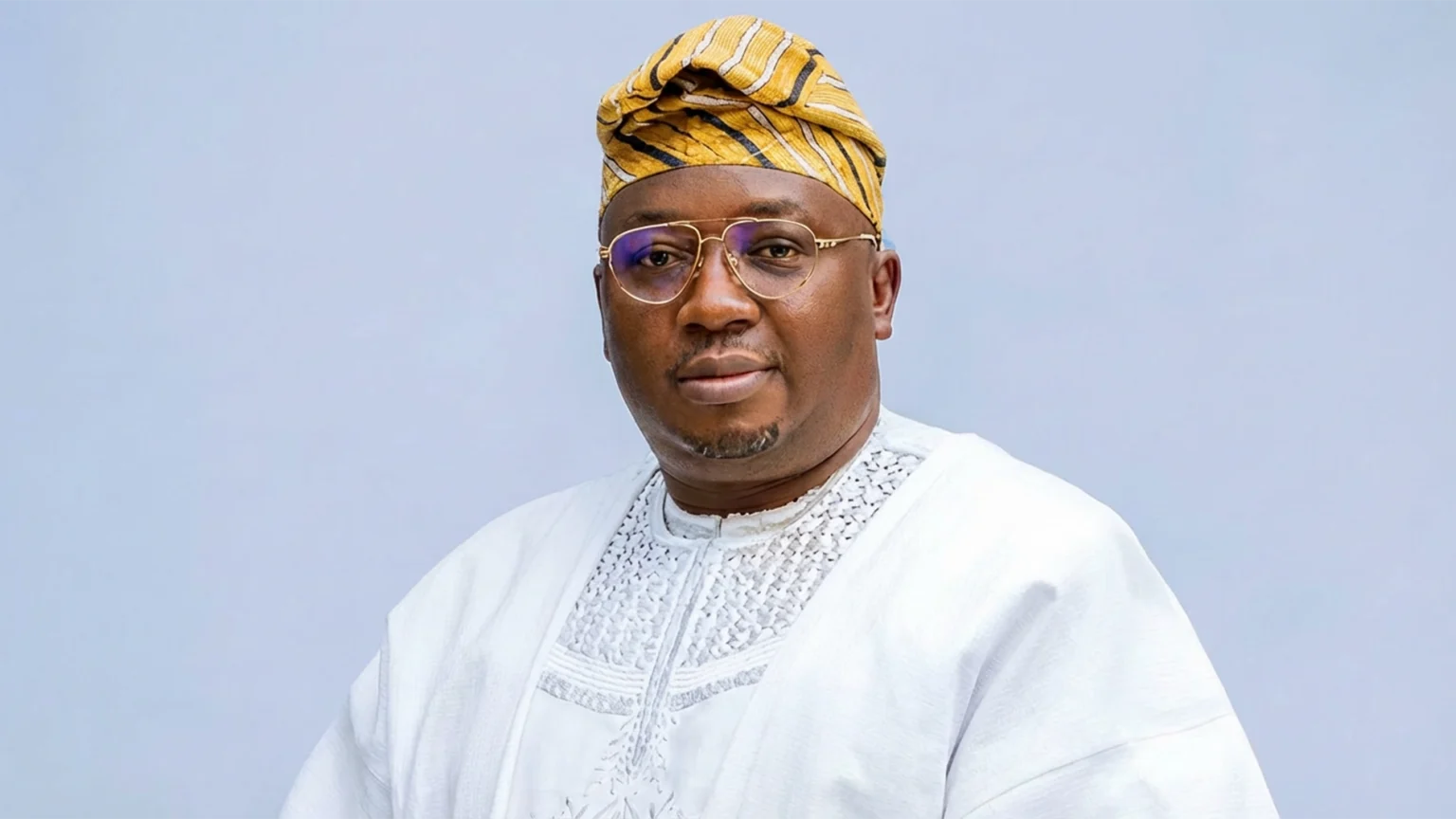
Nigeria’s power sector has once again returned to the centre of public frustration, with renewed scrutiny of the tenure of former Minister of Power, Adebayo Adelabu—a period many Nigerians associate with persistent grid collapses, erratic supply, and rising economic pressure on households and businesses.
In Ibadan, public sentiment took on a symbolic dimension as reports emerged that crowds were mobilised to welcome the former minister at the airport. Some attendees claimed they were paid between ₦5,000 and ₦10,000—allegations that remain unverified, but which have nonetheless fuelled a deeper conversation: is Nigeria prioritising optics over outcomes?
Across the country, the frustration is no longer subtle—it is direct, economic, and personal.
A trader in Ibadan Tajudeen Oluyole put it bluntly:
“We don’t need money for show. We have no light since yesterday. We are suffering because we have to buy fresh food daily as no power for the fridge. How can i go to welcome such a failure. He is a disgrace to Oyo state. We need power, not show. Without electricity, there is no business.”
A small-scale industrial operator Fatai Bello echoed the sentiment:
“Generators are not a solution—they are a burden. Fuel costs are killing productivity. Power failure has killed my business completely. I curse Adelabu everyday. He doesn’t know anything. He should have been sacked since last year. Now, Tinubu should get a competent Minister. If only El-Rufai was still in APC or Marwa. We need someone who can solve the problem.”

From the North-West, an academic voice , Prof. Isa Adamu cut through the debate with a more structural critique:
“The power sector is deeply technical. It requires precision, engineering discipline, and continuity of planning. When leadership is not aligned with these realities, performance suffers. I advise Mr. President to place square pegs in square holes. Adelabu lacked the capacity for that position. People & industries suffered especially in the North. That man caused many people to dislike Tinubu and the administration. I don’t know why the government should put a banker in a top position requiring an engineering background. It was a costly mistake.”
In the South-South, a governance advocate- Effiong Etim framed the issue in political terms:
“Power is not just infrastructure—it is trust. When people see no improvement, confidence in leadership declines. The tenure of Adelabu is a big dent on the Tinubu administration. This Adelabu is not on ground to think after failing as a Minister, he will be supported and voted as a Governor? APC will surely lose the state if an incompetent person is given the gubernatorial ticket. APC leaders must not try to impose anybody that doesn’t have a good track record.”
The numbers tell their own story.
Nigeria, with a population exceeding 200 million, continues to generate between 3,500MW and 5,000MW—levels that fall significantly short of demand. By comparison, South Africa generates over 40,000MW, while Egypt has surpassed 50,000MW after years of aggressive reform and targeted investment.
The difference is not merely resources—it is execution.
Countries that have made progress did so by aligning leadership with technical expertise, investing heavily in transmission, and decentralising generation.
Nigeria’s struggle, by contrast, reflects a recurring pattern: ambitious policy without sustained delivery.

This is where the conversation becomes unavoidable.
Governance is not theory—it is results. And results depend on decisions, particularly the decision of who leads critical sectors.
The National Patriots, in a pointed intervention, called on Bola Ahmed Tinubu to prioritise competence, technical depth, and accountability in restructuring key ministries.
According to the group, Nigeria can no longer afford experimental leadership in sectors that directly determine economic survival.

Their message is clear: place the right people in the right roles—or continue to bear the cost of getting it wrong.
At a time when nations are leveraging energy stability to drive industrial growth, Nigeria remains constrained by a problem it has long identified—but not yet resolved.
The question is no longer whether reform is needed.
It is whether the country is ready to match intention with execution.
Dr. Imran Khazaly.
Headlinenews.news Special Report.





Alhaja Sulyiat a trader in Ibadan lamented and rained curses on Adelabu. We can not print the words she used, but she was very bitter. ” Who does he think he is deceiving with his rented crowd? We all know him well and he can never smell governorship. He failed in Abuja and wants to be compensated in Oyo with Governor? God forbid. Adelabu is finished. They will collect his money but will never vote for him. It is our money so we can collect. Does he think the people are fools? For one week we didn’t have electricity, so which kind of yeye welcome is that? Tinubu should be careful never to consider Adelabu for anything again, even as a gateman. “