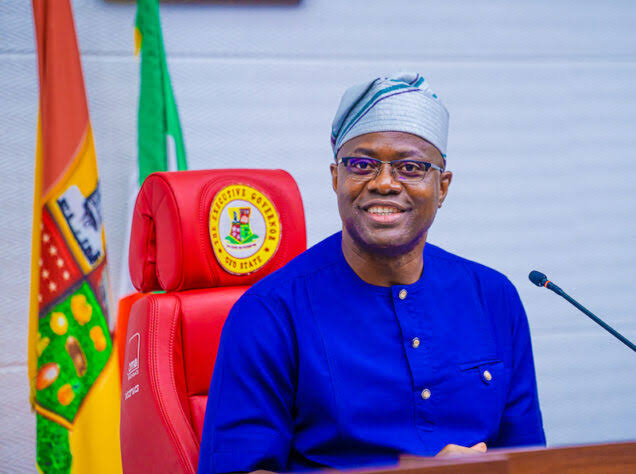
Oyo State Governor, Seyi Makinde, has responded to the growing political conversation surrounding who should succeed him in 2027, as debates intensify over calls for a Muslim governor in the state.
In recent months, the discussion has gained momentum among different groups, including market associations, transport unions, traditional rulers, and political stakeholders. Many of them argue that zoning the governorship to a Muslim candidate would promote religious balance in Oyo’s political leadership, given the state’s history of alternating between Christian and Muslim governors.
Speaking in Yoruba at a farewell ceremony for intending Muslim pilgrims in Ibadan on Wednesday, Makinde cautioned against reducing the succession debate to religion. He urged residents to instead seek divine direction in choosing the next leader.

“I have heard that the next governor of Oyo State should be a Muslim. I want to beg you to pray that God should choose for us, because the mind of the king and chief is in the hand of God. God should choose someone who will continue the work we are doing and take it to greater heights,” he said.
The governor also pointed to what he described as a consistent pattern in Oyo’s representation at the Senate, noting that all serving senators from the state across recent assemblies have been Muslims.
According to him, in both the 9th and 10th National Assembly, as well as parts of the 8th Assembly, Oyo State senators have all been Muslims, raising questions about how political representation is distributed and interpreted.

Makinde questioned the logic behind religion-based arguments for leadership selection, asking whether electoral outcomes should be attributed solely to religious identity.
“Is it only Muslims who voted that got them elected? Let’s be united. You should pray for the progress of Oyo State, and our prayers would be answered,” he added.
His remarks come at a sensitive time in Oyo’s political landscape, as early alignments and negotiations ahead of the 2027 governorship election begin to take shape. While discussions about zoning and religious balance continue to gain attention, the governor’s comments appear aimed at shifting focus toward competence, unity, and continuity in governance.