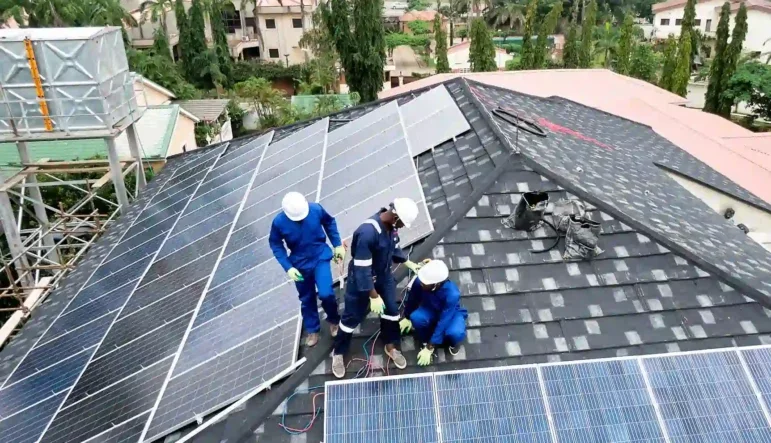
A solar intervention at the Primary Healthcare Centre in Mascara, Ketu, Lagos, is restoring confidence, improving patient outcomes, and strengthening frontline care. With reliable, round-the-clock electricity, critical services now run without disruption, enabling safer procedures, better diagnostics, and efficient emergency response while boosting staff morale and encouraging greater patient trust in the facility, reports AMBROSE NNAJI

For years, healthcare delivery at the Primary Healthcare Centre in Mascara, Ketu, Lagos, operated under a cloud of uncertainty—one shaped not by a lack of medical expertise or supplies, but by unstable electricity. In a system where timing can determine outcomes, power outages were far more than inconveniences. They disrupted care, delayed critical interventions, and created constant anxiety for both patients and health workers. Laboratory tests were postponed or cancelled when equipment could not run. Night shifts became exercises in endurance, with staff working under difficult conditions. Patients in urgent need of attention often waited longer than necessary, while health workers grappled with heat, fatigue, and unreliable generators that consumed scarce resources and frequently failed under pressure.
As Ward Health Committee Chairman, Julius Oyedekun, put it, “When there is no light, what can we do? Sometimes we depend on generators, and even that is not stable.” For nearly two decades, that uncertainty defined care at the facility. Today, however, the narrative is changing. In a move to improve healthcare delivery, integrated power solutions firm JMG Limited installed a 10-kilowatt hybrid solar power system at the health centre. Supported by lithium battery storage, the system now provides uninterrupted, round-the-clock electricity, effectively eliminating disruptions caused by erratic grid supply and significantly reducing dependence on fuel-powered generators. The project, commissioned in the Agboyi-Ketu area of Lagos, is part of JMG’s corporate social responsibility efforts aimed at strengthening healthcare infrastructure. For the company’s Group General Manager, Rabi Jammal, the intervention goes beyond technology. “Access to reliable power is critical to saving lives and improving medical outcomes. This is about sustainable development and community welfare,” he said.

The impact has been immediate. Critical units—including the maternity ward, laboratory, emergency room, and vaccine storage systems—now function without interruption. Procedures are no longer delayed by power failures, and health workers can focus fully on patient care rather than contingency plans. For Oyedekun, the installation marks a long-awaited breakthrough. After years of advocacy—writing letters, engaging authorities, and pushing for intervention—the change is both practical and symbolic. “There is no problem of power failure again. This is wonderful,” he said.
The human cost of unreliable power in healthcare. Behind the statistics and infrastructure gaps lies a deeper story—one defined by human endurance. For frontline health workers, the impact of unreliable electricity was not abstract; it shaped daily practice and patient outcomes. According to Olabiyi Oluwaseun Olatunji, Head of the Nurses Department, the struggle with power supply was constant and exhausting. Before the intervention, electricity was erratic, sometimes available for less than six hours a day. Outages were unpredictable, forcing staff to improvise repeatedly.

While local government efforts occasionally restored supply, the burden often fell on generators, which proved unreliable under sustained use. “They break down when overused,” Olatunji explained. Fuel costs were high, maintenance frequent, and in critical moments, failure was not an option—yet it occurred. In healthcare, even brief interruptions can carry serious consequences, and for her team, that risk was a daily reality. Nowhere was this more evident than in the labour ward, where childbirth was sometimes conducted under torchlight. What should be a controlled and precise process became more difficult and risk-prone. Limited visibility complicated procedures and placed additional pressure on already stretched staff.
Beyond the labour room, laboratory services stalled when equipment could not function, and vaccine storage systems became unreliable due to inconsistent temperatures. Night-time operations were further affected by poor lighting and security concerns, discouraging patients—especially those needing urgent care—from seeking help after dark. The toll on healthcare workers was both physical and psychological. Fatigue became routine, anxiety constant, and morale declined. Improvisation was no longer occasional; it became embedded in daily operations.

The installation of a solar-powered system marked a decisive turning point. The shift from erratic supply to stable, round-the-clock electricity transformed both service delivery and staff confidence. Today, the centre operates on a reliable 24-hour power system. Procedures are conducted with clarity, equipment functions consistently, and the labour ward no longer depends on torchlight. “Clients are more confident coming to the facility. They know they will receive care in a conducive environment,” Olatunji said. The facility, once dim and uninviting, is now illuminated, more secure, and more accessible. For staff, the psychological burden has eased. “The constant worry about power outages is gone,” she added. “Now we can focus fully on patient care.”
The Head of Unit at the centre, Dr. Alli Weniyu, said the impact of reliable electricity extends beyond service delivery to staff wellbeing. He described the solar installation as “nothing short of a miracle,” recalling the harsh conditions that once defined daily operations. Heat, poor ventilation, and erratic power created an environment that undermined both productivity and health. “There was a time I became overwhelmed and had to step away for weeks to recover,” he said, highlighting the toll of burnout in an already strained system. Today, the situation is markedly different. “It encourages us to give more. The conditions are now much more conducive,” he added.

In a sector where human resources are often stretched thin, improved working conditions are not a luxury—they are essential to sustaining care. The Mascara Primary Healthcare Centre plays a vital role in its community, providing services ranging from antenatal care and childbirth to emergency treatment and chronic disease management. Despite limited personnel, it operates round the clock and remains one of the most accessible healthcare options for residents.
Stable electricity has strengthened every aspect of this mandate. Laboratory testing is now uninterrupted, childbirth procedures are safer, and vaccines are stored under consistent conditions, preserving their effectiveness. Emergency responses have become faster and more efficient, while preventive care efforts are gaining traction through outreach programmes focused on early detection of conditions such as hypertension and diabetes. “We’ve seen cases where patients arrive unconscious due to undiagnosed conditions,” Dr. Weniyu noted. “Early detection is critical.” In this context, reliable power is not only enabling treatment but also supporting prevention.
Why reliable power is foundational to healthcare delivery
The transformation at Mascara underscores a broader reality: electricity is not a secondary need in healthcare—it is foundational. Across Nigeria, many primary healthcare centres continue to face similar challenges. Power outages disrupt services, compromise outcomes, and erode public trust. The Mascara experience offers a practical model for change. Solar power, beyond being an alternative energy source, provides stability—reducing dependence on generators, lowering long-term operational costs, and ensuring consistent service delivery. It also aligns with broader goals of sustainability and climate resilience, which are increasingly important in infrastructure planning.
The intervention further highlights the role of public-private collaboration in addressing systemic gaps. President of the Manufacturers Association of Nigeria, Francis Meshioye, emphasised that health is central to productivity and economic growth. Investments in healthcare infrastructure, he noted, align with national priorities and deliver wide-ranging benefits. Solar-powered systems, in particular, offer a viable solution to Nigeria’s persistent energy challenges. By reducing reliance on generators, they cut costs, lower emissions, and ensure uninterrupted operations. Such partnerships demonstrate how targeted interventions, when aligned with community needs, can deliver measurable and lasting impact.
Even from thousands of miles away at a global climate change conference in Brazil, Lagos State Commissioner for the Environment and Water Resources, Tokunbo Wahab, underscored the significance of the solar power intervention at the Mascara Primary Healthcare Centre. In remarks delivered at the project’s commissioning, he described the installation as a clear reflection of Lagos State’s commitment to climate-conscious development—one in which renewable energy is deployed not only to meet environmental targets but also to address critical, frontline service needs.
According to Wahab, reliable electricity is fundamental to effective healthcare delivery. Without it, even the most basic medical procedures are compromised. With it, however, systems function as intended. Labour wards remain illuminated, diagnostic equipment operates without interruption, vaccines are preserved under stable conditions, and emergency procedures can be carried out without delay. In this context, electricity is not merely an infrastructural convenience; it is a core component of patient safety and service efficiency.
He also pointed to JMG’s earlier intervention at the CMS Bariga Primary Healthcare Centre in 2024 as evidence of sustained corporate engagement in strengthening healthcare infrastructure. Such continuity, he noted, demonstrates that private sector participation can play a meaningful role in addressing systemic gaps, particularly in areas where public resources are stretched. Beyond commendation, the commissioner emphasised the importance of sustainability. He urged healthcare workers and local stakeholders to take ownership of the facility and ensure that the gains achieved are preserved over time. At the same time, he called on other private sector players to replicate similar interventions across the state and beyond. The underlying message was clear: in healthcare delivery, reliable power is not optional—it is essential.
Despite the progress recorded at Mascara, challenges remain. Ward Health Committee Chairman, Julius Oyedekun, drew attention to a collapsed perimeter fence that continues to expose the facility to security risks, particularly at night. Unrestricted access has raised concerns about safety, with reports of individuals entering the premises after hours for non-medical purposes. “People come in at night to fetch water freely. This is a hospital—it should not be like that,” he said. These concerns highlight the need for a more comprehensive approach to healthcare infrastructure—one that addresses not only power supply, but also security, maintenance, and overall facility management.
Still, the prevailing mood at the centre is one of cautious optimism. After years of operating under unreliable power conditions, the facility now stands as a practical example of how targeted interventions can produce measurable improvements in healthcare delivery. For both staff and patients, the solar installation represents more than a technical upgrade—it is a turning point. In the labour ward, the difference is immediate and visible. Where procedures were once carried out under torchlight, there is now steady illumination. Health workers perform their duties with greater confidence and precision. Mothers receive care in safer, more controlled conditions, and newborns begin life in an environment that supports their wellbeing from the outset.
For Nurse Olatunji and her colleagues, the transformation goes beyond physical infrastructure. It has altered the rhythm of work and reduced the psychological burden that once accompanied every shift. The constant anxiety associated with power outages has been replaced with a sense of stability, allowing staff to focus more fully on patient care. More broadly, the Mascara experience speaks to a larger reality within Nigeria’s healthcare system. It demonstrates that improving outcomes does not always require sweeping reforms; in some cases, targeted, well-executed interventions can yield significant results. Reliable electricity, in this instance, has strengthened service delivery, improved working conditions, and restored a measure of public confidence in primary healthcare.