

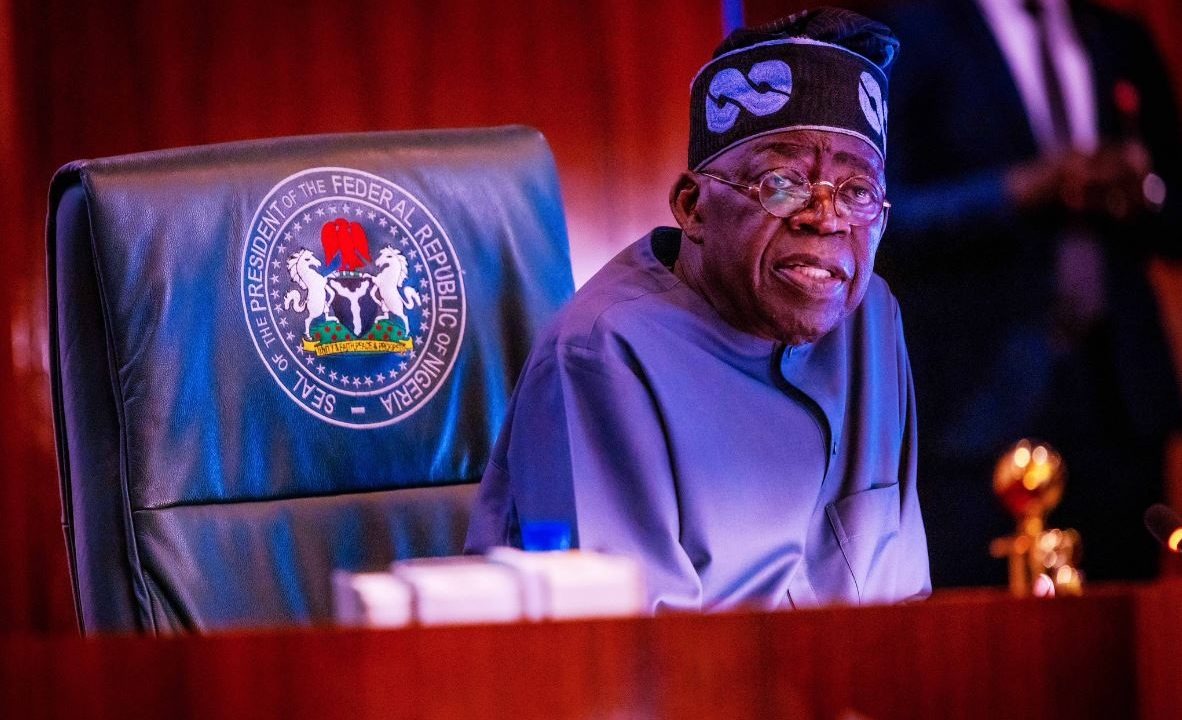
President Bola Tinubu has disclosed that Nigeria is projected to spend about $11.6 billion on debt servicing in 2026, a figure he says will consume nearly half of the country’s expected revenue.

He made the remarks on Tuesday while leading Nigeria’s delegation to the Africa Forward Summit held at the Kenyatta International Convention Centre in Nairobi, Kenya.
According to a statement by presidential spokesperson Bayo Onanuga, the President warned that the heavy debt burden is limiting Nigeria’s ability to invest in key sectors such as industry, agriculture, infrastructure, and human capital development.

Tinubu argued that funds used for debt servicing could otherwise support critical sectors like steel, textiles, agro-processing, and digital industries, while also expanding opportunities for young professionals and improving industrial productivity.
He criticised the global financial system, describing it as structurally unfavorable to African economies, saying high borrowing costs continue to weaken industrial growth and competitiveness across the continent.
The President also called for reforms in international financial institutions, insisting that Africa must be allowed fair access to affordable capital to support industrialisation, manufacturing, and value addition rather than remaining dependent on raw material exports.

He highlighted Nigeria’s ongoing economic reforms, including subsidy removal, exchange rate unification, and banking recapitalisation, noting that these measures have improved fiscal stability and strengthened investor confidence.
Tinubu further stated that Nigeria’s debt-to-GDP ratio is projected at 32.3 percent in 2026, alongside stronger external reserves estimated at $45.5 billion, which he said reflect the impact of recent reforms.

On regional cooperation, he emphasized maritime security and Nigeria’s readiness to share its Deep Blue maritime intelligence infrastructure with Gulf of Guinea countries to strengthen ocean governance and reduce insecurity at sea.
He also stressed that migration challenges across Africa can only be addressed by creating economic opportunities, improved investment in education, and stronger job creation policies across the continent.
The Africa Forward Summit brought together leaders, policymakers, and global stakeholders to discuss investment, digital transformation, agriculture, climate change, and industrial development strategies across Africa.




