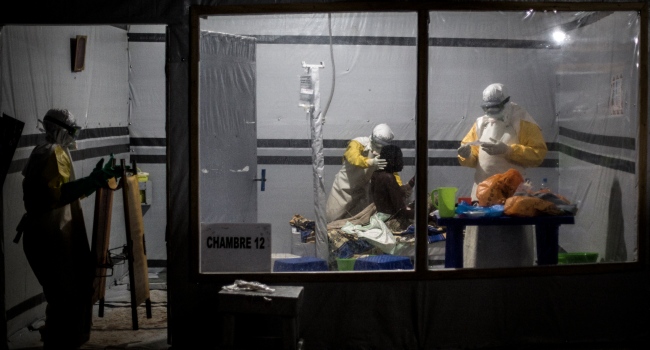
Ebola Outbreak Worsens in Eastern DR Congo as Death Toll Rises
The Ebola outbreak in eastern Democratic Republic of Congo has continued to escalate, with health authorities reporting a sharp increase in suspected cases and deaths, even as global concern intensifies following its declaration as an international health emergency by the World Health Organization (WHO).
According to earlier official figures from the affected region, the outbreak had recorded about 91 deaths out of 350 suspected cases. However, updated figures now place the death toll at approximately 131, with 513 suspected cases reported so far.
The Congolese Health Minister, Samuel Roger Kamba, disclosed this while speaking on national television, noting that the figures remain provisional and are still under investigation.
He cautioned that the numbers were estimates, stressing that further verification is needed to confirm how many of the reported deaths are directly linked to Ebola infection.

Health officials have also confirmed that there is currently no licensed vaccine or specific treatment for the Bundibugyo strain of Ebola responsible for the outbreak. The virus, which has caused multiple outbreaks across Africa over the past five decades, has killed more than 15,000 people historically.
The outbreak is concentrated in Ituri Province in the northeast, near the borders with Uganda and South Sudan. The region, known for its mining activities, sees frequent movement of people across communities, a factor health experts say is contributing to the spread.
Authorities say the virus has now spread beyond the initial epicentre, with suspected cases reported in parts of North Kivu, including the commercial city of Butembo, located about 200 kilometres away. Another suspected case has also been recorded in Goma, a major city currently under the control of the Rwanda-backed M23 militia.
Officials have raised concerns about delayed reporting in some communities, saying misinformation and early beliefs that the illness was spiritual in nature slowed response efforts.
“Unfortunately, the alert was slow to circulate within the community, because people thought it was a mystical illness, and as a result, the sick were not taken to the hospital,” Kamba said.
Health teams continue to rely largely on suspected case data, as laboratory testing capacity remains limited in some of the affected areas.