

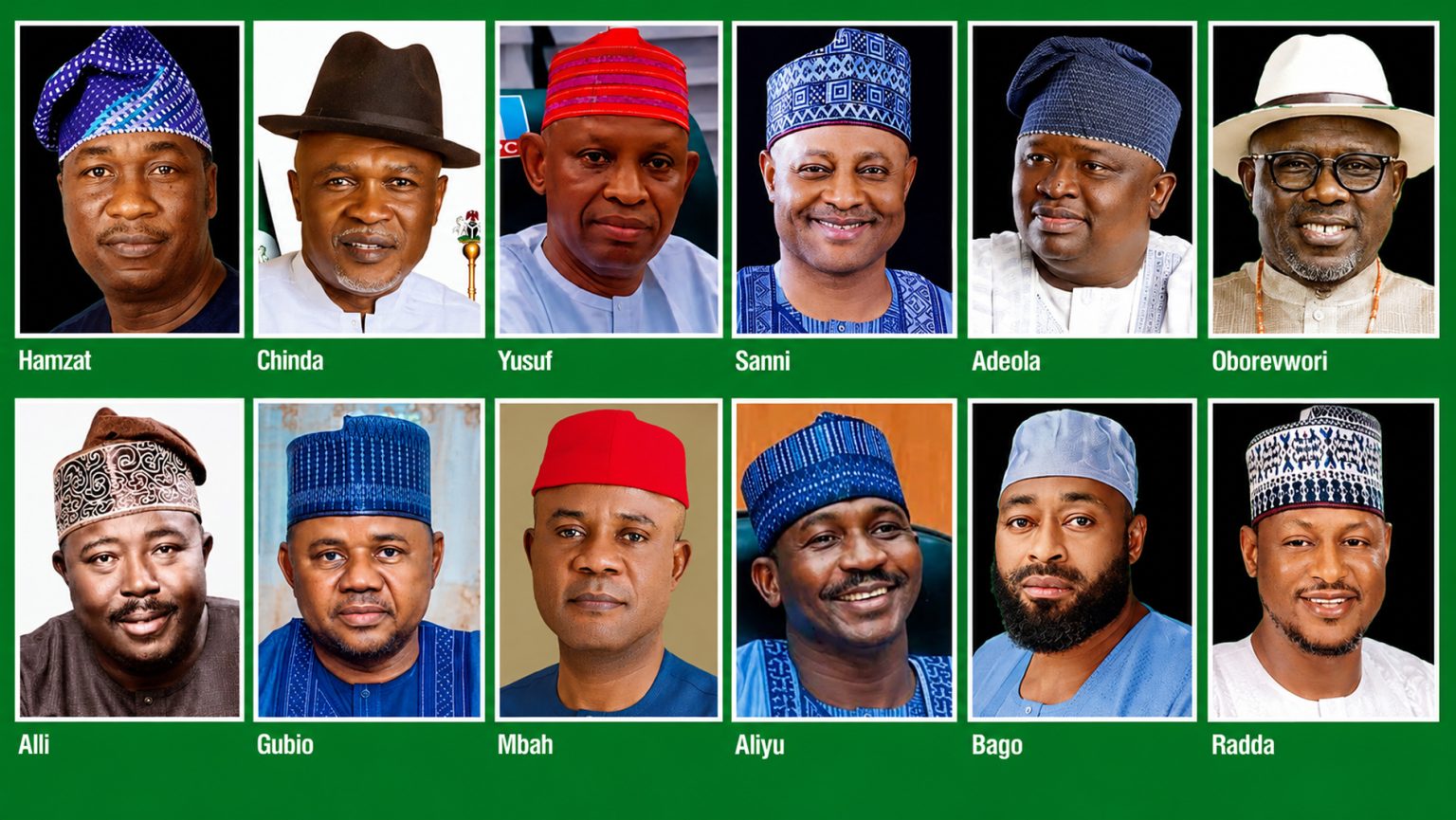
Across several states, the All Progressives Congress (APC) has concluded its governorship primaries ahead of the 2027 general elections, with a mix of consensus arrangements, direct primaries, and affirmations producing candidates in multiple regions of the country.
In Lagos, Deputy Governor Obafemi Hamzat emerged victorious after defeating his main challenger in a direct primary described as peaceful and orderly. In Rivers State, Kingsley Chinda secured the party’s ticket as the sole aspirant following an affirmation exercise.

In Kano, the party endorsed Governor Abba Kabir Yusuf as its consensus candidate, while in Kaduna, Governor Uba Sani clinched the ticket with 459,393 affirmation votes in a process widely supported by party stakeholders.
Oyo State Senator Sarafa Alli recorded a sweeping victory in the APC governorship primary, winning by a wide margin across the state’s local government areas. In Ogun, Senator Solomon Olamilekan Adeola, popularly known as Yayi, emerged as the party’s flagbearer after a largely uncontested exercise.

In Delta State, Governor Sheriff Oborevwori secured the governorship ticket with 345,375 votes in a direct primary, while in Borno, Mustapha Gubio emerged as candidate through a consensus arrangement endorsed by party leaders, including Governor Babagana Zulum.
Enugu State Governor Peter Mbah also moved closer to securing the APC ticket as members overwhelmingly affirmed his candidature as the sole aspirant in the state.

Elsewhere, Governors Dikko Radda of Katsina, Ahmed Aliyu of Sokoto, and Mohammed Umaru Bago of Niger State were all returned as consensus candidates through affirmation processes backed by party stakeholders.
In Kwara State, several aspirants stepped down in favour of Ambassador Abdulfatai Yahaya Seriki following internal consultations aimed at strengthening party unity ahead of the election. In Bauchi and Kwara, however, concerns over delays and transparency were reported as primaries were rescheduled in some areas.
Despite minor tensions in select states, party leaders maintained that the exercises reflected internal democracy, unity, and readiness for the 2027 general elections.




