

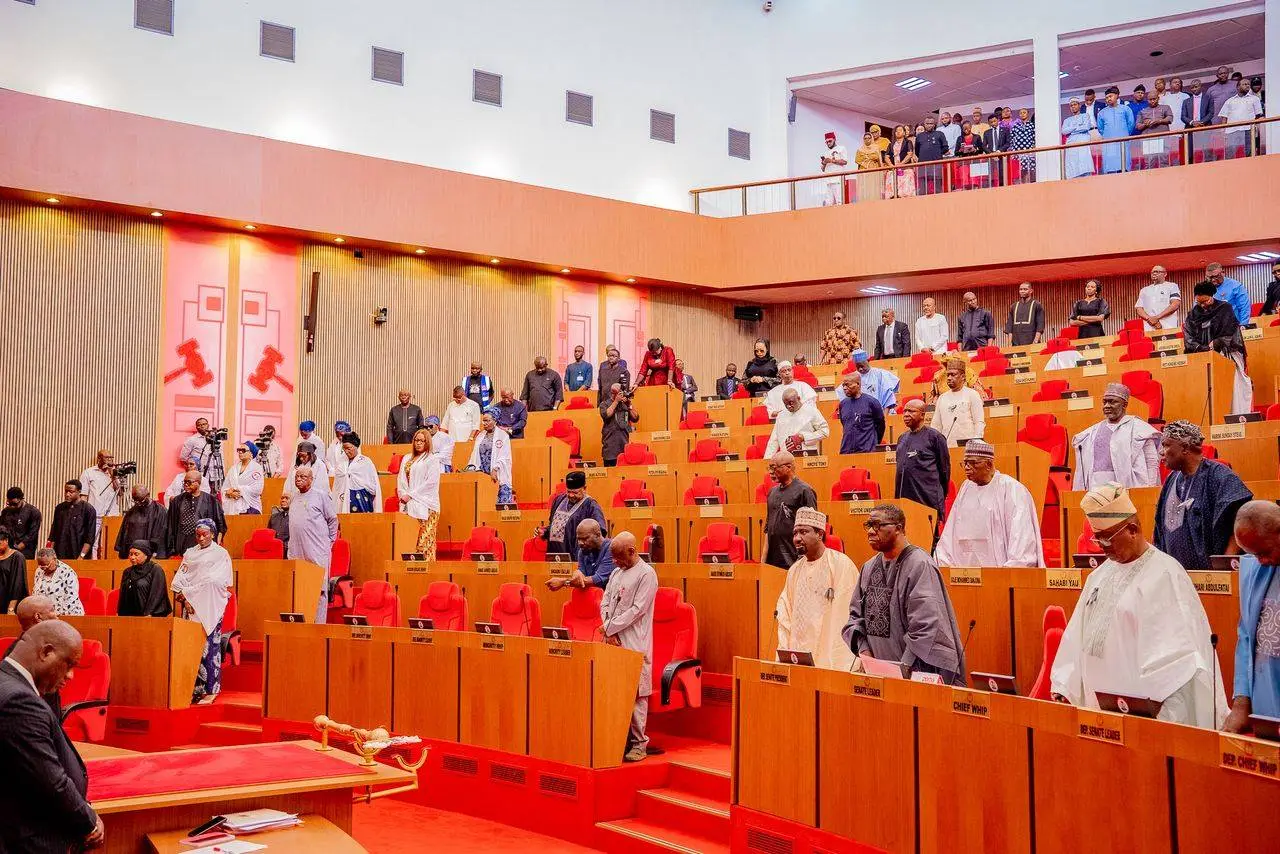
With the 2027 general elections approaching, Nigeria is witnessing a familiar political pattern as several outgoing state governors position themselves for senatorial seats after completing their constitutional tenure.
At least 12 of Nigeria’s 36 governors are currently serving their final terms, with most expected to leave office in 2027, while a few others such as Douye Diri and Hope Uzodimma will exit in 2028 due to off-cycle election timelines.

Over time, the Senate has increasingly become a preferred destination for former governors, with 14 ex-governors already occupying seats in the 10th National Assembly.
This trend has continued into the current election cycle, as several governors are actively seeking senatorial tickets either through party primaries or political endorsements.
Among those involved in the race are governors from Kwara, Nasarawa, Adamawa, Lagos, Borno, Bauchi, Ogun, Yobe, Gombe, and Oyo States, many of whom have already secured party nominations ahead of the 2027 elections.

In Adamawa State, Governor Ahmadu Fintiri has already emerged as the APC senatorial candidate after gaining strong backing from political stakeholders, while similar developments are unfolding in Yobe State, where Governor Mai Mala Buni secured his party’s ticket unopposed.
In Nasarawa, Governor Abdullahi Sule has also clinched the senatorial ticket, while Imo State Governor Hope Uzodimma is preparing for a return to the Senate after previously serving as a lawmaker before becoming governor.

In Kwara and Ogun States, Governors AbdulRahman AbdulRazaq and Dapo Abiodun have also secured senatorial nominations, further strengthening the growing list of governors transitioning to legislative roles.
Meanwhile, in Gombe State, Governor Muhammadu Yahaya has also emerged as the APC candidate for the senatorial race, setting up another case of a sitting governor preparing for the upper chamber.
In Bauchi State, Governor Bala Mohammed is pursuing a senatorial return under a different political platform, highlighting the cross-party nature of the trend.
The pattern of governors moving to the Senate is not new in Nigeria’s political system, having become more prominent since the return to democratic rule in 1999 and particularly after the 2007 general elections.

Over the years, several former governors have transitioned directly into the Senate, reinforcing what many describe as a political career pathway from state executive office to the national legislature.
Analysts say the trend is driven by political survival, continued influence, access to federal power, and the prestige associated with legislative office after leaving Government House.
However, critics argue that it concentrates political power among a small elite group, weakens internal party democracy, and limits opportunities for younger politicians.

There are also concerns about “double benefits,” as some former governors receive state pensions while also earning salaries and allowances as federal lawmakers.
Despite criticism, supporters maintain that former governors bring experience and governance expertise that can strengthen legislative processes.
As the 2027 elections approach, the increasing number of governors targeting Senate seats suggests the trend is likely to continue shaping Nigeria’s political landscape.




