


An Independent Civil Review of the Mohbad Investigation, the Ajiran Murder Case and the Imperative of Due Process
In an era where social media narratives can spread across millions of screens within minutes, public opinion is increasingly shaped by viral posts rather than verified facts. Yet, in every constitutional democracy governed by the rule of law, evidence—not speculation—must remain the foundation upon which reputations are judged and justice is administered.
The recent wave of allegations directed at Assistant Inspector-General of Police (AIG) Moshood Jimoh illustrates the growing tension between online activism and due process. While public officials must remain accountable to citizens, accountability itself loses credibility when allegations are detached from documented facts, official records and judicial processes.
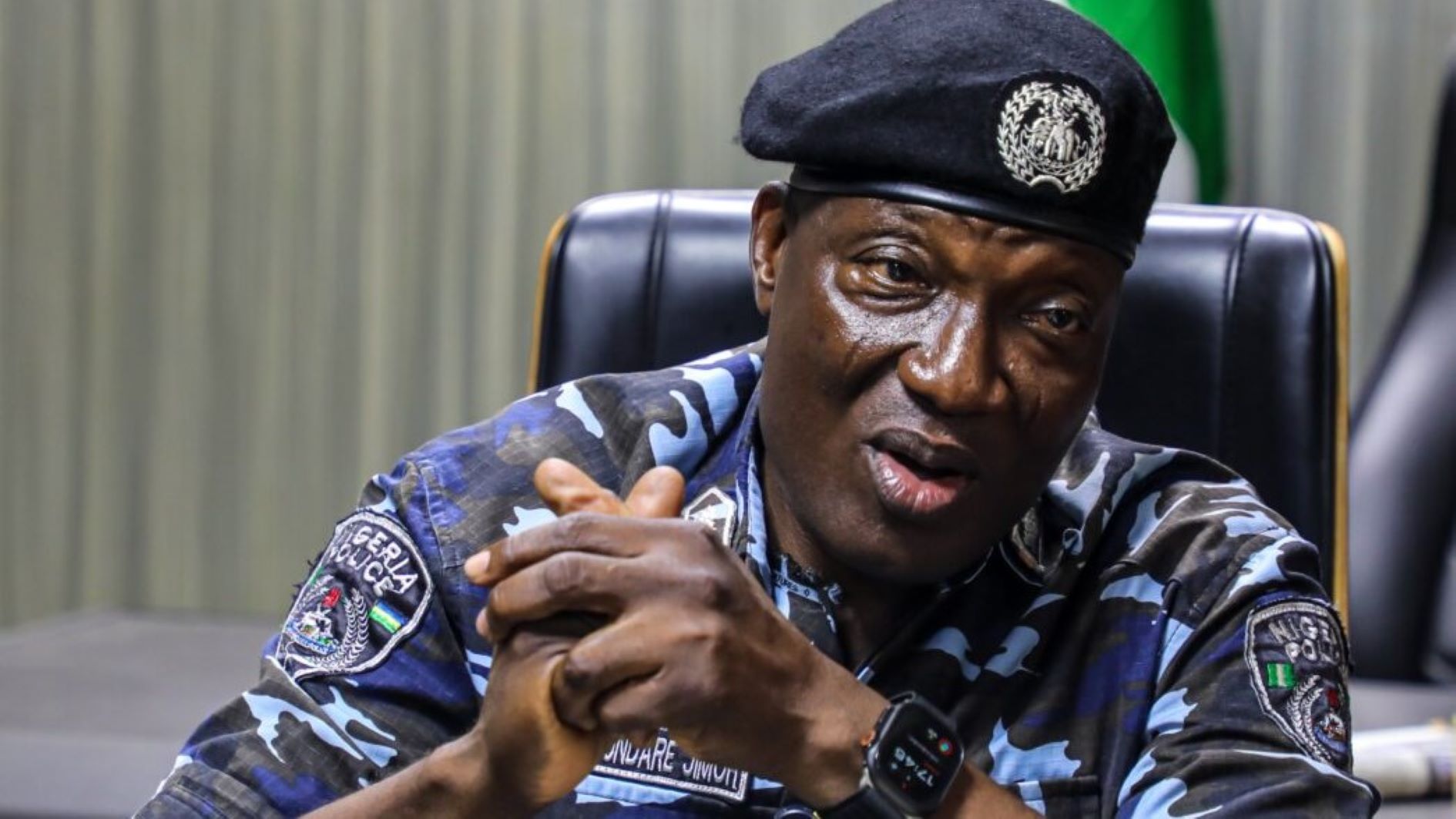
A careful examination of publicly available information presents a chronology that deserves equal public attention.
AIG Moshood Jimoh has served the Nigeria Police Force in several strategic operational, investigative and administrative capacities over a distinguished career spanning multiple states, including Katsina, Cross River, Anambra, Oyo, Gombe, Rivers, the Federal Capital Territory and Lagos.
His career progression reflects extensive policing experience. He has served as Divisional Police Officer, Force Public Relations Officer, Deputy Commissioner of Police at various investigative formations, Commissioner of Police, Ports Authority Police, Eastern Ports, Port Harcourt, before his elevation to Assistant Inspector-General of Police. He has also undertaken professional policing and investigative training both within Nigeria and internationally, building expertise in criminal investigations, police administration, public relations and operational command.
However, the controversy surrounding his name today centres largely on two unrelated matters—the investigation into the death of musician Ilerioluwa Aloba, popularly known as Mohbad, and the ongoing Ajiran double murder case.
The timeline surrounding the Mohbad investigation is particularly instructive.
Public records establish that Mohbad died on September 12, 2023. By contrast, Moshood Jimoh assumed office as Commissioner of Police, Lagos State Command on February 18, 2025—approximately seventeen months after the singer’s death.
This chronology is significant because the police investigation into Mohbad’s death had already commenced immediately after the incident, with substantial investigative activities taking place throughout 2023 and 2024 before eventually involving the Force Criminal Investigation Department.
Based on the publicly available timeline, there is no verified public record indicating that Jimoh supervised, initiated or directed the original investigation into Mohbad’s death. Any attempt to attribute decisions made during those earlier investigative stages to an officer who had not yet assumed office necessarily raises questions that should be answered through evidence rather than assumption.
The distinction is important because chronology remains one of the most objective forms of evidence available in public administration.
Equally prominent in recent public discourse is the Ajiran double murder investigation.
Unlike the Mohbad matter, the Ajiran case falls within the period of Jimoh’s leadership in Lagos. Public records indicate that the investigation was conducted following petitions received by the police, with the matter subsequently progressing through established investigative and judicial procedures. Jimoh has consistently maintained that the investigation was carried out professionally, impartially and strictly in accordance with available evidence.
The case is now before a competent court of law. Under Nigeria’s constitutional framework, it is the responsibility of the judiciary—not social media platforms or public opinion—to determine the admissibility of evidence, establish facts and pronounce guilt or innocence.
This principle lies at the heart of every democratic justice system.
Another development attracting attention has been the circulation on social media of a purported Nigeria Police “Wanted” poster bearing Jimoh’s name and photograph.
If such material was not issued through authorised Nigeria Police channels but was fabricated, manipulated or presented in a misleading manner, the implications extend beyond the reputation of one public officer. The misuse of official government imagery has the potential to mislead the public, erode institutional credibility and undermine confidence in legitimate law enforcement communications.
For this reason, the authenticity and origin of such publications should be established through competent investigation rather than public speculation. Digital publishers, content creators and social media users equally bear a civic responsibility to verify purported official documents before amplifying them to wider audiences.

The same principle applies to allegations of corruption.
Questions have been raised in relation to a complaint reportedly made by Happy A. Edema. Publicly available information indicates that the complaint was assessed by the police and considered civil in nature, with the complainant advised to pursue available civil legal remedies.
In law, the existence of a complaint does not amount to proof of criminal misconduct. Neither allegations nor accusations automatically establish guilt. Until a competent court or disciplinary authority reaches a contrary conclusion, the presumption of innocence remains a cornerstone of justice.
This is not a defence of any individual. Rather, it is a defence of the legal standards that protect every citizen from trial by public opinion.
Democratic societies across the world continue to uphold the same principle. Courts determine criminal liability through admissible evidence, not hashtags; investigative agencies rely on documented facts, not viral narratives; and reputations should neither be destroyed nor rehabilitated solely through the fluctuating currents of social media.
Public scrutiny of government officials remains both necessary and desirable. However, such scrutiny is strongest when anchored in verified evidence, official documentation and objective analysis.
The public record presently establishes three undisputed facts: Mohbad died on September 12, 2023; Moshood Jimoh became Commissioner of Police, Lagos State on February 18, 2025; and the investigation into Mohbad’s death had commenced long before his assumption of office. These chronological facts should inform any fair assessment of his role.
Ultimately, the credibility of law enforcement, the media and democratic institutions depends upon the same enduring principle: facts before assumptions, evidence before emotion and due process before judgment. Public debate is essential in a democracy, but it achieves its highest value only when guided by accuracy, fairness and respect for the rule of law. In the pursuit of justice, verified evidence—not speculation—must always remain the final arbiter.
Dr. G. Fraser. MFR
Headlinenews.news Special Investigative Report.




