

STATECRAFT OVER SPECTACLE: THE REAL TEST OF PRESIDENT TINUBU’S LEADERSHIP
By Princess Gloria Adebajo-Fraser, MFR
President, National Patriots Movement of Nigeria
Whenever tragedy strikes in Nigeria, a familiar cycle unfolds. Public anger rises, political opponents seize the moment, social media erupts with outrage, and before long the conversation shifts from the victims themselves to a recurring question: Why has the President not visited the affected area?
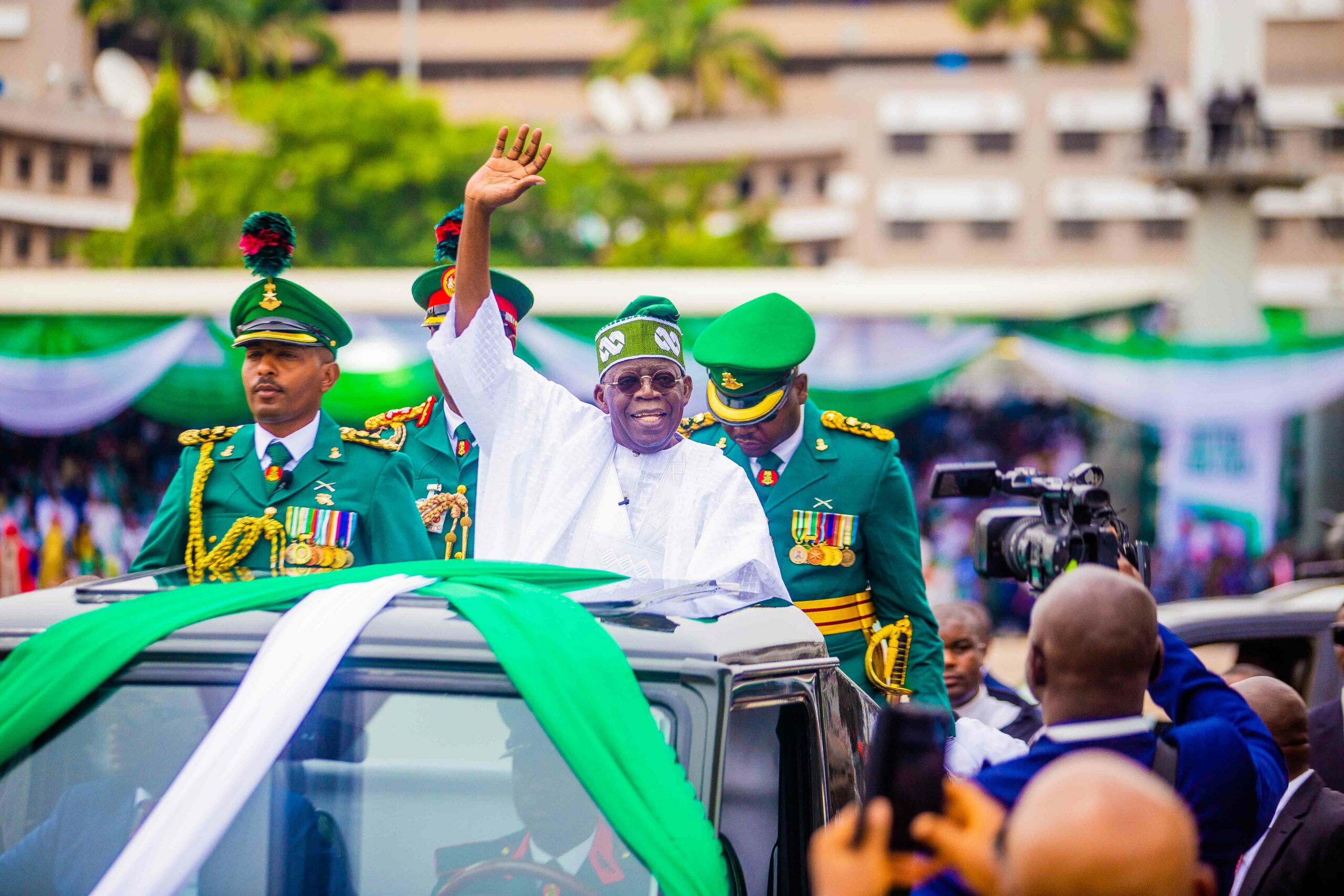
The emotion behind such questions is understandable. Citizens who are grieving naturally seek reassurance from those entrusted with leadership. Communities devastated by violence want to know their pain is recognised. Families who have lost loved ones want evidence that their suffering matters. Yet beneath the emotion lies a deeper question that deserves equal attention: What exactly is the primary responsibility of a President?
In modern governance, leadership is not measured by the number of condolence visits undertaken or the frequency of appearances at disaster scenes. Leadership is measured by the effectiveness of institutions, the quality of decisions made under pressure, the ability to mobilise resources, and the capacity of government to respond to national challenges. The danger of reducing governance to symbolism is that it creates the illusion that physical presence is a substitute for effective action. It is not.
No serious nation is governed through presidential roadshows. The office of the President was never designed to function as a travelling emergency response unit. Rather, it exists as the strategic nerve centre of the state—the point from which national priorities are determined, resources allocated, institutions strengthened, security operations coordinated and economic policies implemented. The President’s responsibility is not merely to be seen. It is to ensure that government works.
History offers valuable perspective. During the Second World War, Winston Churchill did not personally command every battlefield. During the Great Depression, Franklin Roosevelt did not physically visit every struggling American town. More recently, leaders such as Lee Kuan Yew, Deng Xiaoping and Narendra Modi were not judged by the number of crisis locations they visited but by the institutions they built, the reforms they implemented and the transformations they delivered. History remembers outcomes more than appearances. It remembers statecraft more than spectacle.

That is the lens through which President Bola Ahmed Tinubu should be assessed.
Unfortunately, much of Nigeria’s political discourse often ignores context. Security challenges are discussed as though they emerged in 2023. Yet the insurgency in the North-East has persisted for well over a decade. Banditry spread across large parts of the North-West years before the current administration assumed office. Kidnapping evolved into a sophisticated criminal enterprise under successive governments. Illegal mining networks, arms trafficking routes and criminal enclaves became entrenched over many years. These realities were inherited.

Acknowledging this fact is not an attempt to excuse failure. Rather, it is the starting point for honest analysis. Deep structural problems accumulated over decades cannot be resolved within months. The relevant question is therefore not whether challenges exist. They clearly do. The more important question is whether the government is confronting those challenges with seriousness, urgency and strategic direction.
On that score, the evidence deserves objective consideration. Since assuming office, President Tinubu has prioritised the strengthening of Nigeria’s security capabilities. Military procurement has accelerated. Surveillance technology, intelligence gathering and drone operations have received increased attention. Additional recruitment into the armed forces has been approved. Cooperation among security agencies has improved, while partnerships with international allies have expanded. Investments have been directed towards strengthening operational effectiveness across multiple theatres of conflict. These measures may not generate the dramatic imagery associated with political theatre, but they represent the less visible and more consequential work of governance.

Wars against insurgents, terrorists and organised criminal groups are not won through speeches, sympathy visits or public relations exercises. They are won through intelligence, logistics, technology, training, funding and sustained operational pressure. The United States spent approximately twenty years fighting terrorism in Afghanistan despite possessing the most sophisticated military apparatus in human history. Israel continues to confront security threats despite maintaining one of the world’s most advanced defence systems. Colombia spent decades battling insurgent groups before restoring greater levels of stability. No serious security expert anywhere in the world believes that complex asymmetric threats can be eliminated overnight. What matters is whether a nation is moving in the right direction and steadily strengthening its capacity to confront those threats.

Equally important is the tendency to treat security as though it were solely the responsibility of the Federal Government. Nigeria operates a federal system. Governors are recognised as Chief Security Officers of their states. State governments receive substantial allocations from the Federation Account, while local governments possess responsibilities within their jurisdictions. Traditional institutions, community leaders and citizens themselves also play vital roles in maintaining security and providing intelligence. Criminal organisations thrive on local information, local networks and local collaboration. Kidnappers require informants. Illegal mining syndicates require protection. Terrorist groups rely on supply chains and facilitators. The battle against insecurity therefore cannot be won from Abuja alone. Every stakeholder must be held accountable, and every level of government must contribute meaningfully to the solution.
The same principle applies to the economy. When President Tinubu assumed office, he inherited a nation facing severe fiscal strain. Fuel subsidy payments had become increasingly unsustainable. Foreign exchange distortions were discouraging investment and undermining economic efficiency. Public debt obligations were placing enormous pressure on government finances. Economists and policy experts had warned for years that these structural weaknesses could not continue indefinitely. Successive administrations recognised the problem but often delayed difficult decisions because of the political consequences.

President Tinubu chose a different path.
There is no denying that many Nigerians have experienced genuine hardship during this transition. Rising transport costs, food inflation and pressure on household incomes have created real difficulties for millions of families. These concerns should neither be dismissed nor trivialised. A mother struggling to feed her children, a trader grappling with rising operating costs or a pensioner facing escalating living expenses is not interested in economic theory. They are concerned with survival and dignity.
However, fairness requires a broader examination of responsibility. One of the principal objectives of the reforms was to increase the resources available to states and local governments so they could respond more effectively to the needs of their people. Since the removal of fuel subsidies and the implementation of fiscal reforms, subnational governments have received significantly higher allocations than at any comparable period in recent history. This is important because many of the interventions citizens demand most urgently—primary healthcare, rural roads, agricultural support, local transportation, community development, basic education and targeted social safety nets—fall primarily within the constitutional responsibilities of state and local governments.
The critical question therefore is not only what Abuja is doing, but also what governors and local authorities are doing with the unprecedented resources now available to them. How many states have significantly expanded food security programmes? How many have invested aggressively in mass transportation, agricultural mechanisation, rural healthcare and targeted support for vulnerable households? How many have translated increased revenues into visible improvements in the daily lives of ordinary citizens? These are questions that deserve equal attention within the national conversation.

The success of any reform programme ultimately depends on whether increased revenues are converted into tangible improvements in human welfare. That responsibility does not rest with the Federal Government alone. It is shared across every tier of governance. President Tinubu’s reforms were never intended to enrich government accounts while citizens suffered. Their purpose was to create a more sustainable fiscal foundation and empower governments closer to the people to respond more effectively to local needs.
The removal of fuel subsidies was controversial. Exchange rate reforms generated discomfort. Inflationary pressures created hardship. These realities should be acknowledged honestly. Yet it is equally important to recognise that difficult reforms are rarely painless. India’s economic liberalisation was controversial. China’s market reforms initially generated uncertainty. Indonesia, Brazil and numerous other emerging economies experienced similar periods of adjustment. The true test of leadership is not whether decisions are immediately popular. It is whether they are necessary.
Today, states are receiving substantially higher allocations. Government revenues have improved. Investor confidence is gradually recovering. Major infrastructure projects are advancing across the country. The Lagos-Calabar Coastal Highway, the Sokoto-Badagry Super Highway, rail modernisation initiatives, energy investments and strategic transportation corridors are part of a broader effort to improve national competitiveness and economic integration. Whether these initiatives ultimately succeed will depend on execution, but few can deny the scale of ambition behind them.
For decades, Nigerians complained that leaders lacked the courage to confront difficult realities. Now that difficult decisions are being made, that same courage should at least be recognised. This does not mean government should be immune from criticism. Far from it. Democracy requires accountability. Citizens have every right to demand better security, lower inflation, stronger institutions and faster results. Constructive criticism strengthens governance. But criticism must remain grounded in facts rather than political expediency.
A balanced assessment of the current administration reveals a government attempting something far more ambitious than routine governance. It is attempting to restructure critical aspects of Nigeria’s political economy, strengthen state capacity, modernise infrastructure, improve fiscal sustainability and build the foundations for long-term growth. Such efforts inevitably generate resistance. Reforms create winners and losers. Entrenched interests rarely surrender privileges willingly. Political opponents naturally exploit temporary discomforts. Yet history repeatedly demonstrates that transformational leadership often appears unpopular before its benefits become fully visible.
This is why Nigerians must be careful not to confuse impatience with analysis. No serious nation develops through instant solutions. China’s rise took decades. Singapore’s transformation took decades. South Korea’s economic miracle took decades. Even the world’s most successful economies required persistence, sacrifice and policy consistency. Nigeria’s journey will be no different.
The country’s challenges remain significant. Security threats persist. Economic pressures continue. Millions of citizens are still waiting to feel the full benefits of ongoing reforms. These realities should be acknowledged honestly. At the same time, fairness demands recognition of effort, direction and measurable progress.
As another electoral cycle approaches, Nigerians should resist the temptation to judge governance through the narrow lens of political theatre. The more important questions are these: Are institutions becoming stronger? Are reforms being implemented? Is infrastructure expanding? Is state capacity improving? Is the government confronting difficult problems or avoiding them?

Those are the questions history asks.
Long after today’s political arguments have faded, long after social media controversies have disappeared and long after partisan passions have cooled, future generations will ask a far simpler question: Was Nigeria stronger than it was before?
History will not remember who demanded the most presidential visits. It will not remember who generated the loudest headlines or the sharpest criticisms. History will remember who built stronger institutions, modernised infrastructure, expanded economic opportunity, strengthened national security and laid the foundations for future prosperity.
That is the essence of statecraft.
That is the true test of leadership.
And that is ultimately the standard by which President Bola Ahmed Tinubu’s presidency should be judged.
By Princess Gloria Adebajo-Fraser, MFR
President, National Patriots Movement of Nigeria
Governance Consultant, Perception management Expert, Strategist & Researcher.
Publisher, Headlinenews.news




