

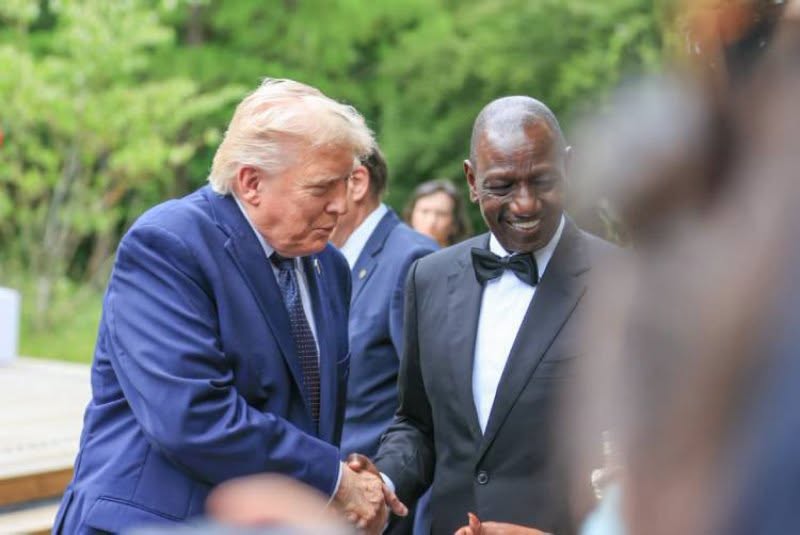
Kenya is nearing the completion of a major minerals agreement with the United States that will focus on the development and processing of rare earth elements and other strategic minerals within the country.
President William Ruto disclosed the development during meetings held alongside the G7 summit, stating that negotiations have reached an advanced stage and a final agreement could be signed in the near future.

The proposed partnership is centered on the mineral-rich Mrima Hill deposit in Kwale County and includes a key provision requiring that strategic minerals be processed locally rather than exported in their raw form.
Ruto said both countries support a framework that promotes value addition within Kenya, allowing the nation to benefit more directly from its natural resources through industrial development, job creation, and increased economic returns.

The emerging agreement comes amid growing competition among major global powers seeking access to Africa’s vast mineral resources, which are critical for clean energy technologies, advanced manufacturing, and defence industries.
China currently maintains a dominant position in Africa’s mineral processing sector and supply chains, giving it considerable influence in global markets. However, the United States has intensified efforts to establish strategic partnerships with African nations to secure access to critical minerals while encouraging local processing and investment.
Russia has also expanded its footprint across parts of Africa through mining and resource-related agreements tied to broader geopolitical and security interests.
Similar mineral partnerships have been pursued in other African countries, including the Democratic Republic of Congo, where key resources such as cobalt and copper play a vital role in global battery production.
The Kenyan initiative reflects a broader trend among African governments seeking greater control over their mineral wealth by prioritising local processing, industrialisation, and increased value retention from resource extraction.
Analysts view the planned agreement as part of a wider transformation in Africa’s approach to resource management as countries negotiate from stronger positions in an increasingly competitive global environment.




