

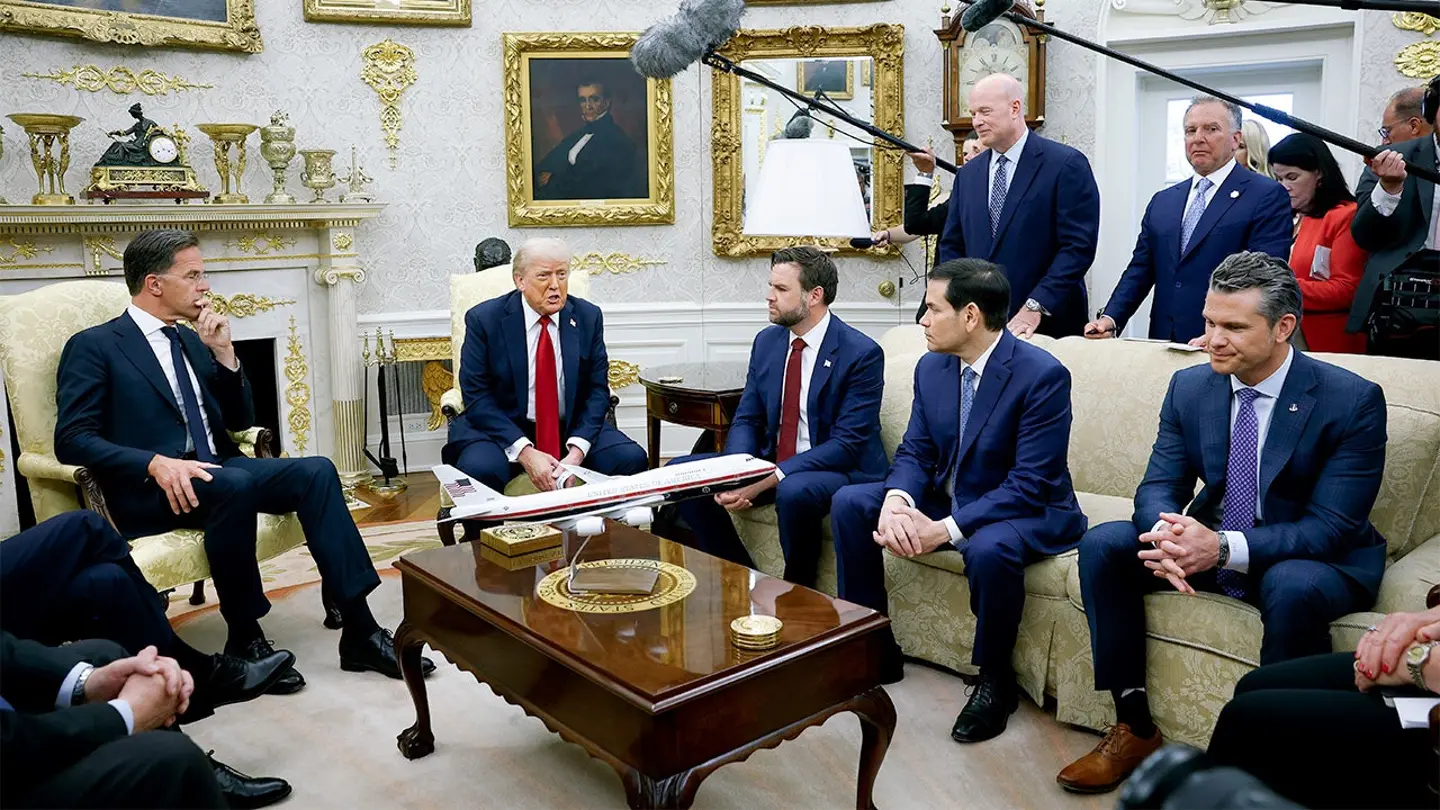
U.S. President Donald Trump is expected to arrive at the upcoming NATO summit in Ankara, Turkey, with renewed criticism of several European allies over their responses to the recent U.S.-led military operation against Iran.
The two-day summit is set to focus on key issues including defence spending, the war in Ukraine, and NATO’s long-term strategy toward Russia. However, tensions surrounding support for the U.S. operation against Iran are expected to feature prominently during private discussions.

Trump has expressed dissatisfaction with some NATO members that declined to grant the United States access to military bases or airspace during the military campaign. He has also criticised leaders who publicly condemned the operation.
Among the countries facing criticism is Spain, whose Prime Minister, Pedro Sánchez, described the U.S. military action against Iran as illegal and unjustified. The disagreement has further strained relations between Washington and Madrid ahead of the summit.
U.S. Ambassador to NATO Matthew Whitaker said the American president remains disappointed by the limited support offered by some allies during the operation, adding that the administration expected stronger cooperation from NATO partners.

According to Whitaker, the conflict also exposed differences in military capabilities among alliance members, with some countries lacking the capacity to contribute effectively to major international operations.
Several European governments defended their decisions by citing domestic legal restrictions and concerns about becoming directly involved in a wider conflict in the Middle East. While the United Kingdom later approved certain military support after initially withholding permission, Spain maintained its opposition, Italy limited its role to logistical assistance, and Germany focused on non-combat support.

Although a number of NATO members later participated in maritime security efforts aimed at protecting shipping routes through the Strait of Hormuz, U.S. officials believe the initial reluctance of some allies continues to influence Trump’s position ahead of the meeting.
The president is also expected to renew his long-standing call for NATO members to increase defence spending to at least five percent of their gross domestic product (GDP), arguing that the United States continues to shoulder a disproportionate share of the alliance’s security responsibilities.

American officials have suggested that countries meeting higher defence commitments could receive additional benefits, including greater cooperation with the United States and priority access to defence partnerships.
Security analysts believe discussions surrounding burden-sharing, alliance unity, and the aftermath of the Iran operation could significantly shape conversations between Trump and European leaders, even as the summit officially focuses on Ukraine, Russia, and NATO’s future security strategy.




