
ATIKU’S SUBSIDY U-TURN: INVECTIVE CANNOT DEFEAT THE ECONOMIC EVIDENCE
Tinubu’s reforms require stronger social protection—not a return to an expensive and corruption-prone petrol subsidy
By Gloria Fraser, MFR
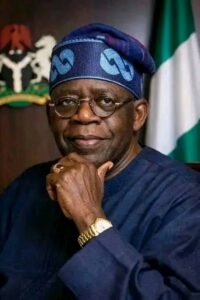
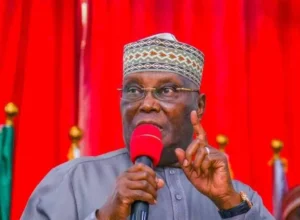
Calling President Bola Tinubu an “ignoramus” and describing economic reform as “arson” does not provide the cost, funding source, eligibility rules or safeguards for Atiku Abubakar’s proposed petroleum intervention. Insults may excite a campaign audience, but they cannot balance Nigeria’s books.
Atiku’s campaign claims he is not proposing the return of the former open-ended subsidy regime. It describes his alternative as a “targeted, capped, budgeted, time-bound and independently audited production-support mechanism.”
Those adjectives cannot substitute for a policy document.
What exactly would be subsidised—crude oil, refinery production, foreign exchange, transportation or the retail price of petrol? Who would receive the payment? How much would it cost per litre and annually? Which expenditure would be reduced to fund it? How would diversion, false consumption claims and cross-border smuggling be prevented?

Until Atiku publishes these details, he has presented a slogan, not an economic programme.
A government payment intended to keep petrol below its economic cost remains a subsidy, even when renamed “production support.” If applied to every litre, wealthy motorists, large businesses and smugglers will again receive more than poorer Nigerians who consume little petrol directly.
Nigeria had already budgeted to terminate the old arrangement before Tinubu assumed office. The 2023 budget funded subsidy only until June, while continuing it throughout the year was projected to cost approximately ₦6.7 trillion—about 70 per cent of the Federal Government’s revenue at the time.
Atiku himself previously supported subsidy removal. His campaign-season reversal therefore requires a credible financial explanation, not clever terminology.
THE PAIN IS REAL, BUT REVERSAL IS NOT THE ANSWER
Atiku’s campaign is correct that Nigerians suffered severely from the combined effects of subsidy removal, currency depreciation, food inflation and higher production and transportation costs. Household purchasing power declined, while businesses and workers came under enormous pressure.
The administration’s greatest failure was not ending an unsustainable subsidy. It was the failure to establish sufficiently broad, credible and operational safety nets before or simultaneously with its removal.
Cash transfers were delayed. The social register faced credibility problems. Affordable mass-transportation interventions were too slow, while food-security measures and wage adjustments did not initially match the scale of the hardship.
That criticism must be accepted honestly.
But implementation failures do not make restoration sound policy. The correct response is to strengthen targeted cash transfers, mass transportation, food production, health insurance, wage protection and affordable credit for productive businesses.
Countries such as Indonesia accompanied fuel-price reforms with targeted cash transfers and social support. Egypt has progressively moved from indiscriminate energy subsidies towards targeted assistance. The lesson is straightforward: protect vulnerable citizens directly instead of subsidising every litre consumed by the rich, poor and smugglers alike.
THE ECONOMY HAS NOT PRODUCED ONLY “ASHES”
Atiku’s claim that the reforms have achieved nothing beyond suffering is contradicted by measurable evidence.

According to the National Bureau of Statistics, Nigeria’s real GDP grew by 3.89 per cent year-on-year in the first quarter of 2026. Headline inflation has fallen to 15.43 per cent under the rebased consumer-price index, although prices remain painfully high for households.

The World Bank reports that stronger revenues, improved reserves, moderating inflation and greater exchange-rate flexibility have strengthened Nigeria’s macroeconomic stability and policy credibility.
ATIKU’S SUBSIDY U-TURN: INVECTIVE CANNOT DEFEAT THE ECONOMIC EVIDENCE
Tinubu’s reforms require stronger social protection—not a return to an expensive and corruption-prone petrol subsidy
By Gloria Fraser, MFR
Calling President Bola Tinubu an “ignoramus” and describing economic reform as “arson” does not provide the cost, funding source, eligibility rules or safeguards for Atiku Abubakar’s proposed petroleum intervention. Insults may excite a campaign audience, but they cannot balance Nigeria’s books.
Atiku’s campaign claims he is not proposing the return of the former open-ended subsidy regime. It describes his alternative as a “targeted, capped, budgeted, time-bound and independently audited production-support mechanism.”
Those adjectives cannot substitute for a policy document.
What exactly would be subsidised—crude oil, refinery production, foreign exchange, transportation or the retail price of petrol? Who would receive the payment? How much would it cost per litre and annually? Which expenditure would be reduced to fund it? How would diversion, false consumption claims and cross-border smuggling be prevented?
Until Atiku publishes these details, he has presented a slogan, not an economic programme.
A government payment intended to keep petrol below its economic cost remains a subsidy, even when renamed “production support.” If applied to every litre, wealthy motorists, large businesses and smugglers will again receive more than poorer Nigerians who consume little petrol directly.
Nigeria had already budgeted to terminate the old arrangement before Tinubu assumed office. The 2023 budget funded subsidy only until June, while continuing it throughout the year was projected to cost approximately ₦6.7 trillion—about 70 per cent of the Federal Government’s revenue at the time.
Atiku himself previously supported subsidy removal. His campaign-season reversal therefore requires a credible financial explanation, not clever terminology.
THE PAIN IS REAL, BUT REVERSAL IS NOT THE ANSWER
Atiku’s campaign is correct that Nigerians suffered severely from the combined effects of subsidy removal, currency depreciation, food inflation and higher production and transportation costs. Household purchasing power declined, while businesses and workers came under enormous pressure.
The administration’s greatest failure was not ending an unsustainable subsidy. It was the failure to establish sufficiently broad, credible and operational safety nets before or simultaneously with its removal.
Cash transfers were delayed. The social register faced credibility problems. Affordable mass-transportation interventions were too slow, while food-security measures and wage adjustments did not initially match the scale of the hardship.
That criticism must be accepted honestly.
But implementation failures do not make restoration sound policy. The correct response is to strengthen targeted cash transfers, mass transportation, food production, health insurance, wage protection and affordable credit for productive businesses.
Countries such as Indonesia accompanied fuel-price reforms with targeted cash transfers and social support. Egypt has progressively moved from indiscriminate energy subsidies towards targeted assistance. The lesson is straightforward: protect vulnerable citizens directly instead of subsidising every litre consumed by the rich, poor and smugglers alike.
THE ECONOMY HAS NOT PRODUCED ONLY “ASHES”
Atiku’s claim that the reforms have achieved nothing beyond suffering is contradicted by measurable evidence.
According to the National Bureau of Statistics, Nigeria’s real GDP grew by 3.89 per cent year-on-year in the first quarter of 2026. Headline inflation has fallen to 15.43 per cent under the rebased consumer-price index, although prices remain painfully high for households.
The World Bank reports that stronger revenues, improved reserves, moderating inflation and greater exchange-rate flexibility have strengthened Nigeria’s macroeconomic stability and policy credibility.
Princess Gloria Adebajo-Fraser MFR.
Former Special Adviser to Former President Goodluck Jonathan.
President, The National Patriots.