

NIGERIA’S GREAT RESET – PART 20
THE CITIZEN RESET: NIGERIA CANNOT BE BUILT BY GOVERNMENT ALONE
By Gloria Fraser, MFR
Government must provide responsible leadership, security, infrastructure and essential services—but national renewal will remain incomplete until Nigerians embrace honesty, unity, civic responsibility and active participation in building the country.
OPENING REFLECTION
“A nation is not only what its government builds; it is also what its citizens protect, practise and become.”
Nigeria is like a house owned by millions of people. Government may strengthen the foundation, repair the roof and provide the doors, but the house cannot endure if its occupants break the windows, steal the wiring or exploit one another inside it.

Nigeria’s Great Reset cannot therefore end with presidential directives, economic policies or federal projects. It must enter our homes, markets, schools, workplaces, places of worship and individual conduct.
Government must protect life and property, uphold justice, provide infrastructure, manage resources honestly and enable prosperity. Patriotism cannot excuse official incompetence, corruption or abuse.
But government cannot manufacture character or guard every pipeline, cable, school and transaction.
National renewal requires a citizen reset.
A SOCIAL CONTRACT BUILT ON TRUST
The social contract joins public responsibility with civic duty. Government earns trust through competence, fairness, transparency and visible services; citizens reciprocate through cooperation, lawful conduct and protection of shared investments.
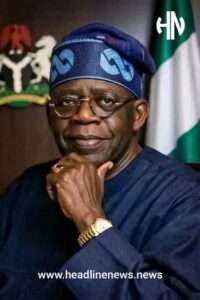
President Tinubu carries responsibility for supporters, critics and undecided citizens alike. Nigerians should approach government neither as unquestioning spectators nor permanent adversaries, but as partners entitled to demand performance while contributing to national recovery.
Ministries should hold town halls, publish simplified budgets and project dashboards, communicate in local languages and provide effective complaint channels. Citizens should know what government is doing, what projects cost and who is accountable.

CITIZENS CANNOT OUTSOURCE NATION-BUILDING
Nigerians rightly condemn corruption in government, but dishonesty is not confined to public office.
A trader who cheats, a contractor using inferior materials, an employer withholding wages, an absentee worker collecting salary, a professional falsifying records and a citizen offering a bribe all weaken Nigeria.
We cannot demand integrity while celebrating unexplained wealth or condemn public theft while admiring private dishonesty.
Fraud, cybercrime, cultism, drug abuse, kidnapping and violence destroy citizens and damage Nigeria’s reputation.
The citizen reset begins when honesty stops being regarded as weakness and wrongdoing stops receiving social approval.
CITIZENS MUST NOT EXPLOIT ONE ANOTHER
There is another uncomfortable reality: Nigerians sometimes increase one another’s hardship.
Government may stabilise economic conditions or improve supply, but households will not receive the full benefit if traders, service providers, cartels or market associations exploit scarcity or manipulate prices.
The Federal Competition and Consumer Protection Commission has uncovered troubling practices. In February 2026, an FCCPC investigation reported patterns of price manipulation by some domestic airlines during the Christmas period. In August, another investigation found indications of possible manipulation of cement prices despite Nigeria’s significant domestic production capacity.
A businessman is entitled to profit. Legitimate profit, however, differs from exploiting another Nigerian’s vulnerability.
Government must strengthen consumer protection and competition enforcement. Businesses and citizens must recognise that economic patriotism includes refusing to profit unconscionably from another citizen’s hardship.

The social contract therefore exists not only between government and citizens, but among citizens themselves.
We cannot build a vibrant nation by exploiting one another.
PROTECTING WHAT BELONGS TO ALL
Vandalism steals from everyone. Damaged railway equipment, power cables, streetlights, telecommunications and petroleum infrastructure must be replaced with money that could finance hospitals, schools and roads.
Communities should monitor public infrastructure, report vandalism and demand prosecution. Citizens should pay lawful taxes, maintain sanitation, conserve utilities and respect public spaces.
A Yoruba proverb says, “Ọ̀wọ́ kan kò gbé ẹrù d’órí”—one hand cannot lift a load onto the head.
Government carries the constitutional burden of leadership, but nation-building requires many hands.
Patriotism is not performed only through flags and slogans. It is demonstrated through daily conduct when nobody is watching.
FAITH SHOULD BUILD CHARACTER, NOT BECOME A CAMPAIGN PLATFORM
Nigeria’s religious institutions possess enormous influence. Churches, mosques and other faith communities reach millions of citizens every week.
That influence should help cultivate God-fearing conduct, honesty, compassion, discipline, peaceful coexistence, respect for law and service to country.
Religious leaders have every right to speak against injustice and address moral issues affecting society. But moral guidance is different from using religious authority to direct worshippers towards or against political candidates.
The pulpit should not become a campaign platform.
Other democracies recognise versions of this distinction. In the United States, tax-exempt organisations under section 501(c)(3), including churches, cannot intervene in political campaigns for or against candidates, although religious leaders remain free to address public-policy questions and express personal political opinions outside their institutional roles. In England and Wales, charities may campaign on issues connected to their charitable purposes but must remain independent of party politics and cannot support political parties or candidates.
Nigeria need not copy another country blindly. The principle is what matters: religious freedom must be protected, but institutional religious authority should not become an instrument for partisan electoral direction.
Our religious organisations can make an enormous contribution by counselling members against corruption, fraud, drug abuse, exploitation, violence, intolerance and dishonesty.
A congregation filled with honest traders, conscientious professionals, responsible parents and compassionate employers may contribute more to national renewal than one repeatedly instructed whom to vote for.
Faith should strengthen conscience. Politics should remain the free democratic choice of the citizen.
UNITY IS A CIVIC RESPONSIBILITY
Nigeria cannot achieve economic renewal while ethnic, religious and regional identities are weaponised against national purpose.
No Nigerian should be denied dignity, justice or opportunity because of origin, faith, language or political affiliation.
Leaders must practise inclusion, but citizens must also reject prejudice. Social media should not become an arena where tribal insults, misinformation and threats are normalised.
The country belongs equally to every Nigerian. National unity begins when we defend another citizen’s rights as firmly as our own.
REBUILDING NATIONAL CHARACTER
Civic renewal begins at home and school. Parents must guide children towards responsible citizenship. Schools should teach civic duties, digital responsibility, conflict resolution and respect for national assets.
Religious leaders, entertainers and influencers should stop glorifying fraud, violence and unexplained wealth.
The National Orientation Agency and other institutions should sustain nationwide civic education in English, Pidgin and indigenous languages. Electronic, audiovisual, print and digital media, including Headlinenews.news, should participate.
Success must be measured not by slogans produced, but by behaviour changed: reduced vandalism, improved tax compliance, greater volunteerism, responsible online conduct and stronger civic participation.
National Patriots, civil society and the media equally have a duty to inform citizens accurately, recognise positive examples and challenge misconduct regardless of who commits it.
CONSTRUCTIVE PARTNERSHIP
Partnership does not remove the citizen’s right to criticise government. It makes criticism more responsible and solutions-oriented.
Constructive citizens verify information, distinguish evidence from propaganda, monitor budgets, vote responsibly, report wrongdoing and propose alternatives.
Government needs citizens to expose weak implementation, exclusion, abandoned projects and corrupt intermediaries. Honest feedback strengthens governance.
President Tinubu can provide leadership, but no President can personally transform the conduct of more than 200 million people.
Nigeria must rediscover collective responsibility.
THE NATIONAL COMPACT
Government must lead competently, spend transparently, enforce laws fairly, protect vulnerable people and deliver services. Citizens must act honestly, protect public assets, reject crime, refuse exploitation, respect one another and engage constructively.
President Tinubu has taken difficult steps to change Nigeria’s direction. Nigerians should support reforms serving the national interest while helping ensure their implementation becomes compassionate, transparent and effective.
Government can construct the road. Citizens must refuse to vandalise it.
Government can fight inflation. Businesses must refuse to exploit consumers.
Government can create opportunity. Citizens must use it productively.
Religious institutions can shape conscience without dictating political choice.
Government can design reform. Only an engaged, disciplined, honest and united people can transform reform into national greatness.
That is the Citizen Reset. That is the responsibility of every Nigerian. And that is how we shall build the vibrant nation we deserve.
FOOD FOR THOUGHT
“Patriotism is not what we demand from Nigeria; it is what we refuse to do against Nigeria.”
— Princess Gloria Adebajo-Fraser, MFR
THE NATIONAL PATRIOTS’ POSITION
The National Patriots believes Nigeria faces a serious deficit of patriotic ideals across professions, sectors and social groups. It appears in corruption, theft, vandalism, fraud, tax evasion, sabotage, cultism, ethnic hostility, religious intolerance, professional dishonesty, narcotics abuse, aversion to productive work, exploitation of fellow citizens and indifference to the common good.
No reform can deliver its full gains while citizens undermine the systems intended to serve them.
We call on government, the National Orientation Agency, schools, families, religious and traditional institutions, civil society, businesses and the media to lead a sustained, non-partisan reawakening of patriotism.
Honesty, unity, productive work, national service and protection of public property must again become respected social values.
Patriotism means loyalty to Nigeria, constructive engagement with government and rejection of conduct that sabotages progress.
President Tinubu can lead the Great Reset, but its success depends upon Nigerians joining hands with government—and with one another—to create a patriotic, disciplined, compassionate and engaged citizenry.
Princess Gloria Adebajo-Fraser, MFR
President, The National Patriots
Former Special Adviser to President Goodluck Jonathan, GCFR
Vice-Chairman, Strategic Communications Committee, Buhari PCC 2019
Member, Strategy Committee, Presidency, 2023.




