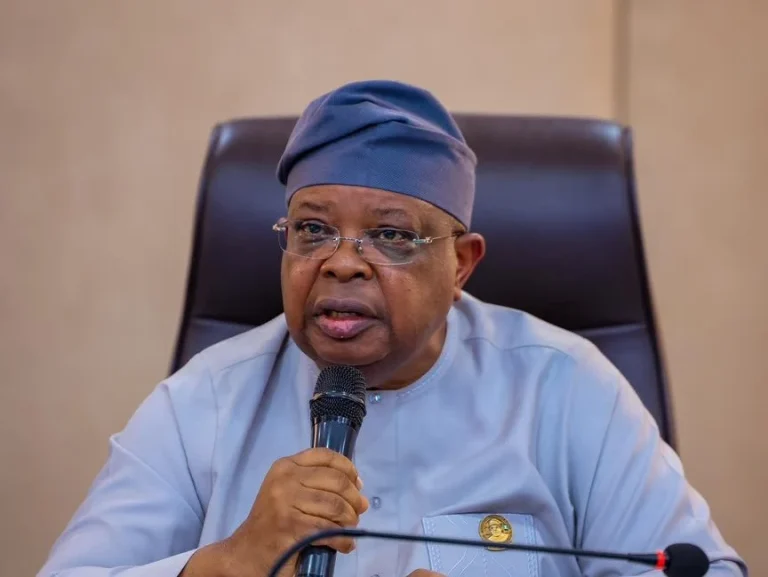
Nigeria’s Minister of Power, Joseph Tegbe, has said the Federal Government can no longer continue to bear the financial burden of electricity tariff shortfalls while striving to provide reliable electricity to all Nigerians.

Tegbe made this known at an energy conference organised by the Harvard Business School Association of Nigeria in Lagos, where industry experts and regulators discussed the challenges facing the country’s power sector.
He explained that persistent problems, including poor revenue collection, inadequate metering, mounting debts owed to electricity generation companies and structural weaknesses in the electricity market, were contributing to the sector’s difficulties.
According to the minister, electricity pricing must reflect commercial realities, but consumers’ payments must also be collected efficiently to ensure that operators can recover their costs and sustain supply.
He said the government was working with the Nigerian Electricity Regulatory Commission to review the electricity market structure and tariff assumptions.

Tegbe also questioned the continued operation of the Nigerian Bulk Electricity Trading company, which purchases electricity in bulk from generation companies and resells it to distribution companies. He argued that the existing arrangement had encouraged inefficiencies and should give way to a more commercially sustainable model.
The minister said the government intended to promote bilateral electricity agreements, allowing power producers to supply distribution companies or customers under agreed commercial terms. He cited Mainstream Energy Solutions’ supply arrangements with the Abuja and Ikeja electricity distribution companies as examples of the approach.
Addressing the metering challenge, Tegbe disclosed that Nigeria currently had a metering gap of about 40 per cent. He said the government had deployed more than 700,000 meters across the country in the preceding six months, with plans to install 7.5 million additional meters over the next two to three years.

He added that technical, commercial and collection losses across the electricity value chain exceeded 44 per cent, leaving the sector unable to recover sufficient revenue from electricity supplied to consumers.
These challenges, he said, had contributed to the approximately ₦3.3 trillion in accumulated debts owed to power generation companies. The government had reportedly paid between ₦1.2 trillion and ₦1.3 trillion through its debt-settlement initiative and intended to complete the payments by 2027.
Tegbe further disclosed that the government was considering independent transmission lines to connect underutilised power plants with industrial clusters where electricity demand was high.
He cited power plants in the Niger Delta region, including Alaoji, which were designed to generate a combined 3,000 megawatts but were reportedly producing only about 400 megawatts.

The minister said the government was also reviewing transmission infrastructure, conducting technical audits and prioritising investments in areas with the greatest electricity demand.
Meanwhile, energy expert Gbite Adeniji said resolving the sector’s financial crisis would require the government to settle outstanding debts and strengthen the financial position of Nigerian Bulk Electricity Trading to enable it to meet its obligations to power producers and gas suppliers.
Adeniji warned that payment difficulties affecting gas suppliers were disrupting the entire electricity value chain and discouraging investment in new power generation facilities. He also called for stronger regulatory oversight of gas prices to prevent inefficiencies in procurement from being passed on to electricity consumers.
The Chief Executive of the Nigerian Upstream Petroleum Regulatory Commission, Oritsemeyiwa Eyesan, said outstanding debts, gas pricing challenges and payment collection difficulties had continued to affect the sector. She noted that debt-resolution measures and the government’s bond initiative were helping to address some of the outstanding obligations.
Eyesan also highlighted the completion of the OB3 gas pipeline as a significant development for improving gas distribution from southern Nigeria to the northern part of the country.
In a separate comment, the Chief Executive of the Nigerian Midstream and Downstream Petroleum Regulatory Authority, Rabiu Umar, dismissed suggestions of friction between the two petroleum regulators. He said both agencies were working together to improve the investment environment and support the development of gas infrastructure.
The government’s proposed reforms are aimed at addressing the financial and operational weaknesses of Nigeria’s electricity market. However, their impact on electricity supply, tariffs and consumers will depend on how effectively the measures are implemented.