

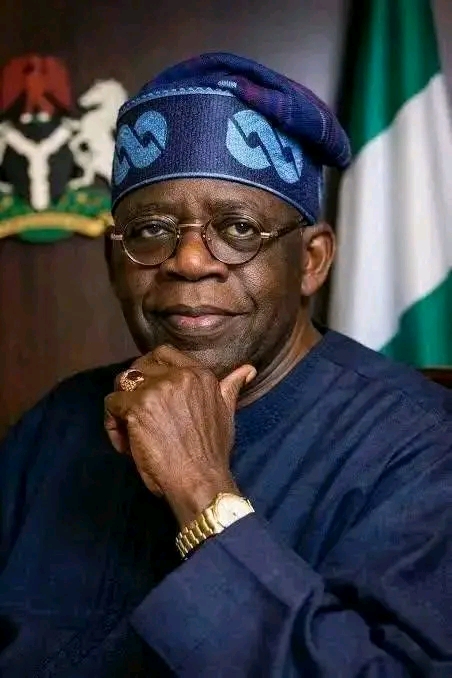
President outlines investment priorities in roads, ports, power and rail, insisting that economic reforms must now deliver jobs and better living standards
Headlinenews.News | October 30, 2026
President Bola Ahmed Tinubu has outlined a new phase of his administration’s economic programme, placing infrastructure delivery, productive borrowing and measurable improvements in Nigerians’ living standards at the centre of the drive towards a $1 trillion economy by 2030.
In an essay titled “From Reforms to Delivery: Our Infrastructure Investment and Growth Strategy,” published on October 29 and 30, the President argued that the difficult reforms introduced since 2023 must now translate into completed projects, stronger industries and lasting employment opportunities.
His central proposition is that public debt should increasingly finance productive assets rather than recurring expenditure or short-term fiscal pressures. Roads, ports, electricity networks and railways, he argued, can generate economic benefits long after the loans used to finance them have been repaid.
REFORMS AND ECONOMIC INDICATORS
Tinubu pointed to fuel subsidy removal, exchange-rate unification and tax changes as foundations of the administration’s economic recovery strategy.
Citing official economic figures, he said real GDP expanded by 4.43% in the second quarter of 2026, while headline inflation declined to 14.63% in September. Food inflation remained higher at 19.59%, illustrating the continued pressure on household budgets.
The President also reported gross external reserves of $55.1 billion as of October 9, including approximately $46 billion in net reserves. He said the tax-to-GDP ratio had increased from 7% to 12.5%, while net Federation Account allocations rose from ₦15.2 trillion in 2024 to ₦21.9 trillion in 2025.
These indicators form the administration’s case that improving fiscal capacity and investor confidence can support a more ambitious infrastructure programme. They do not, by themselves, mean that the cost-of-living challenge has been resolved.
BORROWING FOR PRODUCTIVE INVESTMENT
The President identified the Lagos–Calabar Coastal Highway, Sokoto–Badagry Superhighway, Trans-Sahara corridor, electricity grid improvements and Lagos port modernisation among the administration’s principal investment priorities.
He also highlighted hospitals, education and vocational training as essential parts of the broader development strategy.
According to his projections, the Lagos–Calabar corridor could reduce logistics costs by 15–20% and create substantial direct and indirect employment. These are anticipated benefits, dependent on project completion, financing and wider economic conditions, rather than jobs or savings already delivered.
The President acknowledged that debt service was approximately 65% of revenue in the first half of 2026, even as public debt stood at 35.75% of GDP in the second quarter. Those figures underscore the need for careful project selection, transparent financing and demonstrable returns.
He further advocated longer-term financing arrangements suited to infrastructure expected to serve the country for decades.
INTERNATIONAL CONFIDENCE AND DOMESTIC DELIVERY
Tinubu cited positive developments involving international credit rating agencies, Nigeria’s removal from the Financial Action Task Force grey list and renewed investor interest as signs of improved financial credibility.
Such developments can expand financing opportunities, but they do not eliminate borrowing risks. The decisive question remains whether investment is efficiently deployed and generates the growth required to service debt sustainably.
The Federal Executive Council’s next-stage priorities, as outlined by the President, include food affordability and energy-price stability, fiscal discipline, completion of high-impact projects, regulatory efficiency and targeted support for households and human development.
For Nigerians, the practical test will be whether infrastructure reduces transport and food costs, improves electricity reliability, expands access to markets and creates sustainable employment.
FROM POLICY TO RESULTS
The President’s argument reflects an important distinction in economic management: borrowing can be justified where projects are viable, transparently procured and capable of producing lasting public value. Equally, borrowing for poorly executed projects can deepen fiscal pressure without delivering promised benefits.
A credible delivery programme therefore requires published project milestones, realistic cost assessments, independent oversight and clear reporting on completion and economic impact.
Nigeria’s infrastructure deficit is substantial, and delaying essential investment carries its own economic costs. But the strongest defence of borrowing will ultimately be completed roads, functional ports, reliable power and opportunities experienced by citizens.
For the Tinubu administration, the next phase of reform will be judged not only by improving economic indicators or access to capital, but by how effectively those gains are converted into lasting national prosperity.
HEADLINENEWS.NEWS