

National Security, Cost Savings, Climate Commitments and Public Health Strengthen the Case for Solar Power at the Presidential Villa
By Princess Gloria Adebajo-Fraser, MFR
November 2, 2026
“Government or private sector commitments to net-zero cannot be a mere public relations exercise.”
— António Guterres, United Nations Secretary-General
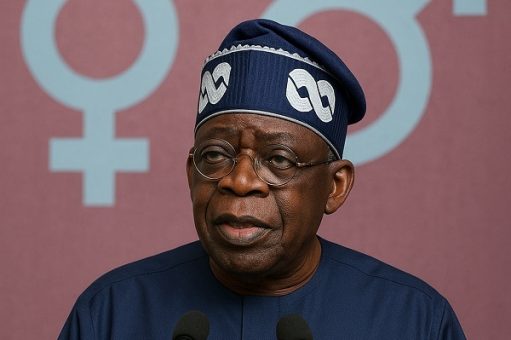
President Bola Ahmed Tinubu’s decision to introduce solar electricity at the Presidential Villa should be examined beyond the suggestion that disconnecting Aso Rock from the national grid will make more electricity available to Nigerians.

The stronger justification lies in national security, uninterrupted government operations, reduced public expenditure, environmental protection and Nigeria’s international climate commitments.
For a country confronting persistent electricity shortages and security challenges, establishing a dependable, independently managed power system at the seat of government has strategic significance.
Leadership by example begins with government practising the policies it promotes.
NATIONAL SECURITY: WHY ENERGY INDEPENDENCE MATTERS
The Presidential Villa accommodates critical communications, security coordination, administrative operations and emergency response facilities requiring uninterrupted electricity.

A properly designed solar mini-grid, supported by battery storage, secure controls and backup systems, can reduce dependence on external electricity suppliers and exposure to national grid failures.
For a country confronting terrorism, banditry and other security threats, continuity of electricity at the Presidency is an important component of institutional resilience.
Solar technology alone cannot eliminate every vulnerability. Nevertheless, a diversified, independently managed electricity system can strengthen operational reliability and national security.
NIGERIA’S CLIMATE OBLIGATIONS AND TINUBU’S COMMITMENT
Nigeria is a signatory to the United Nations Framework Convention on Climate Change and a party to the Paris Agreement, ratified in 2017.

Its Climate Change Act 2021 establishes a domestic framework for climate action, while Nigeria has adopted the ambition of achieving net-zero greenhouse gas emissions by 2060.
These international commitments require sustained domestic measures, emissions reporting and progressively stronger climate policies.
At a United Nations climate dialogue in April 2025, President Tinubu declared:
“For Nigeria, the urgency of this moment is clear: we view climate action not as a cost to development, but as a strategic imperative.”
The President had earlier identified solar and alternative energy investments as development priorities at COP28 in Dubai in December 2023.

MILLIONS OF GENERATORS: THE HIDDEN ENVIRONMENTAL COST
Consider the enormous volume of carbon dioxide emitted daily by millions of petrol and diesel generators powering Nigeria’s factories, industries, hospitals, universities, hotels, government offices, commercial establishments and residential communities.
Generator emissions contribute to climate change, while exhaust pollutants threaten respiratory health and environmental quality.
A 2024 Sustainable Energy for All study, conducted with Lagos State, estimated approximately 4.5 million fossil-fuel generator sets in Lagos alone, producing an estimated 39 million tonnes of carbon dioxide-equivalent emissions annually.
These are study estimates, but they illustrate the magnitude of the challenge.
Imagine the cumulative environmental burden across Nigeria’s 36 states and the Federal Capital Territory.

Beyond the enormous expenditure on diesel, petrol and maintenance, widespread generator dependence presents a serious public-health and environmental challenge.
Reducing that dependence through reliable solar systems and improved national electricity infrastructure is essential to Nigeria’s long-term climate objectives.
CLEAN ENERGY IN GOVERNMENT: AFRICAN AND GLOBAL PRECEDENTS
Governments worldwide increasingly incorporate renewable energy into public infrastructure.
Ghana: Its Government Goes Solar initiative promotes solar installations and energy efficiency across public institutions to reduce electricity expenditure.
South Africa: Cape Town has deployed solar systems across municipal facilities, including electricity depots and wastewater infrastructure.
Kenya: In July 2026, the government commissioned a solar-hybrid installation at Nairobi’s Remand and Allocation Maximum Security Prison.


United States: Solar technology has featured at the White House under successive administrations, beginning with President Jimmy Carter in 1979.
United Kingdom: Renewable energy programmes cover parliamentary facilities, schools, National Health Service institutions and military establishments.
Germany and India: Germany’s Bundestag complex incorporates renewable energy systems, while India has installed rooftop solar capacity across thousands of government buildings.
These examples demonstrate that adopting clean energy within government institutions is an established international practice.
THE FINANCIAL CASE: FROM EXPENDITURE TO SAVINGS
The Presidential Villa solar mini-grid received a ₦10 billion allocation in the 2025 budget, with another ₦7 billion proposed for 2026.
The State House budgeted approximately ₦1.99 billion for generator diesel in 2025, while reported electricity expenditure reached ₦483.34 million in 2024.

Project officials estimated annual energy expenditure at approximately ₦6 billion, projecting that solar electricity could reduce costs to below ₦1.2 billion annually.
That represents potential annual savings exceeding ₦4.8 billion, although actual savings require verification.
Against combined project allocations of ₦17 billion, the investment could theoretically recover its initial cost within approximately four years if the projected savings materialise. This calculation excludes financing costs and additional lifecycle expenses.
State House Permanent Secretary Temitope Fashedemi reported in February 2026 that the State House Medical Centre had operated predominantly on solar electricity and battery storage since May 2025.

The experience demonstrates the operational possibilities of cleaner electricity, although the Villa’s full financial performance should be independently assessed.
Claims of ₦47 billion in annual electricity expenditure also require reconciliation with published budget records.
SOLAR POWER ALREADY REACHING UNIVERSITIES AND HOSPITALS
Importantly, the Federal Government’s renewable energy investments extend beyond Aso Rock.
Through the Rural Electrification Agency’s Energising Education Programme, solar-hybrid installations have been developed for federal universities and teaching hospitals.
Beneficiary institutions include the University of Maiduguri and Teaching Hospital, University of Calabar and Teaching Hospital, Federal University of Agriculture, Abeokuta, University of Abuja and Nigerian Defence Academy.

The Federal Ministry of Education has identified additional tertiary institutions for renewable energy support under the Renewed Hope Energising Education Programme.
These investments address genuine operational needs. Hospitals require uninterrupted electricity for life-saving equipment, while universities depend on reliable power for research, laboratories and teaching.
The Electricity Act 2023 also provides an expanded framework for decentralised electricity investment, complementing improvements required in national generation, transmission, distribution and metering.
At the United Nations General Assembly in September 2026, Tinubu rejected the “false choice between development and climate action.”
The Presidency’s solar initiative can be evaluated against that principle through measurable savings, dependable electricity, reduced generator emissions and stronger public infrastructure.
Leadership by example becomes meaningful when policies demonstrated at the Presidency are implemented across institutions serving the Nigerian people.

THE NATIONAL PATRIOTS’ POSITION
The National Patriots commend President Bola Ahmed Tinubu’s renewable energy initiatives and Nigeria’s net-zero ambition for 2060. As a chartered accountant, he understands the importance of curbing wasteful expenditure amid economic hardship. We recognise the environmental, public-health and national-security benefits of reducing dependence on fossil-fuel generators. We particularly commend the Federal Government’s solar installations in universities, teaching hospitals and other public institutions. These investments demonstrate leadership by example and should deliver reliable electricity, measurable savings and sustainable development for Nigerians.
Princess Gloria Adebajo-Fraser, MFR, MBA, FIPMD, is an International Governance and Perception Management Consultant, President of the National Patriots Movement, Publisher of Headlinenews.News, and author of Nigeria’s Great Reset: Rebuilding Today for a Prosperous Tomorrow. She previously served as Special Adviser on Strategy and Planning to President Goodluck Jonathan.
Presently a Member of the APC-PCC Strategic Communications Committee.




