

From Macroeconomic Stabilisation to Household Prosperity: Social Protection, New Opportunities and the Next Phase of Reform
By Princess Gloria Adebajo-Fraser, MFR
An economic foundation is not a finished house. Neither should the difficulties of reconstruction be mistaken for the final outcome.
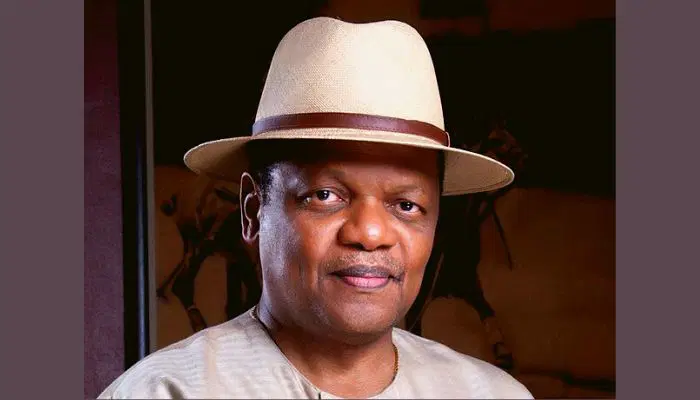
Atedo Peterside, a Nigerian economist and investment banker who founded IBTC Bank in 1989, argues that President Bola Ahmed Tinubu’s reforms are making the rich richer and the poor poorer. His concern about inequality merits examination. But his sweeping verdict leaves out important evidence and the intended sequence of reform.
Hardship is real. Workers, pensioners, middle-income families, manufacturers, traders and business owners face high living costs. The question is whether today’s difficulties tell the whole story.
WORLD BANK: POVERTY RATE STABILISED
The World Bank’s October 2026 Nigeria Development Update reports that Nigeria’s poverty rate stabilised for the first time since 2019, following years of deterioration. It also records first-half real GDP growth of 3.5% in 2024, 3.9% in 2025 and 4.2% in 2026. Services drove much of this expansion, with agriculture contributing more strongly.

Poverty remains a serious challenge. Nevertheless, this finding matters when assessing Peterside’s unqualified claim about the direction of economic welfare.
FIRST BUILD THE CAPACITY TO FUND DEVELOPMENT
Peterside risks putting the cart before the horse by treating early financial-market gains as the final measure of a multi-stage reform programme.
The administration initially confronted petrol-subsidy expenditure, foreign-exchange distortions, weak revenues and fiscal pressures. These adjustments imposed real costs, but aimed to strengthen stability and financing for productive investment.
Where will sustained funding for cash transfers, student financing, healthcare, irrigation, affordable transport and infrastructure come from without dependable public revenues?
Vulnerable citizens need assistance during adjustment, not merely afterwards. Yet durable social protection also requires fiscal capacity. Increased federation revenues give states greater responsibility to translate allocations into public services.

PRESIDENT TINUBU’S HUMAN-DEVELOPMENT VISION
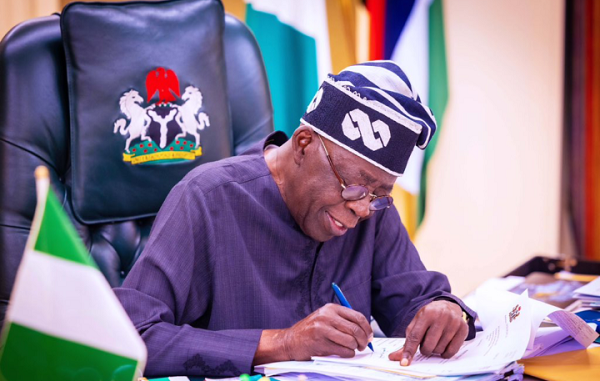
In his Independence Day address on 1 October 2026, President Tinubu declared:
“When I speak of prosperity, I do not speak merely of a larger economy, abstract numbers or better statistics. I mean something much more personal.”
His stated ambition includes productive jobs, affordable essentials, better education and improved household welfare. Macroeconomic statistics are instruments, not the destination.
On 22 October, the National Economic Council endorsed a 90-day cost-of-living plan presented by Finance Minister Taiwo Oyedele. It addresses food affordability, tax harmonisation, high-impact projects, investment bottlenecks and targeted household support, alongside proposals to pass cleaner-transport savings to commuters. Its effectiveness will depend on delivery.
CASH TRANSFERS, SKILLS AND EDUCATION
The Federal Government reported in March 2026 that 9,178,837 households had received an initial ₦75,000 cash-transfer payment, with subsequent payments continuing. On 30 October, the Ministry of Humanitarian Affairs announced a separate ₦50,000 relief intervention for eligible vulnerable households.
Student financing through NELFUND, consumer-credit initiatives, including SPARK USSD, and tax relief for qualifying low-income earners and small businesses form additional elements of the support framework. Credit is repayable, not a grant. Regional development commissions offer further channels for investment in underserved communities.
The World Bank reports that social protection increased from 1.4% of state expenditure in 2021 to 4.4% in 2025. Spending commitments matter, although beneficiaries’ outcomes remain the ultimate measure.
The tuition-free Technical and Vocational Education and Training programme provides practical skills for employment and enterprise. Education Minister Tunji Alausa reported in October that more than 250,000 Nigerians were undergoing training, with a reported ₦30,000 monthly trainee stipend.
Communications Minister Bosun Tijani reported that the 3 Million Technical Talent programme had trained over 135,000 Nigerians, with more than 300,000 additional learners accessing resources and approximately 15,000 employment or opportunity pathways supported. More than 1.8 million were in the programme pipeline. Training and pathways should not be confused with confirmed permanent jobs.
On school access, Alausa reported in May that over one million street children had returned to classrooms nationwide over 30 months. That is a government-reported national figure, not an independently established three-year reduction across northern states; UNICEF continues to document serious educational exclusion in the North.
OPPORTUNITIES BEYOND THE STOCK MARKET
A focus confined to shareholders misses enterprise in technology, entertainment, hospitality, fashion and the creative arts. Lagos ranked first in Dealroom’s 2025 Rising Stars technology-hub category.

Lagos’s 2024 Detty December tourism and entertainment economy generated an estimated $71.6 million. An industry report estimated ₦396.54 billion in consumer spending during the 2025 festive season, including ₦175.4 billion in hospitality and accommodation and ₦129.55 billion in entertainment and nightlife.
This spending supports hotels, restaurants, event organisers, musicians, caterers, designers, makeup artists, hairstylists, photographers, transport operators and other service providers. Funke Akindele’s three major film releases between 2023 and 2025 generated approximately ₦5.39 billion in reported box-office receipts.
Successful entertainers and entrepreneurs can acquire homes and vehicles, educate relatives, support parents and assist extended families. These commercial successes are not confined to bank shareholders. Spending and box-office receipts are not individual profits, however, and these industries developed over many years, continuing to expand during Tinubu’s presidency.
High living costs still constrain household purchasing power. That is precisely why the 90-day affordability plan deserves close attention.
COMPARATIVE ANALYSIS: STABILISATION AND SOCIAL INVESTMENT
Indonesia’s fuel-subsidy reforms illustrate how governments can redirect fiscal resources towards household assistance and development, using targeted transfers during adjustment. Brazil’s macroeconomic stabilisation preceded the expansion and consolidation of major social programmes, including Bolsa Família.
Both experiences connect fiscal management with social protection rather than treating them as competing objectives.
Former World Bank President Robert McNamara described economic growth and poverty reduction as connected goals:
“The two goals are intrinsically related, though governments are often tempted to pursue one without adequate attention to the other.”
NATIONAL PATRIOTS’ POSITION
Can Peterside reasonably portray the administration as simply making Nigerians poorer without considering the World Bank’s poverty-stabilisation finding, household transfers, tuition-free skills programmes, growing creative enterprise and the cost-of-living action plan?

For an economist and investment banker of his standing, this is a disappointingly one-sided assessment. The National Patriots considers his formulation biased in presentation and unjustified in its sweeping conclusion. It echoes familiar opposition propaganda, although that resemblance does not establish his motives or political allegiance. Nigerians are entitled to expect greater analytical depth and intellectual fairness from someone with his professional experience.
President Tinubu’s administration has pursued short-term relief alongside medium-term investments in skills, education, productivity and infrastructure. It would be inaccurate to claim that every possible remedy has been exhausted, or that hardship has disappeared. The proper test is whether these programmes produce sustained improvements in living standards.
Our forthcoming book, Nigeria’s Great Reset: Rebuilding Today for a Prosperous Tomorrow, examines the transition costs and the pathway from recovery to household prosperity.
The first phase sought to stabilise Nigeria’s economy. The next must make that stability count in Nigerian homes. Economic transformation cannot happen overnight; it requires sustained financing, execution and measurable results.
Princess Gloria Adebajo-Fraser, MFR, MBA, MIoD, FIPMD
International Governance and Perception Management Consultant. Former Special Adviser on Strategy and Planning to President Goodluck Jonathan; member of the Presidency’s Strategy Committee in 2023; member of the APC Presidential Campaign Council Strategic Communications Team; President, National Patriots.