

From Macroeconomic Stabilisation to Household Prosperity: Social Protection, New Opportunities and the Next Phase of Reform
By Princess Gloria Adebajo-Fraser, MFR, MBA, MIoD, FIPMD
An economic foundation is not a finished house. Neither should the difficulties of reconstruction be mistaken for the final outcome.
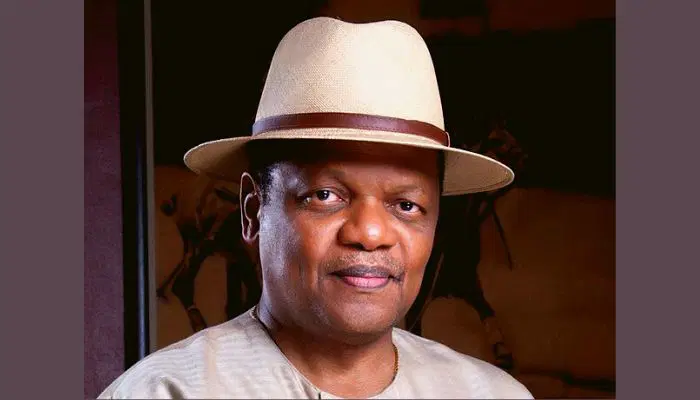
Atedo Peterside, a Nigerian economist and investment banker who founded IBTC Bank in 1989, argues that President Bola Ahmed Tinubu’s reforms are making the rich richer and the poor poorer. His concern about inequality merits examination. His sweeping conclusion, however, leaves out important evidence and the intended sequence of the administration’s reforms.
Hardship is real. It affects low-income workers, middle-income families, pensioners, manufacturers, traders and business owners. But hardship is not exclusive to the poor, and financial-market gains alone cannot describe the entire economy.
WORLD BANK: POVERTY RATE STABILISED
The World Bank’s October 2026 Nigeria Development Update reports that Nigeria’s poverty rate stabilised for the first time since 2019, after years of deterioration. That is a material finding when assessing an unqualified claim that the poor are becoming poorer.
The Bank also reports first-half real GDP growth of 3.5% in 2024, 3.9% in 2025 and 4.2% in 2026. Services remained a major driver, while agriculture contributed more strongly. These figures show an improving growth trajectory alongside a change in the national poverty trend.
Poverty remains a serious challenge. Yet an accurate assessment must acknowledge the evidence of stabilisation rather than present economic deterioration as the whole story.
FIRST BUILD THE CAPACITY TO FUND DEVELOPMENT
Peterside risks putting the cart before the horse by treating the early distribution of financial gains as the final measure of a reform programme still being implemented.
The initial reforms addressed petrol-subsidy expenditure, foreign-exchange distortions, fiscal pressures and weak government revenues. Their costs have been felt widely. Their purpose was to strengthen economic stability and create dependable capacity for investment and social spending.
Where will sustained funding for cash transfers, student financing, healthcare, irrigation, affordable transport and infrastructure come from without stronger revenues and fiscal capacity?
This does not mean vulnerable citizens should wait for relief until stabilisation is complete. Support is necessary during adjustment. But sustained social protection requires sustainable financing. The World Bank reports increased revenues available to states, creating opportunities—and responsibilities—for governments to improve public services.
PRESIDENT TINUBU’S HUMAN-DEVELOPMENT VISION
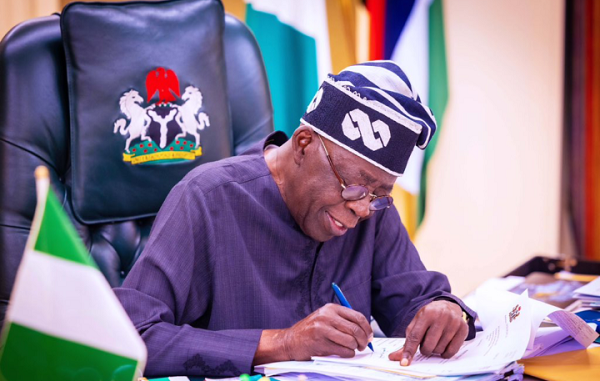
In his Independence Day address of 1 October 2026, President Tinubu said:
“When I speak of prosperity, I do not speak merely of a larger economy, abstract numbers or better statistics. I mean something much more personal.”
The point is that economic statistics are instruments, not the destination. The administration’s stated ambition includes affordable food and transport, productive jobs, education and greater opportunities for households.

On 22 October 2026, the National Economic Council endorsed a 90-day cost-of-living action plan covering food affordability, tax harmonisation, completion of high-impact projects, investment bottlenecks and targeted household support. The Council also addressed how savings from cleaner transport could reach commuters through lower fares.
These measures are commitments to implementation, not evidence that prices have already fallen. They demonstrate the policy shift towards household welfare.
SOCIAL PROTECTION IS PART OF THE PROGRAMME
Cash-transfer programmes for vulnerable households, student financing through NELFUND, consumer-credit initiatives and tax relief for qualifying low-income earners and small businesses form part of the social-intervention framework.
The SPARK USSD initiative aims to widen access to consumer credit, including for people without smartphones. Such credit is repayable, not a grant. NELFUND helps eligible students finance education, while regional development commissions provide institutional channels for infrastructure and livelihoods in underserved areas.
The World Bank reports that social protection increased from 1.4% of state expenditure in 2021 to 4.4% in 2025. This shows greater budgetary attention, although programme outcomes depend on delivery and reach.
The issue is therefore not whether social protection exists, but how effectively the next stage converts available resources into improved lives.
OPPORTUNITIES BEYOND THE STOCK MARKET
A narrow focus on shareholders misses significant activity in Nigeria’s digital, creative and service economies.
Lagos ranked first in Dealroom’s 2025 global Rising Stars technology-hub category. Software development, fintech, digital marketing, online commerce and content production are opening avenues for enterprise and skilled work.
Funke Akindele’s three major film releases from 2023 to 2025 generated approximately ₦5.39 billion in reported box-office receipts. Behind such productions are actors, editors, costume designers, makeup artists, hairstylists, photographers, caterers, drivers and marketing professionals. Fashion, hospitality and online entrepreneurship connect still more Nigerians to emerging markets.
These examples do not prove that everyone is wealthier or that all successes were caused by federal policy. They do show why economic opportunity cannot be measured through stock portfolios alone.
COMPARATIVE ANALYSIS: REFORM AND SOCIAL INVESTMENT
Indonesia’s fuel-subsidy reforms illustrate how fiscal resources can be redirected towards targeted household assistance and development priorities. Targeted transfers also helped protect vulnerable people during difficult price adjustments.
Brazil’s macroeconomic stabilisation in the 1990s preceded the later expansion and consolidation of major social-transfer programmes, including Bolsa Família. Stronger institutions and more dependable financing helped support broader social policy.
The lesson from both countries is sequencing with protection: stabilisation can expand the capacity to fund social programmes, while assistance during the transition helps households manage reform costs.
Former World Bank President Robert McNamara described economic growth and poverty reduction as connected objectives:
“The two goals are intrinsically related, though governments are often tempted to pursue one without adequate attention to the other.”
Growth and human development must reinforce each other.

NATIONAL PATRIOTS’ POSITION
The National Patriots invites Peterside to consider the administration’s complete programme: macroeconomic stabilisation and revenue recovery, followed by stronger delivery of social protection, lower living costs, productive employment and human development.
We also invite him to read the forthcoming Nigeria’s Great Reset: Rebuilding Today for a Prosperous Tomorrow, which examines the reforms, their transition costs and the pathway from economic recovery to household prosperity.

Peterside raises a legitimate concern about hardship. His formulation nevertheless requires qualification in light of the World Bank’s poverty-stabilisation finding, expanding areas of economic activity and the administration’s next-stage interventions.
The first phase sought to stabilise Nigeria’s economy. The next must make that stability count in Nigerian homes.
Economic stability creates capacity. Social protection must turn that capacity into opportunity and relief.
Princess Gloria Adebajo-Fraser, MFR, MBA, MIoD, FIPMD
International Governance and Perception Management Consultant. Former Special Adviser on Strategy and Planning to President Goodluck Jonathan; member of the Presidency’s Strategy Committee in 2023; member of the APC Presidential Campaign Council Strategic Communications Team; President, National Patriots.




