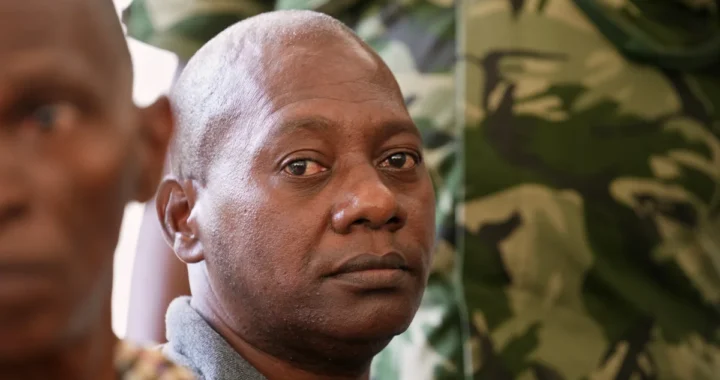
A Kenyan pastor, Paul Mackenzie, has been sentenced to 200 years in prison for his role in the deaths of 191 members of his church, whom he allegedly instructed to starve themselves to death in a bid to meet Jesus Christ.
Mackenzie, leader of the Good News International Church, received the sentence on Friday from the High Court in Mombasa, Kenya. He was convicted of murdering 190 children and one adult in connection with the deadly religious cult.

Justice Diana Kavedza, who delivered the judgment, said Mackenzie bore the primary criminal responsibility for relocating his followers to a remote area and directing them to undertake prolonged fasting until they died.
The pastor was prosecuted alongside 28 other members of the group, including guards accused of enforcing his fasting instructions and gravediggers who allegedly helped conceal the bodies in mass graves. All the defendants initially denied the charges, except one who reportedly confessed and pleaded for leniency.
On October 19, the court found all 29 defendants guilty of murdering the 191 victims.
The case is connected to the discovery of more than 400 bodies in 2023 at Chakama Ranch, an 800-acre property in Kilifi County, where followers of the church reportedly lived in mud huts, away from the attention of nearby communities and authorities.
More than 60 of the bodies were identified and buried by relatives, while several others remain unidentified and unclaimed.

During Friday’s sentencing, Justice Kavedza disclosed that 183 of the victims died from starvation, while the remaining eight were killed through direct homicide.
She described the killings as cold and calculated, rejecting arguments that the defendants’ personal losses, including the deaths of their own children, diminished their responsibility for the crimes.
The judge also noted that the convicted individuals had shown little remorse, with some reportedly expressing willingness to continue fasting until death.
Mackenzie’s assistant pastor, Smart Mwakalama, was sentenced to 160 years in prison.
The prosecution had sought the death penalty for Mackenzie and life imprisonment for his accomplices. However, the court handed down prison terms ranging from 160 to 200 years.

Lawrence Obonyo, the defence lawyer representing Mackenzie and some of the other convicted individuals, said an appeal had already been initiated. He questioned the legality of the lengthy sentences, arguing that they effectively amounted to life imprisonment.
All the convicted defendants were given 14 days to file appeals.
Meanwhile, one of the victims’ relatives, Suleiman Ziro, who travelled about 120 kilometres to attend the sentencing, said the punishment was insufficient. He disclosed that he lost six of his children and his wife to the cult in 2023 and called for the death penalty, particularly as the remains of some of his loved ones had yet to be recovered.

Mackenzie’s son, Dan Mackenzie, also reacted to his father’s conviction, saying he felt sorry for him but acknowledged that justice had been served to the victims.
He explained that he survived the group by rejecting his father’s teachings, a decision that reportedly subjected him to punishment. Two of his younger brothers and three sisters were later rescued and placed in a children’s home.
Kenya has not carried out an execution since 1987. Under the country’s judicial system, individuals sentenced to death serve life imprisonment when the death penalty is not carried out.