

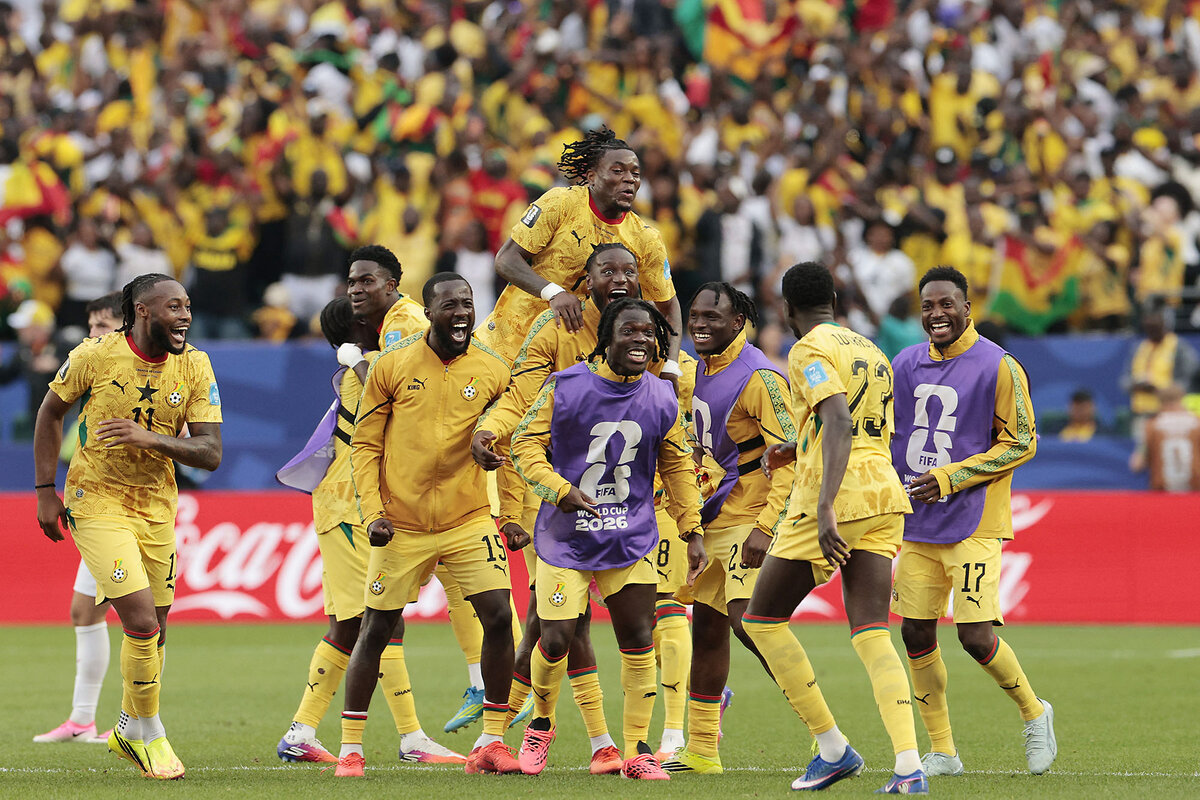
The expanded 2026 FIFA World Cup has become more than a football tournament for many people of African descent, serving as a celebration of heritage, identity, and the growing influence of African football on the global stage.
For Ghanaian-American Ed Owusu, football was never his first sporting passion after moving to the United States as a child in 1997. Inspired by Michael Jordan and the Chicago Bulls, basketball dominated his attention until Brazil’s memorable performance at the 2002 World Cup transformed his perspective.

His connection to the sport deepened even further when Ghana qualified for its first FIFA World Cup in 2006 and faced Brazil, sparking a lasting appreciation for football’s tactical depth and creativity.
The 2026 tournament has also highlighted Africa’s rising presence in world football following FIFA’s expansion from 32 to 48 participating nations. A record 10 African countries qualified for the competition, and nine of them progressed to the Round of 32, marking one of the continent’s strongest performances in World Cup history.

The achievement represents a significant milestone compared to previous tournaments, where African teams struggled to make deep runs, despite Morocco’s historic semi-final appearance in 2022.
Beyond the performances on the pitch, many members of the African diaspora see the tournament as an opportunity to celebrate their ancestry. Fans across the United States have embraced jerseys representing their family origins, even when their chosen teams were not participating in the matches they attended.
Alexis McCoy, who first experienced the FIFA World Cup during the 1994 tournament in the United States, attended this year’s competition with her family while proudly wearing a Côte d’Ivoire jersey. Her husband wore Nigeria’s colours, while her father represented Ghana, reflecting their family’s ancestral roots.

She said the jerseys sparked conversations with supporters from different countries and created meaningful connections through a shared appreciation of football and cultural identity.
McCoy also questioned how much stronger African national teams could become if more players of African descent chose to represent their ancestral countries instead of European nations.
She further noted the significance of Haiti’s return to the World Cup after more than five decades, describing it as an important achievement for the Caribbean nation.

The tournament has also produced memorable moments for first-time participants such as Cape Verde and Curaçao, whose qualification inspired widespread support from neutral fans.
Jamaican-born chemical engineer Natalee Bailey described the atmosphere during Cape Verde’s matches as a powerful demonstration of global unity, saying supporters from different nationalities rallied behind the underdog team.
Having travelled extensively, Bailey said the World Cup offers a unique environment where people from diverse backgrounds come together despite political differences between their governments.
She added that the tournament has also helped improve international perceptions of the United States by showcasing a welcoming environment for visitors from around the world.




