


Regional power politics, Atiku’s Southern electoral reach and Tinubu’s reform record challenge the ADC’s interpretation of the Sokoto rally.
By Princess Gloria Adebajo-Fraser, MFR
A crowded campaign ground is not a presidential mandate. Yet the African Democratic Congress (ADC) has presented the turnout at former Vice-President Atiku Abubakar’s Sokoto campaign flag-off as evidence that Nigerians are fed up with President Bola Ahmed Tinubu.
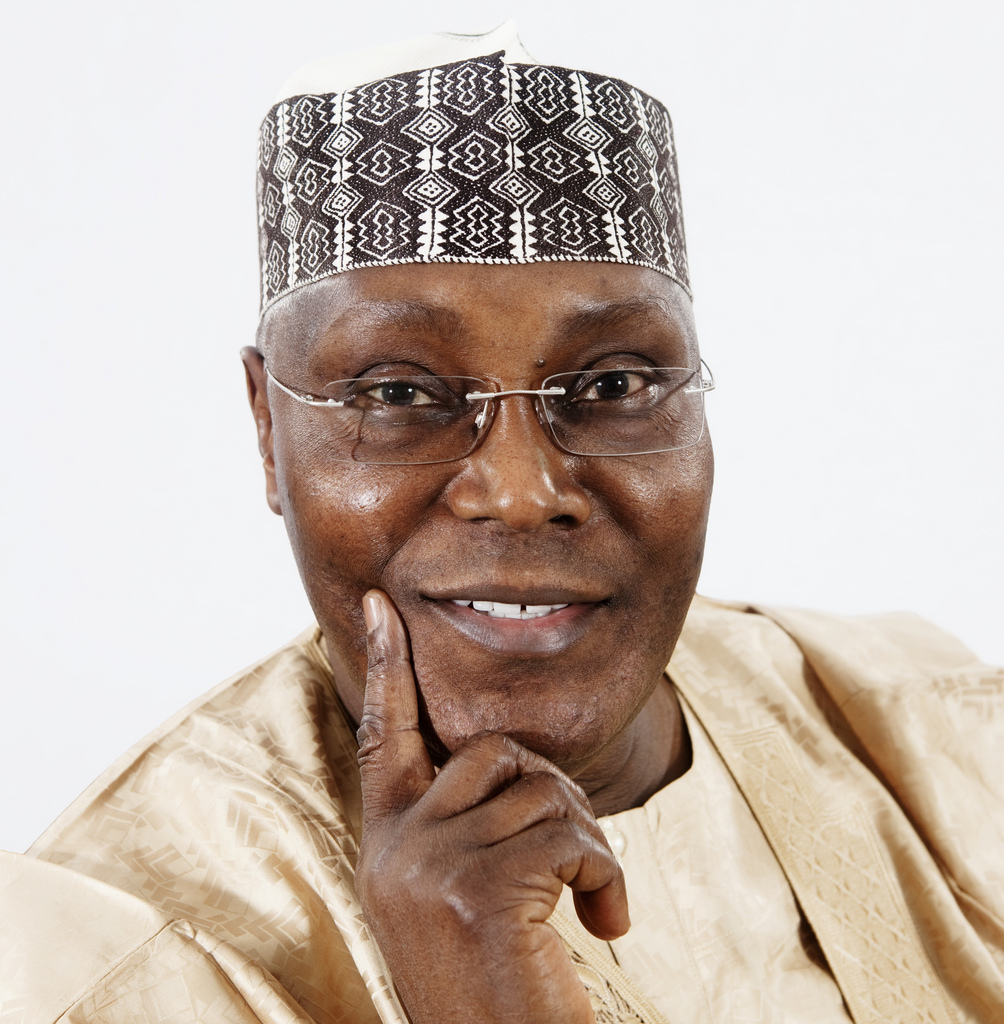
The rally demonstrated that Atiku can mobilise supporters in Sokoto. It did not establish how many attendees are registered voters, whether they intend to vote for him or whether the same enthusiasm exists across Nigeria. The ADC’s sweeping conclusion therefore goes beyond the evidence.
REGIONAL POWER POLITICS: ANOTHER EXPLANATION
The National Patriots contend that the desire among some Northern political interests to return presidential power to the region offers another explanation for the substantial turnout. That interpretation is different from the ADC’s assertion that the gathering proves nationwide rejection of Tinubu.
Muhammadu Buhari completed eight years as president before Tinubu assumed office in May 2023. Supporters of North-South power rotation argue that the South should have the opportunity to complete two terms before the presidency returns to the North. Others contest that political convention, which is not a constitutional requirement.
Regional calculations are therefore relevant to interpreting the Sokoto gathering. But attendance alone cannot establish the motives of individual participants or the preferences of the wider Northern electorate. The presidency remains a national office open to eligible candidates from every region.
WHY SOKOTO RATHER THAN THE SOUTH?
Atiku’s choice of Sokoto raises a strategic question. Why launch in a Northern constituency where he already enjoys an established political following instead of demonstrating organisational strength in Southern Nigeria?
A Southern flag-off would have offered an early test of mobilisation beyond familiar territory. The ADC has yet to demonstrate that the reception in Sokoto can be replicated in Lagos, Ogun, Oyo, Ondo, Edo, Delta, Rivers or the South-East. That is a challenge to be answered with organisation and electoral evidence, not declarations about crowd size.
Tinubu’s campaign launch in Kaduna offers a contrasting choice of venue. Neither venue determines an election, but a candidate seeking the presidency must build support across the federation rather than rely on regional enthusiasm.
BUHARI’S ELECTORAL HISTORY IS INSTRUCTIVE
Muhammadu Buhari drew substantial Northern crowds but lost presidential elections in 2003, 2007 and 2011. His victory in 2015 followed the formation of the All Progressives Congress and a wider coalition involving political forces from several regions. Tinubu played a significant role in that alliance.

The lesson is straightforward: even substantial regional popularity must be translated into a geographically broad coalition, functioning party structures and valid votes. Atiku’s Sokoto turnout, however impressive, cannot substitute for those requirements.
SANUSI’S ASSESSMENT OF THE REFORMS
Emir Muhammadu Sanusi II, a former Central Bank of Nigeria governor and prominent Northern traditional ruler, recently acknowledged the administration’s economic progress at the Oxford Global Think Tank conference.
“I’m not a fan of politicians, but we need to give credit to President Tinubu’s administration for bringing us back from the brink,” Sanusi said.
His assessment underscores that political opinion in the North is not uniform. Economic performance should be examined through growth, inflation, reserves, employment and household purchasing power, rather than inferred from one campaign rally.

THREE YEARS OF REFORMS; EIGHT YEARS OF PUBLIC SERVICE
The National Patriots cite Tinubu’s education financing, vocational training, infrastructure and social interventions, assessable against published results and meaningful household outcomes.
Atiku, Vice-President from 1999 to 2007, chaired the National Council on Privatisation. He bears political accountability for oversight of the federal privatisation programme, including questions about asset valuations, transparency and the subsequent performance of transferred enterprises.
According to the Federal Ministry of Education’s 2026 report, the Technical and Vocational Education and Training programme attracted more than 2.8 million applications, with 156,446 verified trainees receiving support. The Nigerian Education Loan Fund reported ₦372.62 billion disbursed across 319 tertiary institutions.
Education authorities also reported that more than one million out-of-school children had returned to learning through government-supported interventions, including programmes in Northern communities. Those are reported programme results; school retention, learning outcomes and employment will establish their lasting impact.
NORTHERN INFRASTRUCTURE AND PEOPLE-FOCUSED GOVERNANCE
The administration’s Northern infrastructure portfolio includes the Sokoto–Badagry Superhighway, Abuja–Kaduna–Zaria–Kano Expressway and Kano–Maiduguri corridor. Projects remain at different stages, but their intended benefits include improved connectivity, agricultural distribution and trade.

Regional development commissions are designed to address infrastructure gaps and coordinate interventions. The National Economic Council’s 90-day action plan also addresses food affordability, investment bottlenecks and household support.
The National Patriots argue that these initiatives reflect a shift towards people-focused governance and institutionalised social protection for vulnerable households. The extent of funding and actual relief delivered must be measured against specific budgets, disbursements and household outcomes. Economic hardship is real; whether it amounts to political rejection is a separate question. The administration must publish clear delivery milestones, identify eligible households, ensure transparent payments with independently verifiable delivery data and demonstrate that assistance reaches people most exposed to food, transport and energy costs.
WHAT THE NATIONAL PATRIOTS’ SURVEY REPORTED
The National Patriots report conducting a survey of 12,000 respondents, comprising 2,000 in each of Nigeria’s six geopolitical zones. According to the organisation, none expressed outright rejection of Tinubu. Respondents instead offered suggestions to address living costs, particularly leasing government refineries to increase domestic fuel production and potentially reduce energy costs.
Some respondents reportedly described the President as a father figure whose administration they wanted to succeed. Others expressed distrust of opposition politicians, alleging propaganda and misinformation. These are respondents’ reported opinions, not independently established findings about the opposition.
The organisation interprets its responses as indicating that concern over hardship can coexist with support for the President. The survey’s sampling method, questionnaire and detailed response data have not been independently examined; consequently, it cannot establish the preferences of all Nigerian voters or a national Tinubu–Atiku comparison.

Refinery leasing is a proposal worth evaluating, although domestic refining does not guarantee cheaper fuel: crude costs, exchange rates, operating expenses and market conditions also affect prices.
As former US President Theodore Roosevelt declared in his 1910 Citizenship in a Republic address:
“The credit belongs to the man who is actually in the arena.”
Leadership requires the courage to act, while its ultimate measure remains results that improve citizens’ lives.
THE TEST IS NATIONAL, NOT REGIONAL
The ADC must explain how Atiku would finance and implement his policies and demonstrate national electoral reach. Tinubu must show how reforms improve living standards.
Presidential elections depend on valid ballots and constitutional geographical spread, not campaign photographs.
A crowd can announce political ambition. Only the electorate can confer a presidential mandate.
NATIONAL PATRIOTS POSITION
The National Patriots maintain that Tinubu’s reform record and expanding social protection agenda deserve substantive assessment. Our reported six-zone survey found respondents concerned about living costs, particularly fuel prices, without expressing outright rejection of the President. We distinguish economic hardship from political rejection and challenge the claim that Atiku’s Sokoto crowd establishes nationwide dissatisfaction or an electoral mandate.
THE NATIONAL PATRIOTS
Princess Gloria Adebajo-Fraser, MFR, MBA, MIoD, FIPMD
President, National Patriots
Member, APC-PCC Strategic Communications Team