

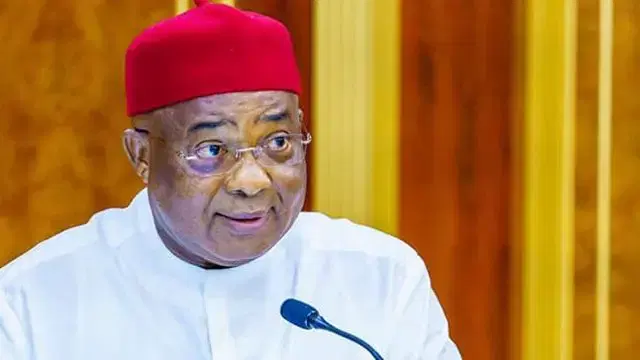
The Economic and Financial Crimes Commission (EFCC) has launched an investigation involving the Director-General of the Energy Commission of Nigeria, Mustapha Abdullahi, over alleged large-scale financial transactions that have triggered political tension within Nigeria’s ruling elite.

Initial reports suggested the probe involved hundreds of billions of naira, with figures ranging from N500 billion to over N800 billion, though the exact amount remains unverified.
Attention has since shifted beyond the figures to concerns within political circles over alleged links between the funds and emerging political mobilisation efforts ahead of the 2027 general elections.
Investigators are reportedly examining whether public revenues, including state-level allocations, were moved through various channels connected to political structures allegedly associated with campaign mobilisation activities.

The allegations have also drawn attention to the Progressive Governors’ Forum (PGF), a platform of APC governors, amid claims of coordinated financial contributions for political purposes linked to the ruling party’s future electoral strategy.
While no formal charges have been established against the forum itself, the development has raised internal concerns within the APC, particularly around financial transparency, trust, and coordination among party stakeholders.
Sources familiar with the investigation say the EFCC is tracing the flow of funds to determine how transactions were authorised and whether any public resources were diverted or mismanaged.

The controversy has reportedly caused unease within sections of the ruling party, as governors and political actors privately debate the structure and management of political financing arrangements ahead of the next election cycle.
Some party insiders have defended the contributions as voluntary political support, while others acknowledge internal disagreements over accountability and fund management.

The situation has also sparked wider debate over campaign financing practices in Nigeria, where political funding often operates through informal and opaque systems.
Although the APC leadership has publicly projected unity, the unfolding investigation has intensified scrutiny over internal party finances and raised broader questions about the intersection of governance, public funds, and political mobilisation.
The EFCC has not yet filed formal charges, and all individuals involved are presumed innocent as investigations continue.




