

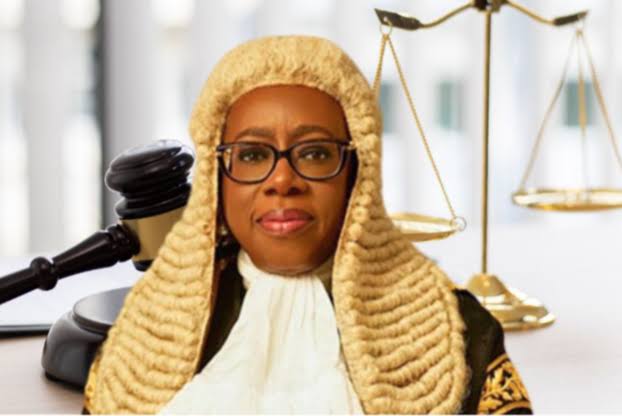
Justice on Trial: Nigerian Judiciary Opens Public Comment on 82 Judicial Nominees in Unprecedented Reform Push
By HeadlineNews.News Editorial Board | May 2025
In a watershed reform for Nigeria’s justice system, the Nigerian Judicial Institute (NJI) has called on the public to submit comments on 82 shortlisted judicial candidates, marking a turning point in how judges are appointed in Africa’s most populous nation. The move, announced via Premium Times and championed by the new Chief Justice of Nigeria (CJN), Justice Olukayode Ariwoola Kekere-Ekun, introduces a layer of public accountability into a previously opaque process.
“This is a vital reform step that will help sanitize the bench,” said Dr. G. Fraser, MFR. “For far too long, unsuitable individuals have found their way into the judiciary. This move finally gives Nigerians a voice in who gets to judge them.”

From the Courtroom to the People
For decades, judicial appointments in Nigeria have been the preserve of senior legal officials, often shielded from public scrutiny. This new measure will allow lawyers, litigants, civil society groups, and citizens to:
Review candidate names and histories
Submit written objections, support, or concerns
Highlight ethical, professional, or personal misconduct
The NJI has assured that all comments will be treated confidentially and will inform a final review by ethics committees and the National Judicial Council (NJC).
Countries like the United States, South Africa, and Canada already engage the public in judge selection through hearings, interviews, or comment periods, helping to elevate standards and weed out unfit nominees. Nigeria’s adoption of this practice signals a desire to realign with global best standards.
A History of Misjudgment: The Hidden Cost of Judicial Abuse
While this new initiative offers hope for future reform, it also draws attention to the consequences of past failures—when the absence of proper scrutiny allowed individuals of deeply questionable character to ascend the bench.
One such case, documented during the tenure of former CJN Aloma Mariam Mukhtar, illustrates just how damaging the wrong judicial appointment can be.

This now-retired judge’s record was littered with incidents of violent behavior, abuse of authority, and criminal intimidation:
He physically assaulted a family member during a personal disagreement.
He illegally sealed his mother’s home using an official court seal, blocking her from her residence without any court order.
He was known to harass relatives and issue arrest threats, using his judicial office as a personal tool of vendetta.
In a public abuse of power, he arrested a commercial bus driver for stopping to offload passengers, completely outside any legal mandate.
He submitted falsified medical records to enable international travel, abandoning his courtroom duties for months.
He was involved in public fights at family events, even reportedly tearing the clothes of relatives during a scuffle.
He carried a pistol without proper license or state approval, which he routinely used to threaten, intimidate, and blackmail citizens.
He allegedly filed false criminal charges to detain individuals he had personal issues with.
He committed judicial murder by preventing a cancer patient from travelling for treatment till the man died after a year.
He wears a red gown when he hears a criminal case which should only be when a death sentence is being delivered. This put fear in the accused.
He was one of the most corrupt, mentally unsound judges the Nigerian Judiciary ever appointed.
Besides, there were more than one hundred petitions against him to the Lagos State Ministry of Justice.
The case eventually reached the NJC, which compulsorily retired the judge—a disciplinary action critics say amounted to a soft landing for what should have triggered criminal prosecution.

“That man should not be walking free. He should be in jail,” said a spokesperson for Nigerians for Good Governance and Integrity (NGI), Against Injustice, a watchdog tracking judicial misconduct. “He abused power, assaulted people, and used the court as a weapon. Compulsory retirement is not justice—it is an escape.”

Femi Falana, SAN, reportedly intervened to secure the release of some of the judge’s victims, who had been detained under trumped-up or unlawful charges.
Such incidents underscore why the current reform is not only welcome but essential. They also point to the need for additional layers of oversight, including:
Mandatory psychological assessments
Comprehensive lifestyle audits
Strict penalties, including lifetime bans and jail terms, for abuses of power
“The judiciary must police itself—or risk being seen as an extension of impunity,” NGI stated.

Restoring Trust: A New Chapter Begins
The public comment initiative is already being hailed as one of the boldest moves to reclaim public trust in Nigeria’s judiciary. It could help transform the bench into a body composed not just of legal experts—but of men and women of honour, empathy, and discipline.
“Justice must not only be done but seen to be done,” said retired Justice Amina Abdullahi. “And it begins with who we allow to wear the robe.”

Conclusion
With this reform, Nigeria is taking a bold step toward cleansing its judicial temple. But it is only the beginning. Accountability, integrity, and public involvement must become permanent fixtures in the justice system if the courts are to serve the people—and not the privileged few who manipulate power for personal gain.
A History of Misjudgment: The Cost of Allowing Abusive Judges on the Bench.
While the current reform championed by CJN Kekere-Ekun offers a hopeful future, it also forces a long-overdue reckoning with Nigeria’s troubled judicial past—one marked by the appointment of individuals who never should have been allowed near the bench.
A glaring example involves a now-retired judge whose history reads like a dossier of misconduct and criminal abuse of power. During his tenure:
He assaulted a family member at the Altar during a Church service.
He unlawfully sealed his own mother’s residence using a judicial seal—typically reserved for court-ordered enforcement—effectively locking her out of her home without any legal basis for years till date.
He harassed and threatened relatives and community members, even ordering unlawful arrests and detentions.
He once arrested a commercial bus driver Kasali on a public road for merely stopping to let off passengers, an act entirely outside his jurisdiction and got him remanded to Kirikiri maximum prison for years.
He obtained fake medical records to facilitate long overseas travel, abandoning his courtroom responsibilities for months to Party in London without formal leave.
He was reported to have fought publicly at a family ceremony, tearing the clothes of his own relatives in a fit of rage because they were loyal to his mother.
He illegally carries a pistol without a license or official authorization, using it to intimidate and blackmail perceived opponents, relatives to submission.
He filed trumped-up charges to get citizens detained unjustly, leveraging his position to terrorize those who stood up to him.
This matter was formally reported to the National Judicial Council (NJC) during the tenure of former Chief Justice Aloma Mariam Mukhtar, Nigeria’s first female CJN known for her tough stance on judicial ethics. The judge in question was eventually compulsorily retired—a disciplinary measure often used when a dismissal could attract more public scrutiny.
Committed Judicial murder by preventing a Cancer patient with a case before him from traveling to the UK for treatment despite all documents submitted and the person who was a Client of Falana died due to lack of treatment to stop the spread of the cancer.
However, many observers believe this outcome was far too lenient.
> “That man should not be walking free. He should be in jail. He abused power, assaulted people, forged documents, and weaponized the law,” said a senior official from Nigerians for Good Governance and Integrity (NGI), Against Injustice, an advocacy group tracking judicial misconduct. “Compulsory retirement is not justice. It is an institutional cover-up.”
Renowned human rights lawyer Femi Falana, SAN, reportedly took up some of the cases involving victims falsely detained under the judge’s orders. Several individuals were later released after it became evident that their arrests were founded on malice, personal vendettas, or fabricated claims.
This case represents just one of several where the lack of transparent vetting, psychological evaluation, and ethical enforcement allowed individuals with a pattern of violent behavior, mental instability, and criminal tendencies to sit in judgment over others.
It illustrates why the current reform—soliciting public comments before confirmation—is not just symbolic, but necessary to prevent future travesties of justice.
> “You cannot give judicial power to a tyrant and expect justice,” NGI’s statement continued. “The judiciary must police itself or lose its legitimacy in the eyes of the people.”
In light of such egregious cases, legal experts are calling on the NJC to go further: implement lifetime disqualifications, mandated background and psychological checks, and provisions for criminal prosecution in serious cases of abuse.
Nigeria’s judiciary has long been seen as the last hope of the common man, but as these past examples show, it has at times also been the first instrument of oppression in the wrong hands.
Editor’s Note: HeadlineNews.News will continue to monitor the NJI’s vetting process and publish verified updates on the candidates under review. To submit your comments or concerns about any of the 82 shortlisted nominees, visit the official NJI portal before the public window closes.
Headlinenews.news Special Investigative Report




