

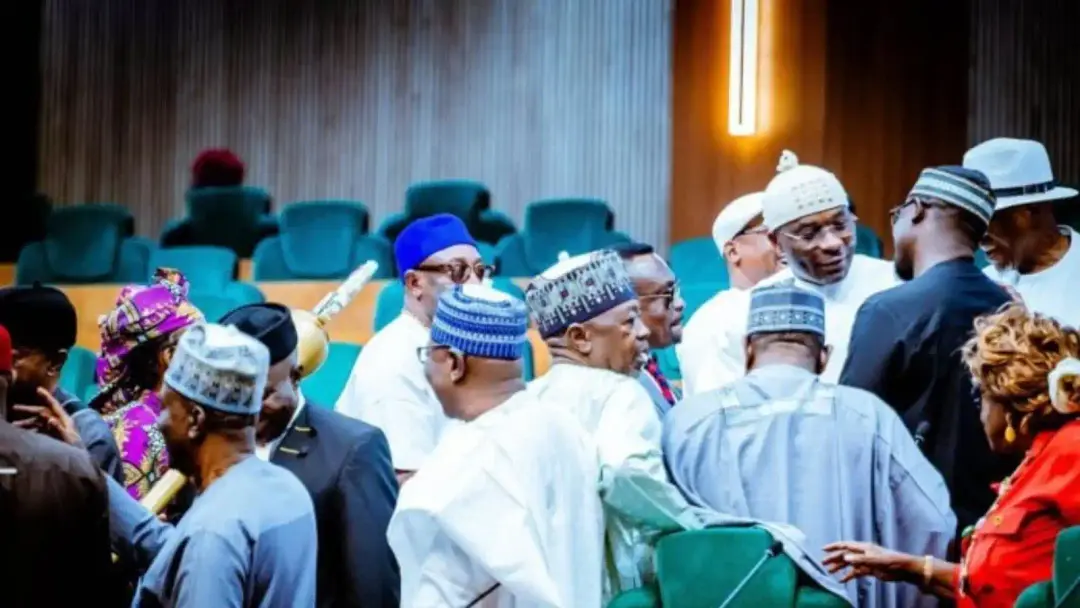
A heated debate erupted in the House of Representatives on Wednesday after lawmakers clashed over a proposal to invite President Bola Ahmed Tinubu to explain delays in the implementation of the national budget.
The motion, moved by the member representing Aba North and South Federal Constituency of Abia State, Hon. Mascot Ikwechegh, focused on the slow pace of budget execution and its impact on government projects and public service delivery.

Ikwechegh told the House that presentations by ministers and heads of Ministries, Departments, and Agencies (MDAs) during the ongoing 2026 budget defence sessions revealed that many agencies received little or no capital funding throughout the 2025 fiscal year. According to him, the funding shortfalls have caused numerous projects across the country to remain abandoned or delayed.
He also highlighted complaints from indigenous contractors who claimed they had not been paid for completed and certified projects. Many of the contractors, he said, secured bank loans to execute government contracts and are now facing severe financial hardship because of the outstanding payments.

The lawmaker recalled that President Tinubu had earlier directed the settlement of verified contractor debts estimated at about N1.5 trillion during a Federal Executive Council meeting held in December 2025. However, he noted that despite the directive and approvals from relevant authorities, many MDAs were yet to receive the necessary funds.
Ikwechegh further raised concerns over a circular reportedly issued by the Office of the Accountant-General of the Federation on June 29, 2026, suspending payments for zonal intervention and constituency projects until further verification by the Federal Ministry of Special Duties and Intergovernmental Affairs.
While urging the House to commend the President for ordering the payment of contractors’ outstanding debts, he also called for the immediate implementation of the directive to ease the funding crisis.

The chamber became tense after Ikwechegh proposed inviting President Tinubu to appear before lawmakers to explain the persistent delays in budget implementation and the effects on infrastructure development and security-related projects.
His proposal sharply divided members of the House. Some lawmakers backed the invitation, arguing that the President should address the nation on the issue, while others maintained that ministers and heads of government agencies were constitutionally responsible for implementing the budget and should be held accountable instead.
The debate grew more intense when Hon. Godwin Oga Amobi suggested postponing the House’s planned Open Week to allow lawmakers concentrate on resolving the budget implementation challenges. The proposal received support from Hon. Sani Lawan.

Opposing the move to invite the President, Hon. Yusuf Gagdi argued that executive duties fall within the responsibility of ministers and agency heads, insisting they should answer questions from Parliament. He also requested that the motion be split to allow lawmakers vote separately on the proposal to invite the President and the remaining resolutions.
His submission sparked loud exchanges across the chamber, with lawmakers shouting in disagreement as tensions rose.
Despite repeated appeals for calm, Speaker Abbas maintained order and ruled that the House would not divide the motion for separate votes, directing proceedings to continue in line with parliamentary rules.




