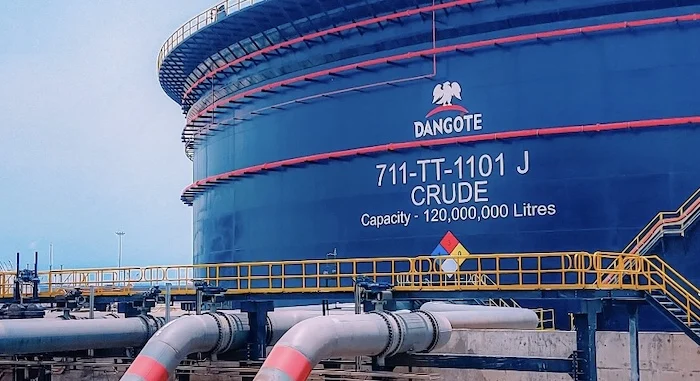
Dangote Petroleum Refinery has dismissed allegations that its petroleum products are exported to Lomé, Togo, and subsequently re-imported into Nigeria, describing the claims as false, misleading and inconsistent with commercial realities.
In a statement issued on Tuesday, the refinery said the allegations are not supported by trade data, market logic or its operational practices. The company stressed that its primary objective remains strengthening domestic fuel supply and reducing Nigeria’s dependence on imported petroleum products.

According to the refinery, all sales contracts and export agreements expressly prohibit the resale or re-importation of its products into Nigeria. It argued that facilitating such a process would directly undermine its business interests and contradict its mission of supporting local refining and energy security.
The company further explained that exporting fuel only for it to be shipped back into Nigeria would be economically irrational due to the additional costs associated with transportation, storage, financing and handling. It noted that no export discounts are offered that would create profitable arbitrage opportunities for such transactions.
Dangote Refinery also highlighted its product-tracking systems, stating that it maintains detailed records of lifting points, vessels, counterparties and destination markets to ensure transparency and accountability throughout its supply chain.

The response comes after reports suggested that some petroleum products originating from the refinery were being routed through Lomé before finding their way back into Nigeria through regional trading networks. Recent market reports indicated that Lomé has emerged as a major fuel trading hub for West Africa, with some Dangote-origin products being redistributed across the region, including Nigeria.
However, the refinery maintained that it neither encourages nor facilitates any form of re-importation, insisting that such practices would undermine local refining efforts, place pressure on foreign exchange reserves and weaken Nigeria’s industrial growth objectives.
The company reiterated that there is no strategic, economic or operational basis for claims that it exports petroleum products for re-importation into Nigeria, urging stakeholders to rely on verified information rather than speculation.