

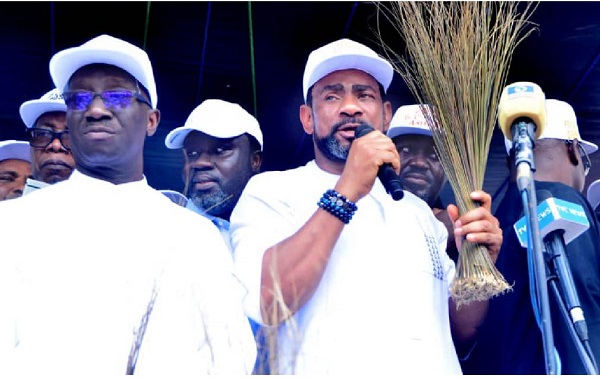
Tensions are rising within the All Progressives Congress (APC) in Owan West Local Government Area of Edo State, as some party leaders have openly opposed the re-election bid of the Speaker of the State House of Assembly, Blessing Agbebaku.
Agbebaku, who is seeking another term in the Assembly, appears to be facing strong resistance from within the party’s local structure, despite his political experience and past electoral victories.
His political journey has been anything but straightforward. First elected in 2007 under the Peoples Democratic Party (PDP), he remained loyal to the party during its dominance in Edo politics, even at times when that loyalty came at a personal cost. During the administration of former Governor Adams Oshiomhole, Agbebaku and other PDP lawmakers opposed key policies, acting in line with party directives.

That loyalty, according to close associates, did not translate into political rewards, and is said to be one of the decisions he later regretted.
Over the years, Agbebaku’s political alignment shifted. He later moved closer to the APC and eventually became Chief of Staff to former Speaker Frank Okiye in 2019. In 2023, however, he returned to the Assembly on the PDP platform and emerged Speaker. Following political developments in the state, he again aligned with the APC, maintaining a working relationship with the current administration.
Despite this, not all APC leaders in Owan West are convinced of his place within the party.
The controversy intensified after a former Deputy Governor of Edo State, Reverend Peter Obadan, called on party leaders to adopt Agbebaku as a consensus candidate for the next Assembly election. In a letter to stakeholders, Obadan praised the Speaker’s performance, describing him as inclusive, respectful, and effective in his role.
However, that endorsement did not sit well with many party leaders at the grassroots.
In a strongly worded response, several ward and local government leaders rejected the idea, describing it as undemocratic and not reflective of the party’s position in Owan West. They argued that the constituency has experienced what they called poor representation and insisted that no candidate should be imposed.

The leaders also raised concerns about Agbebaku’s standing within the party, claiming he has not formally integrated into the APC structure at both ward and local government levels.
At a subsequent meeting in Sabongida-Ora, party stakeholders outlined conditions that must be met before Agbebaku can be considered for the party’s ticket. These include formally defecting to the APC at the grassroots level, publicly apologising to individuals he allegedly wronged during the last governorship election, and recognising the existing party leadership structure.
They maintained that only after meeting these conditions would he be allowed to contest alongside other aspirants.
The party leaders also made it clear that no candidate would be given automatic endorsement, stressing that all aspirants must go through a fair primary process in line with the party’s constitution.
While Agbebaku has reportedly insisted that he is already a bona fide member of the APC, the situation on the ground suggests a deepening internal divide.
With the party primaries approaching, the unfolding dispute highlights the ongoing struggle for control, influence, and legitimacy within local party structures—factors that could play a decisive role in determining the APC’s strength and unity in the next election cycle.




