

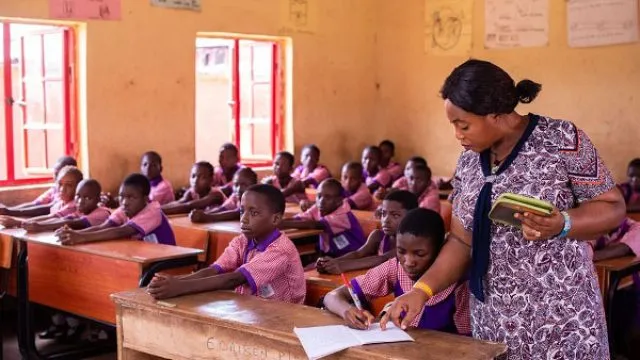
The Federal Government has approved a major reform of Nigeria’s education system by replacing the existing 6-3-3-4 structure with a compulsory 12-year uninterrupted basic education model.
The announcement was made by the Minister of Education, Dr. Tunji Alausa, during the 2025 Extraordinary Meeting of the National Council on Education (NCE) in Abuja. Under the new 12-4 system, the distinction between Junior Secondary School (JSS) and Senior Secondary School (SSS) will be removed, making secondary education part of a continuous basic education programme that lasts until students are about 16 years old.
According to the minister, the reform is aimed at reducing school dropout rates by removing financial and structural barriers that prevent many students from completing secondary education.
He explained that the policy also seeks to establish a uniform curriculum nationwide while introducing students to vocational, entrepreneurial and technical skills earlier, better preparing them for higher education and the labour market.
As part of the reform, the government plans to adopt 16 years as the minimum age for admission into tertiary institutions, subject to the approval of the National Council on Education.

Alausa noted that several developed countries already operate similar education systems, where students complete 12 years of basic education before progressing to universities or other higher institutions.
The minister said the reform is part of broader efforts to address challenges in Nigeria’s education sector. He revealed that although more than 23 million pupils are enrolled in public primary schools, only slightly over three million continue into junior secondary schools, leaving a significant gap in student progression.

He added that private schools are unable to absorb the large number of students who do not transition into secondary education, identifying limited access to schools as a major challenge.
To address this, the Federal Government has engaged with the Nigerian Governors’ Forum to encourage state governments to establish more schools and expand access to education.
Implementation of the new model will involve policy adjustments, expansion of school infrastructure, recruitment and training of teachers, increased funding, stronger partnerships and improvements to the curriculum. The revised curriculum will also place greater emphasis on technical education, vocational training and digital literacy to equip students with skills needed in today’s economy.
The latest decision follows earlier discussions on the proposal in February 2025, when the minister called for major reforms to strengthen Nigeria’s education system and improve its contribution to national development.




