

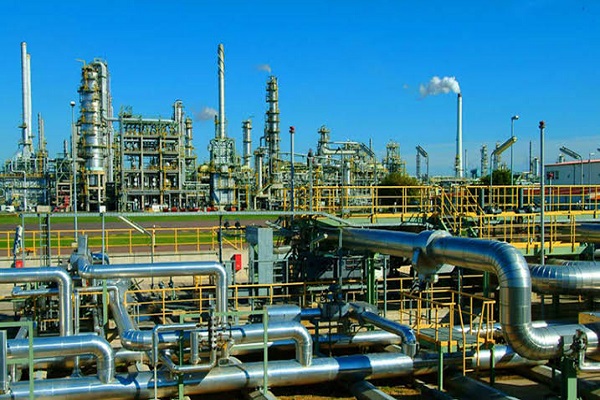
The Federal Government says it has preserved about three billion tonnes of iron ore deposits to supply the Ajaokuta Steel Rolling Complex in Kogi State when the facility becomes fully operational.
Director-General of the National Steel Raw Materials Exploration Agency (NSRMEA), Kolawole Michael, said the decision is in line with President Bola Tinubu’s policy of discouraging the export of raw solid minerals and promoting local value addition.

According to him, the government is committed to ensuring Nigeria’s mineral resources are processed locally to create jobs, drive industrialisation, and increase economic value rather than exporting them in their raw form.
Michael explained that although the iron ore deposits in Itakpe are among the highest quality available, mining activities remain limited because the Ajaokuta Steel Plant, the intended major consumer of the resource, is yet to resume full operations.
He said the original development plan assigned different responsibilities across the steel value chain, with NSRMEA responsible for exploration, the National Iron Ore Mining Company handling mining activities, and Ajaokuta Steel processing the raw materials into finished steel products.

The NSRMEA boss noted that geological surveys carried out in collaboration with Russian experts confirmed the exceptional quality of the Itakpe iron ore, making it a vital resource for Nigeria’s steel industry.
He added that while iron ore accounts for about 95 percent of the raw materials required for steel production, limestone and coal make up the remaining five percent. Since Ajaokuta is not yet operational, some limestone deposits have been licensed to cement manufacturers to support economic activity.
Michael also identified the need for high-quality coking coal, revealing that significant deposits exist in Obi-Lafia, Nasarawa State, but require further exploration and processing before they can be used for steel production and reduce dependence on imported coal.
He credited the government’s Early-Stage Mineral Exploration and Research Grant Endowment (EMERGE) programme for supporting mineral exploration efforts and unlocking Nigeria’s vast mineral potential.

The agency, however, appealed for increased funding to modernise its laboratories, acquire advanced exploration equipment, including drones, and strengthen mineral exploration activities needed to support the country’s industrial development.




