


Power, Reform, and the Cost of Change
Nigeria has not lacked leadership—it has struggled with the cost of reform, and the impatience that follows it.
History shows a recurring pattern: necessary decisions are delayed, distortions deepen, and when correction finally comes, the pain is mistaken for the problem itself.
Few leaders illustrate this tension more than Sani Abacha and Ibrahim Babangida—and today, President Bola Ahmed Tinubu.
Babangida and Abacha: Reform Under Command

Under Ibrahim Babangida, Nigeria underwent one of its most extensive phases of structural adjustment. The relocation of the federal capital to Abuja, the establishment of the Presidential Villa in Asokoro, the creation of the Federal Road Safety Corps (FRSC), and the liberalisation of key sectors reflected a leadership style built on scale, speed, and central authority. Beyond institutional reforms, his administration expanded national infrastructure and strengthened financial sector frameworks, laying foundations for private-sector participation that continue to shape Nigeria’s economic architecture.
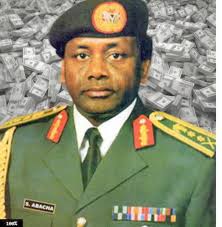
Sani Abacha followed with a different emphasis—discipline and fiscal control. Inflation declined, and foreign reserves rose sharply from under $500 million to several billions of dollars. His administration also pursued fiscal consolidation without reliance on IMF programmes, reflecting a posture of economic sovereignty. Nigeria asserted regional influence through ECOMOG, while infrastructure expanded across key sectors.
Yet both eras were defined by a common feature: command governance. Decisions were swift, execution was immediate—but dissent was limited, and institutional depth remained weak.
Their legacies endure—not as simple successes or failures, but as examples of what centralised power can achieve—and what it can suppress.
From Command to Consensus: Obasanjo and Buhari
Nigeria’s return to democracy under Olusegun Obasanjo marked a structural shift. Having governed both as a military leader and later as a civilian president, Obasanjo stabilised Nigeria’s global standing—securing debt relief, strengthening institutions, and liberalising telecommunications, unlocking one of the country’s most transformative economic expansions.

Muhammadu Buhari followed with a focus on discipline and infrastructure. His administration completed the Second Niger Bridge and expanded rail and road networks, while confronting significant security and economic pressures.
But both administrations illustrate a critical distinction: democratic governance slows decision-making—but strengthens legitimacy.
Tinubu: Reform Without the Shield of Command
On May 29, 2023, President Bola Ahmed Tinubu declared: “Subsidy is gone.”
It was not a policy tweak—it was a rupture.
Subsidy removal did not create Nigeria’s hardship—it exposed it.
Within days, the administration moved further—signing into law the decentralisation of electricity, breaking decades of centralised control. Three years later, 11 states have moved into regulatory transition frameworks for electricity generation and distribution, signalling the early shift toward a decentralised power economy.
These were not isolated actions. They were structural corrections.
At the point of transition, Nigeria’s position was fragile. Debt servicing consumed nearly all federal revenue. Oil production had fallen to about one million barrels per day. Most critically, net usable foreign reserves were estimated at under $4 billion, despite higher gross figures (Source: Central Bank of Nigeria / Reuters, 2025–2026).
That reality has shifted.
By the end of 2025, net reserves rose to $34.8 billion, with gross reserves approaching $50 billion by early 2026 (Source: Central Bank of Nigeria; Reuters, March 2026).
GDP growth improved to 3.4% in 2024 and 4.23% in Q2 2025 (Source: National Bureau of Statistics).

Fitch upgraded Nigeria’s sovereign rating to B with a Stable outlook, citing improved policy credibility (Source: Fitch Ratings, April 2025 & 2026).
These are not final outcomes—but they are clear indicators of direction.
From Policy to Execution
Reform must translate into visible progress.
The Kaduna–Kano rail corridor, which stood at just 15% completion in 2023, advanced to 53% by September 2025, with further progress toward approximately 60% by 2026 (Source: Federal Ministry of Transportation).
The Kano–Maradi rail line moved from about 5% to 61% completion (Source: Federal Ministry of Transportation, 2025 reports).
Major highway projects long delayed are now active. The Lagos–Calabar Coastal Highway has recorded about 70% completion on Section 1 (Source: Federal Ministry of Works, 2025 update), while the Sokoto–Badagry Superhighway has entered the execution phase.
These are not isolated projects—they are economic arteries.
When completed, they will reshape trade flows, reduce logistics costs, and strengthen national integration—particularly across Northern Nigeria.
People-Centred Governance and Fiscal Reality

By 2025–2026, the administration’s approach has become clearer—reform anchored in people-centred governance.
As President Tinubu stated:
“The strength of any nation lies in its people—especially at the grassroots.”
Fiscal policy reflects this.
In June 2025 alone, ₦4.232 trillion was available for distribution across the federation (Source: Federal Ministry of Finance / FAAC communiqué, June 2025), improving liquidity across all tiers of government and strengthening the capacity of states to meet obligations and fund social interventions.
There was a time when states depended on bailouts to meet salary and pension obligations; that dependence has now eased.
In addition, the establishment of development commissions across the six geopolitical zones signals a deliberate shift toward region-specific, grassroots development.
On Borrowing and Economic Direction
Criticism that the government is “borrowing without clarity” misses a critical point.
A portion of borrowing is used to service and refinance legacy debt obligations—an unavoidable responsibility. Without it, the risk is instability.
The more important question is how resources are deployed.
Across sectors, spending is visible—in infrastructure, education, healthcare, energy, and subnational support. These are capital and social investments, not abstract expenditure.
In a country with deep structural deficits, borrowing is not the danger—misallocation is.
A Professional Approach to Governance
Tinubu’s approach reflects a professional logic: a system operating under structural imbalance cannot be sustained—it must be corrected.
Subsidy removal, exchange-rate unification, tax reform, and fiscal redistribution are not random policies—they are coordinated corrective measures.
As he stated:
“The reforms we are undertaking are difficult, but they are necessary to secure Nigeria’s long-term stability and prosperity.”
Security, Sovereignty, and the Next Phase of Reform

Economic reform alone is not sufficient. National stability ultimately rests on security.
As fiscal conditions improve, the next phase must focus on strengthening Nigeria’s Armed Forces—through investment, restructuring, and capacity building—to restore operational effectiveness and defend national sovereignty without dependence on external forces.
Economic progress must be protected.
Sovereignty must be enforced.
The Case for Continuity
The question is no longer whether reform was necessary.
The question is whether it will be sustained.
Nigeria’s policy history is defined by reversal—reforms abandoned before results materialise.
What is emerging now is different.
Measured by the scale of structural intervention within three years, the foundation has been laid. The gains are incomplete, the hardship real—but the direction has changed.
Continuity is not a political argument—it is a policy requirement.
The National Patriots
The National Patriots reiterate that nation-building demands more than opinion—it demands perspective, discipline, and a willingness to understand the weight of leadership decisions in their proper context.

As Princess Gloria Adebajo-Fraser, MFR, states:
“A nation that judges its leaders only by the discomfort of reform risks losing the opportunity for transformation. True patriotism is not blind loyalty—it is the maturity to recognise sacrifice, the discipline to endure transition, and the wisdom to support what secures the future.”
At a time of shifting global alignments and internal economic adjustment, Nigerians must resist narratives that amplify division or weaken national resolve. Constructive engagement—not reflex opposition—is what sustains progress.
The responsibility of leadership is to act.
The responsibility of citizens is to understand.
In that balance lies Nigeria’s long-term stability, progress, and sovereignty.
Conclusion: Beyond Comfort
Nations are not transformed by comfort.
They are reshaped by correction sustained long enough to take hold.
The real test of leadership is not popularity in the moment—but the courage to act when it matters, and the discipline to see reform through.
Nigeria stands at that point again.
Nigeria does not lack direction—it risks losing momentum. And in reform, momentum is everything.
Princess G. Adebajo-Fraser, MFR
President, The National Patriots




