

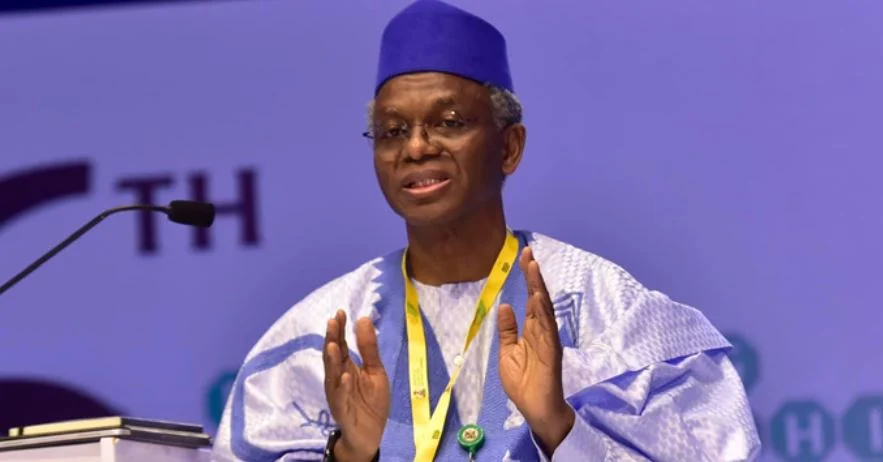
Seven years after warning foreign powers against intervention in Nigeria, the former Kaduna Governor turns to Trump, Macron and international organisations over his detention.
By Princess Gloria Adebajo-Fraser, MFR
Power is temporary, but the words spoken while exercising it can follow a political leader long after leaving office.

That enduring lesson has returned to Nigeria’s political discourse following former Kaduna State Governor Nasir El-Rufai’s appeal to international leaders and human-rights organisations over his continued detention.
On October 30, 2026, El-Rufai marked what he described as his 256th day in detention by drawing international attention to his demand for a fair trial.
Among those tagged in his social media appeal were United States President Donald Trump, French President Emmanuel Macron, the United Nations, European Union, African Union and prominent international media organisations.
His central message was straightforward: a fair trial is a fundamental human right, not a privilege granted by government.

Yet the appeal has revived memories of a controversial statement he made seven years earlier, when his attitude towards foreign involvement in Nigeria’s affairs appeared considerably different.
THE 2019 “BODY BAGS” CONTROVERSY
On February 5, 2019, during an appearance on the Nigerian Television Authority, El-Rufai warned foreign powers against interfering in Nigeria’s general elections.
He declared that those attempting such intervention would return to their countries in “body bags.”
The remarks attracted widespread criticism from opposition politicians, diplomatic observers and civil society organisations.
El-Rufai subsequently defended his comments as an assertion of Nigerian sovereignty rather than an invitation to violence.

Nevertheless, the language was widely considered provocative, particularly coming from a serving governor during a sensitive election period.
Seven years later, the same political figure is seeking international attention concerning his own access to justice.
The contrast is striking.
WHEN POLITICAL CIRCUMSTANCES CHANGE
El-Rufai governed Kaduna State between 2015 and 2023 and was an influential participant in national political affairs.
Today, his circumstances are markedly different.
His detention follows investigations and legal proceedings involving allegations connected to his period in office and a separate case concerning alleged interception of communications involving National Security Adviser Nuhu Ribadu.

The former governor has contested the allegations, which remain subject to judicial determination.
His recent international appeal followed a Federal High Court decision rejecting his no-case submission in the communications-interception proceedings and requiring him to present his defence.
The court’s decision does not establish guilt. It means the proceedings must continue.
Nevertheless, El-Rufai’s changed circumstances illustrate how quickly political influence can give way to personal vulnerability before the institutions of justice.

THE IRONY OF INTERNATIONAL INTERVENTION
There is an important distinction between foreign interference in a country’s elections and international scrutiny of alleged human-rights violations.
Nigeria’s sovereignty must be respected, but international human-rights advocacy is not inherently inconsistent with national independence.
El-Rufai is therefore entitled to seek attention for his legal concerns, just as other Nigerians are entitled to question the consistency of his public positions.
The deeper issue is whether political leaders defend fundamental rights consistently or become their strongest advocates only when personally affected.
Justice should never depend upon political affiliation, personal influence or access to powerful international personalities.
THE RULE OF LAW MUST PREVAIL
Nigeria’s Constitution guarantees fair hearing and due process.
El-Rufai must enjoy these protections, regardless of his previous political statements or the controversies surrounding his administration.
Equally, legitimate investigations into alleged misconduct by public officials must be permitted to proceed without intimidation, political interference or prejudgment.
The presumption of innocence remains fundamental.
A credible justice system must protect the rights of accused persons while allowing competent authorities to investigate allegations and present evidence before independent courts.
This principle applies equally to former governors, ministers, political opponents and ordinary citizens.
A LESSON FOR NIGERIA’S POLITICAL CLASS
The controversy surrounding El-Rufai’s statements offers a wider lesson about political conduct.
Public office should encourage restraint, humility and respect for constitutional institutions.
Statements made during periods of political influence may acquire entirely different significance when circumstances change.
Leaders who demand accountability from others must accept accountability themselves. Those who defend sovereignty must also recognise that fundamental rights deserve protection irrespective of who occupies public office.
Ultimately, El-Rufai’s legal fate belongs to the courts, not political commentators or international personalities.
However, the contrast between his 2019 warning and his 2026 appeal is a legitimate subject of public reflection.
The enduring lesson is simple: political power may change hands, but justice, constitutional rights and responsible leadership must remain constant.
Yesterday’s powerful officeholder may become today’s petitioner. That is precisely why the rule of law must protect everyone.
NATIONAL PATRIOTS: EL-RUFAI AND THE IRONY OF POWER
The National Patriots observe the irony of El-Rufai’s appeal to foreign leaders after his controversial 2019 “body bags” warning against foreign interference. Power is transient; accountability is enduring. His circumstances remind public officials that humility, restraint and respect for justice must transcend political fortunes. We uphold his right to fair trial while insisting that nobody stands above the law.
THE NATIONAL PATRIOTS
Princess Gloria Adebajo-Fraser MFR.
President the National Patriots.
Member APC-PCC 2027 Strategic Communications Team.