

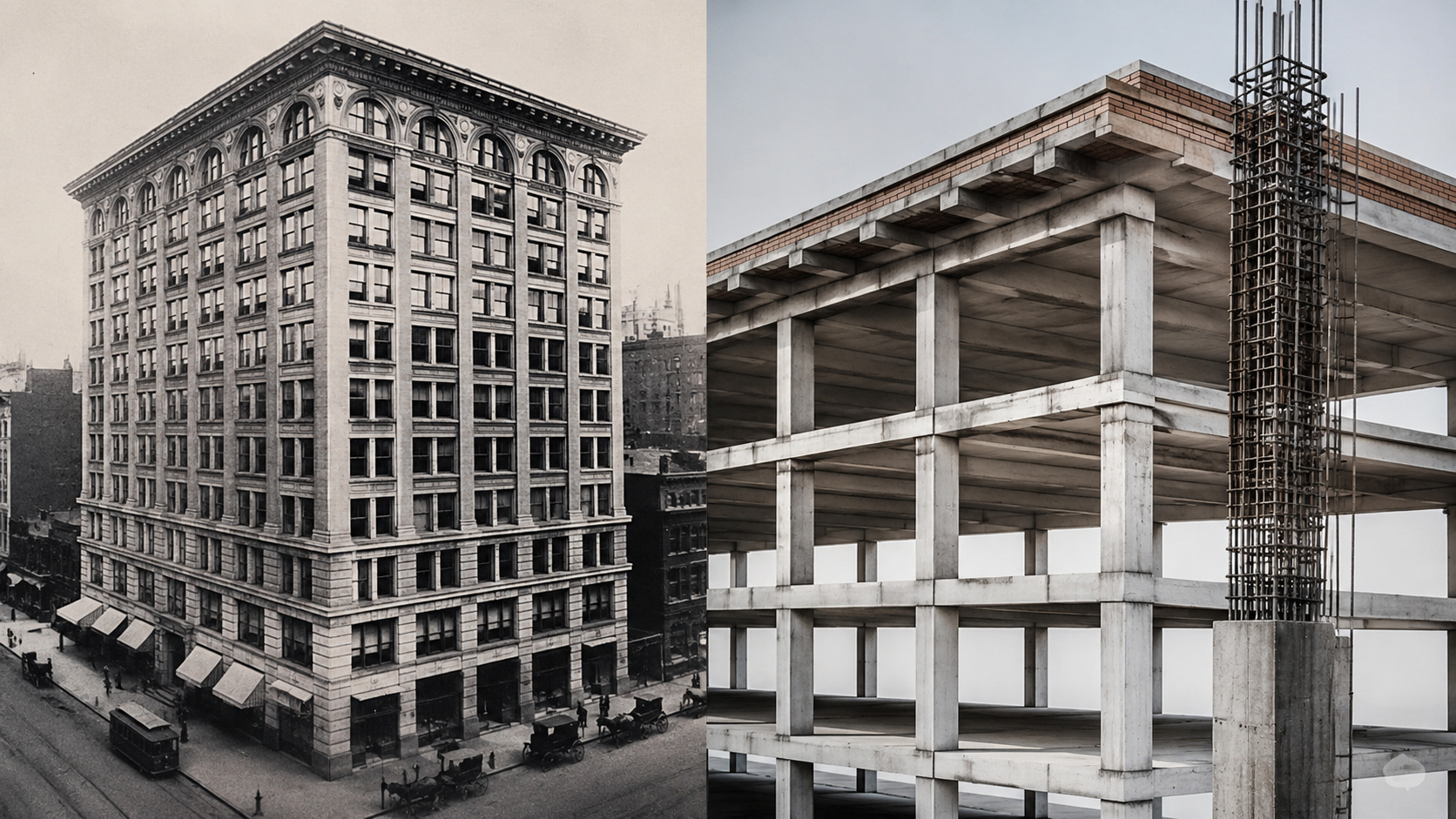
Completed in 1903, the Ingalls Building in Cincinnati, Ohio, made history as the world’s first skyscraper built with reinforced concrete, proving that the material could safely support high-rise construction and transforming the future of civil engineering.
At the beginning of the 20th century, reinforced concrete was still viewed with skepticism for tall structures. Most engineers believed the material could not safely support buildings much taller than six stories, while steel remained the preferred choice for skyscrapers.

Despite widespread doubts, businessman Melville E. Ingalls backed an ambitious project to construct a 16-story office building using reinforced concrete as its primary structural material. The bold idea faced significant opposition, with city authorities reportedly taking nearly two years to approve the construction permit due to concerns about the building’s safety.
Construction began in 1902, with architectural design by Elzner & Anderson and structural engineering led by Henry N. Hooper. The building was completed the following year, standing approximately 64 metres (210 feet) tall, making it the tallest reinforced concrete building in the world at the time.

A key factor behind the project’s success was the use of an innovative reinforcement system developed by engineer Ernest L. Ransome. His patented twisted steel bars improved the bond between steel and concrete, allowing the structure to combine concrete’s compressive strength with steel’s resistance to tension, creating a stronger and more reliable building system.

The project attracted widespread public attention, with many doubting the building would remain standing once construction supports were removed. However, the Ingalls Building proved its critics wrong and demonstrated the reliability of reinforced concrete for high-rise construction.

Its success encouraged wider adoption of reinforced concrete in the construction industry and paved the way for future skyscrapers around the world. More than 120 years after its completion, the Ingalls Building remains standing and in use, serving as a lasting symbol of one of the most significant breakthroughs in modern structural engineering.




