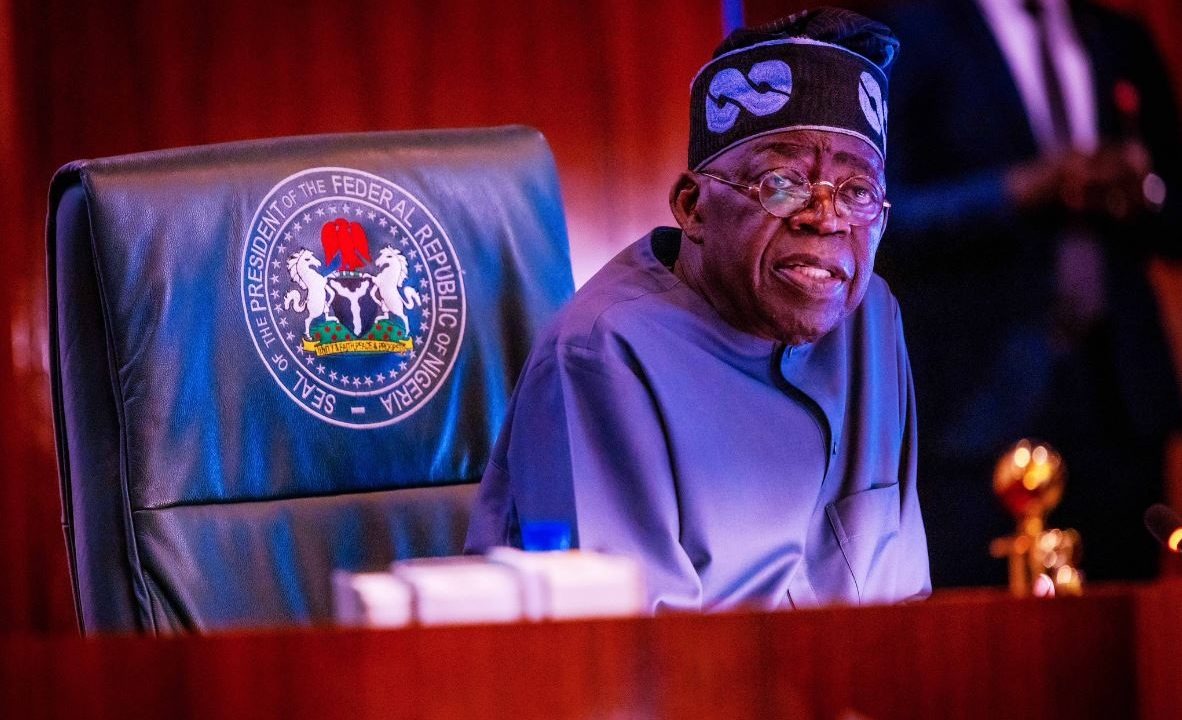
As Nigeria moves steadily toward the 2027 general elections, the political landscape is witnessing a dramatic wave of realignments that is reshaping alliances across party lines.
Governors, lawmakers, and other influential political figures are increasingly drifting toward the ruling All Progressives Congress (APC), a trend widely interpreted as strategic positioning ahead of what is expected to be a highly competitive election cycle. At the centre of this movement is the perceived political weight of President Bola Tinubu, whose influence is fast becoming a key factor in shaping ambitions and party calculations nationwide.

Across the country, defections have become a regular feature of the political calendar. Since early 2026, several high-profile politicians have switched camps, citing alignment with national development priorities and the need for stronger ties with the federal government. These movements have significantly strengthened the APC’s presence in both the executive and legislative arms, while weakening opposition parties.
In many cases, entire political structures at state and local levels have followed defecting leaders, further consolidating the ruling party’s reach. Political observers say this is not just about party switching, but about access to influence, resources, and ultimately, presidential backing ahead of 2027.
However, opposition parties have raised concerns over the trend, accusing the ruling party of deliberately weakening rival platforms to create a political environment dominated by a single force. They argue that the growing pattern of defections could undermine democratic competition if not checked. The APC, on its part, has dismissed such claims, insisting that politicians are voluntarily choosing to align with its policies and leadership.

Within APC circles, the influx of new entrants is being welcomed as a sign of growing confidence in the party’s direction. Party leaders say the development reflects the appeal of its governance agenda and its dominance across most regions of the country.
The current political configuration shows APC in firm control of a majority of states, as well as significant representation in the National Assembly, further reinforcing its position as the dominant party in the Fourth Republic. In contrast, opposition parties such as the PDP, Labour Party, NNPP, and others continue to experience internal fragmentation and loss of key figures.
At the heart of the unfolding political realignment is the question of presidential influence. Analysts note that in Nigeria’s political system, the backing of a sitting president often carries significant weight in determining party primaries and electoral outcomes. This has intensified competition among aspirants seeking proximity to the presidency, with many seeing alignment as a pathway to securing party tickets and electoral advantage.
Political analyst Dr. Funke Adebola describes the situation as a “high-stakes recalibration of loyalty and ambition,” noting that early alignment with the ruling structure is increasingly viewed as a strategic necessity by many politicians.

The situation has also triggered intense political activity in key swing states, where defections are reshaping local power structures ahead of governorship and legislative elections. In several of these states, opposition figures who recently joined APC are already positioning themselves for major roles in the next electoral cycle.
However, the rapid influx of new members is not without tension. Within APC, concerns are emerging over internal competition between long-standing members and new entrants, especially around ticket allocation and political appointments. Party leaders are now faced with the challenge of balancing loyalty with political expansion.
Despite these internal dynamics, APC’s leadership remains confident that the party’s structure, combined with its national reach, places it in a strong position ahead of 2027. Opposition voices, meanwhile, warn that Nigeria’s democratic space risks becoming increasingly uneven if political competition continues to tilt in favour of a single dominant force.
As the political season gathers momentum, one thing is clear: alliances are shifting quickly, calculations are intensifying, and the race toward 2027 is already redefining Nigeria’s political map long before voters head to the polls.