

Kyari: Smallholder Farmers Sustain Nigeria’s Food Supply but Face Deepening Poverty
The Minister of Agriculture and Food Security, Abubakar Kyari, has said that although smallholder farmers produce about 85 per cent of the food consumed in Nigeria, many of them continue to live in poverty with little improvement in their livelihoods.
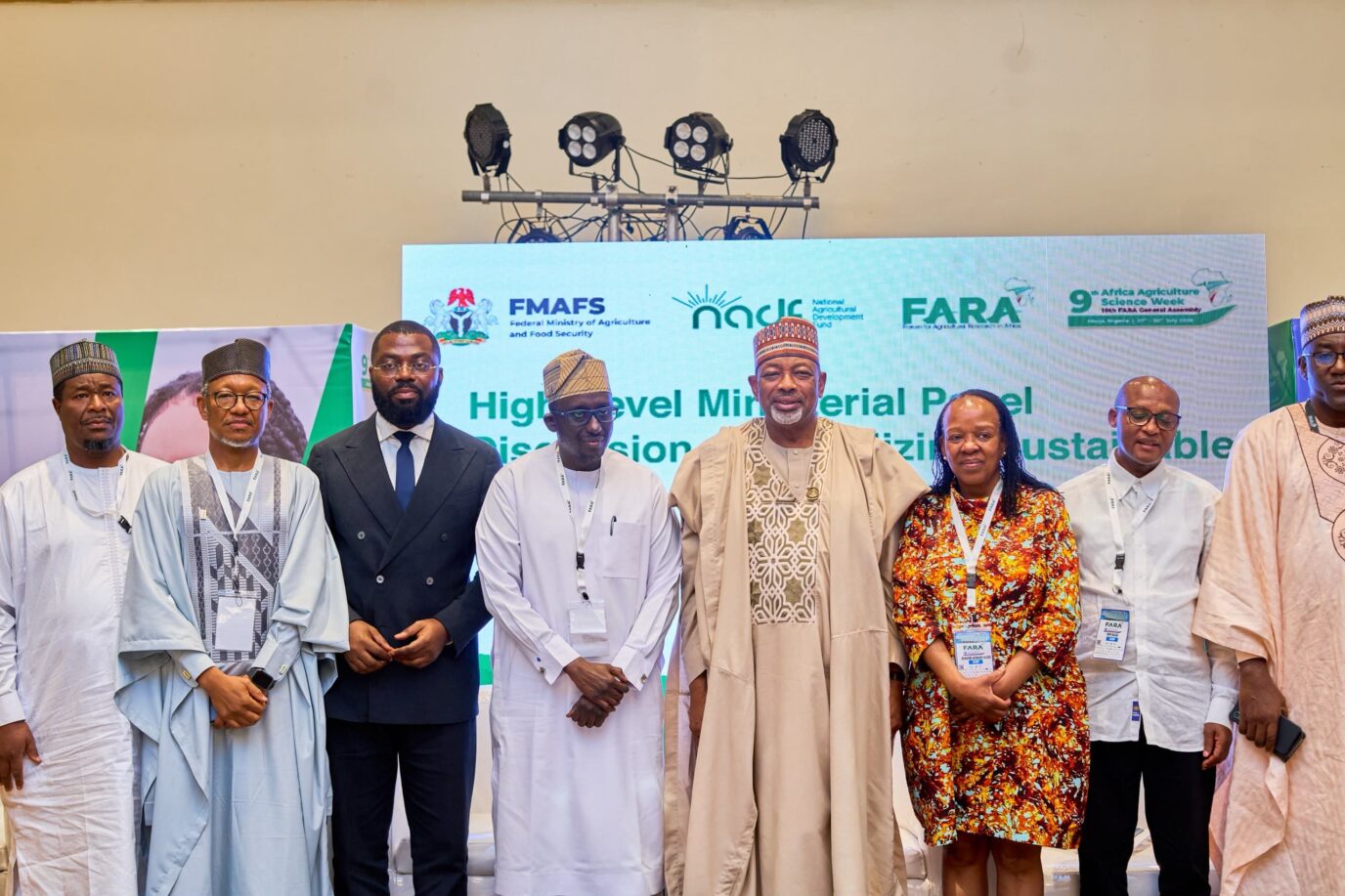
Kyari made the remarks during a high-level ministerial dialogue on sustainable financing for Agricultural Research, Development and Innovation (AR4D), held as part of the ninth Africa Agriculture Science Week in Abuja.
The event, organised by the National Agricultural Development Fund (NADF) in partnership with the Forum for Agricultural Research in Africa (FARA), focused on finding sustainable ways to finance agricultural research and innovation across the continent.
According to the minister, the establishment of the NADF was aimed at addressing years of inadequate investment in Nigeria’s agricultural research sector.

He recalled supporting the creation of the fund during his time in the National Assembly after observing the positive impact of similar intervention agencies in other sectors.
Kyari noted that despite agriculture contributing roughly one-quarter of Nigeria’s Gross Domestic Product (GDP), rural communities where most of the country’s food is produced have remained underdeveloped.
“About 85 per cent of the food we eat comes from smallholder farmers, yet their living conditions have barely changed. That clearly shows there is a structural imbalance in our agricultural economy,” he said.
The minister identified poor access to quality seeds, limited financing, shrinking farmland, climate change and years of neglect of agricultural research institutions as major factors affecting productivity.
He explained that many farmers now plant grains harvested from previous seasons because they cannot afford certified seeds, leading to lower yields and declining output.

Kyari also praised the National Agricultural Development Fund for carrying out a baseline assessment of Nigeria’s 16 agricultural research institutes and 17 colleges of agriculture, describing the exercise as an important step towards rebuilding the country’s agricultural research system.
Speaking at the event, the Executive Secretary of the NADF, Mohammed Ibrahim, said Africa’s agricultural transformation would depend not only on funding research but also on creating an innovation ecosystem that links research to industry and market demand.
He argued that agricultural research should produce innovations capable of attracting investment, encouraging commercialisation and driving large-scale adoption by farmers.
“Research certainly needs funding, but the market also needs research. Investment naturally flows where there are clear returns,” Ibrahim said.
The dialogue ended with the adoption of the Abuja Clarion Call, where more than 500 African leaders urged governments to increase domestic investment in agricultural research, establish sustainable agricultural development funds, strengthen partnerships with the private sector, expand innovative financing options and accelerate agricultural transformation across the continent.




