

Nigeria’s Oil Challenge Shifts From Refining Capacity to Crude Supply
Nigeria’s oil sector is entering a new phase. The country’s major challenge is no longer the absence of refining capacity but producing enough crude oil to keep its growing number of refineries running.
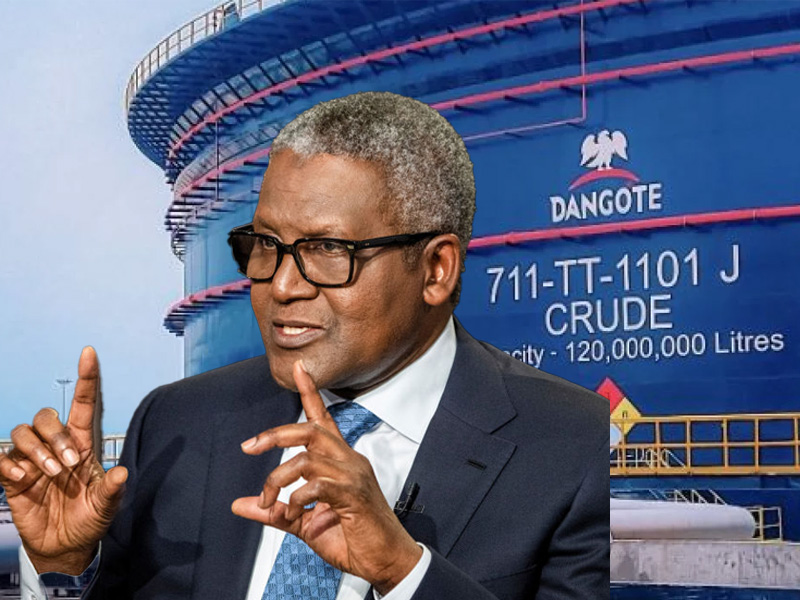
The Dangote Petroleum Refinery, Africa’s largest refinery, alone requires about 552,500 barrels of crude oil daily when operating at an estimated 85 per cent capacity. This represents roughly 35 per cent of Nigeria’s total daily crude production.
Nigeria produced about 1.56 million barrels per day in June 2026. After supplying Dangote Refinery, only around 1.01 million barrels per day would remain for other domestic refineries, export obligations and crude-backed financing commitments.
Although the remaining volume may be enough under normal conditions, analysts warn that the margin is small and could be affected by unexpected disruptions such as pipeline failures, security challenges, or production outages.

Growing Pressure on Crude Supply
The issue facing Nigeria is not a lack of oil reserves. The country has an estimated 37.28 billion barrels of crude oil and condensate reserves.
The problem is the ability to produce enough crude daily to meet competing demands from local refineries, international buyers and financial obligations tied to crude oil.
With the downstream petroleum sector now largely deregulated, petrol prices are increasingly influenced by production costs, crude availability and exchange rate movements.
This means any disruption to crude supply could quickly affect fuel prices at filling stations.
A Lagos-based research firm, PAC Research, noted that the future of Nigeria’s refining sector would depend on whether upstream production can balance three major needs: supplying refineries, meeting export commitments and fulfilling crude-backed loan agreements.
Dangote Refinery Still Depends on Imported Crude
Despite Nigeria’s plan to prioritise local crude supply for domestic refineries, reports show that Dangote Refinery has not received all the crude promised under the arrangement with the Nigerian National Petroleum Company Limited (NNPC).
Records from May and June 2026 reportedly show that about 78 per cent of the refinery’s crude supply came from NNPC, while the remaining 22 per cent was sourced from other countries.

Buying crude from international markets, especially in US dollars, increases production costs and can contribute to higher fuel prices.
This has pushed Dangote Refinery to explore direct upstream investments to secure a more reliable crude supply.
Why Nigeria’s Crude Production Remains Limited
Industry experts have identified several factors affecting crude output.
One major challenge is oil-backed loan commitments. The NNPC reportedly committed about 272,500 barrels per day of crude to repay loans worth more than $8.8 billion, reducing the amount of freely available crude for local refiners.
Other problems include oil theft, pipeline vandalism, ageing infrastructure and years of underinvestment in oil fields.
These challenges have made it difficult for Nigeria to increase production enough to satisfy both domestic and international obligations.
A New Reality for Nigeria’s Oil Industry
Energy analysts say Nigeria’s refining ambitions have created a new challenge: ensuring enough crude is available to support local processing.
As domestic refining capacity expands, the country must find a balance between keeping refineries supplied, maintaining exports and managing financial commitments.
The next 12 to 18 months will be crucial, as crude supply levels could influence fuel prices, inflation, foreign exchange demand and investor confidence.
Nigeria now has the refineries it has long sought. The next challenge is ensuring there is enough crude oil to power them.




