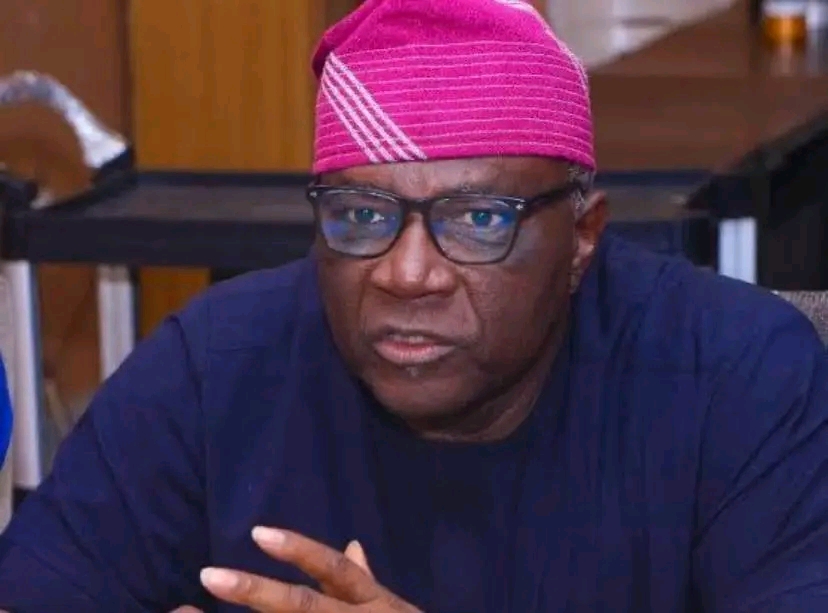
Nigeria Still Has Capacity to Borrow More Than Some African Countries – Onanuga
The Special Adviser to President Bola Ahmed Tinubu on Information and Strategy, Bayo Onanuga, has defended Nigeria’s rising debt profile, insisting that the country is still financially capable of taking on more loans when compared with some other African economies such as Egypt, South Africa and Senegal.
Onanuga made the remarks in a post on his X handle on Monday, responding to growing public criticism over the Tinubu administration’s borrowing trend and concerns about Nigeria’s debt burden.
He argued that many of the criticisms being raised stem from a poor understanding of economics and public finance.
“Nigeria has not over-borrowed compared to countries like Egypt, South Africa and the West African country of Senegal,” he wrote.
According to him, Nigeria remains credit-worthy and still has room to access additional loans to finance key infrastructure projects across the country.

“Nigeria is credit worthy and can still take more loans to finance infrastructure. The unwarranted alarm against loans is symptomatic of economic and financial ignorance,” he added.
His comments were in response to a social media user, Akinwumi, who had compared Nigeria’s debt position with that of Egypt and South Africa.
The post highlighted that Egypt’s total debt stands at over $400 billion against a GDP of about $390 billion, placing its debt-to-GDP ratio above 100 percent. It also noted that South Africa’s debt is about $580 billion compared to a GDP of roughly $420 billion, translating to about 135 percent.
In contrast, Nigeria’s public debt was put at around $110 billion against a GDP of about $340 billion, giving a debt-to-GDP ratio of approximately 35 percent.
Despite this comparison, public concern over Nigeria’s borrowing continues to grow, especially amid rising inflation, currency pressure, and increasing debt servicing obligations.
Since assuming office in May 2023, the Tinubu administration has continued to seek both domestic and external loans to finance infrastructure development, budget deficits, and economic stabilisation programmes.
The government has consistently maintained that borrowing is necessary to support critical sectors such as power, transportation, agriculture, and social welfare interventions.
However, critics argue that the rising debt profile could place further strain on the economy if not properly managed, especially given Nigeria’s weakening naira and growing cost of debt servicing.