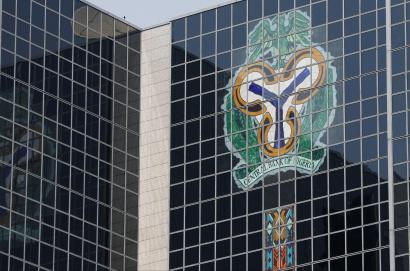
The Central Bank of Nigeria (CBN) has ordered banks, payment service banks, and other regulated financial institutions to immediately identify and freeze the accounts, assets, and other economic resources linked to 10 individuals and entities sanctioned for alleged involvement in terrorism financing.

The directive, contained in a circular dated June 24, 2026, follows updated sanctions issued by the Nigeria Sanctions Committee (NIGSAC) and the United States Department of the Treasury’s Office of Foreign Assets Control (OFAC) under anti-terrorism financing regulations.
According to the CBN, six individuals have been added to the sanctions list, alongside four Bureau de Change (BDC) operators believed to be owned or controlled by the designated persons. Financial institutions have been instructed to immediately screen existing customers, beneficial owners, and all incoming and outgoing transactions against the updated sanctions list, including aliases and other identifying information.

The apex bank directed that all funds and assets belonging to, or controlled directly or indirectly by, the sanctioned individuals and entities be frozen without prior notice. The directive also applies to businesses that are at least 50 percent owned, individually or collectively, by the designated parties.
Banks and other regulated institutions are prohibited from providing funds, financial services, or economic resources to the affected individuals and organisations. They are also required to file Suspicious Transaction Reports with the Nigerian Financial Intelligence Unit whenever confirmed or attempted matches are detected.

The CBN further instructed financial institutions to submit compliance reports within 48 hours, detailing any accounts or assets frozen and the actions taken. Institutions that find no matches are still required to submit nil returns.
As part of broader efforts to combat terrorism financing, the regulator directed enhanced monitoring of suspicious transaction patterns, including rapid movement of funds, the use of money service businesses and bureau de change operators, informal transfer channels, and transactions involving high-risk jurisdictions. It also ordered institutions to conduct comprehensive reviews of past transactions and customer relationships linked to the sanctioned individuals and entities.
The CBN warned that false or misleading reports would attract regulatory sanctions under the Banks and Other Financial Institutions Act (BOFIA) 2020 and other applicable laws, adding that the directive takes immediate effect.