

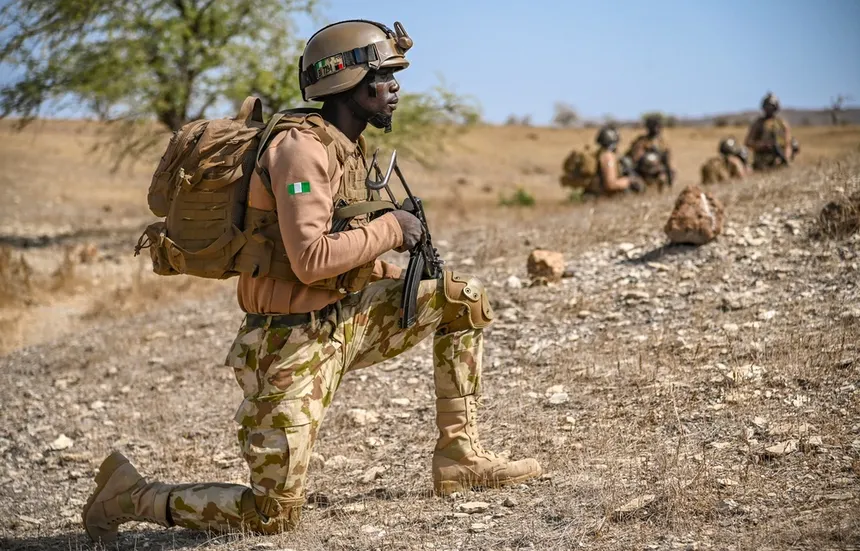
Nigeria’s security partnership with the United States is increasingly shifting away from a focus on troop deployment toward stronger intelligence sharing, strategic coordination, and international security collaboration.

Speaking after the African Chiefs of Defence Conference held in Luanda, Angola, the Commander of the United States Africa Command (AFRICOM), General Dagvin Anderson, said the evolving partnership reflects a broader approach in which intelligence and information-sharing play a more significant role in tackling terrorism and transnational crime than the long-term presence of foreign troops.
He cited a recent international operation that intercepted 31 tonnes of cocaine being transported from South America through the West African coastline. According to Anderson, the successful operation involved coordination between U.S. agencies, AFRICOM, and international partners before a Spanish vessel intercepted the shipment, making it the largest maritime drug seizure on record.

The operation follows another major drug interception in September 2025, when an AFRICOM-supported mission seized 9.6 tonnes of cocaine off the West African coast. These operations highlight West Africa’s growing importance in global efforts to combat drug trafficking.
Anderson noted that Nigeria has become a key player in this security framework, particularly through recent operations in the Lake Chad Basin targeting senior ISIS operatives linked to both regional attacks and the group’s international activities.
He explained that while U.S. forces involved in the operation have largely withdrawn, intelligence cooperation with Nigeria continues based on the country’s request. According to him, the current strategy prioritises Nigerian-led operations supported by intelligence and technical assistance rather than sustained foreign military deployments.

The AFRICOM commander also revealed that Nigerian authorities have used information campaigns following successful operations to weaken insurgent groups, encouraging more fighters to surrender in the country’s northeast.
Security analysts believe this approach combines military operations, intelligence gathering, and strategic communication to reduce the influence of terrorist organisations while strengthening Nigeria’s ability to respond to evolving security threats.

The growing collaboration also supports broader international security efforts, positioning Nigeria as an important partner in addressing terrorism, organised crime, and cross-border criminal activities across Africa and beyond.




