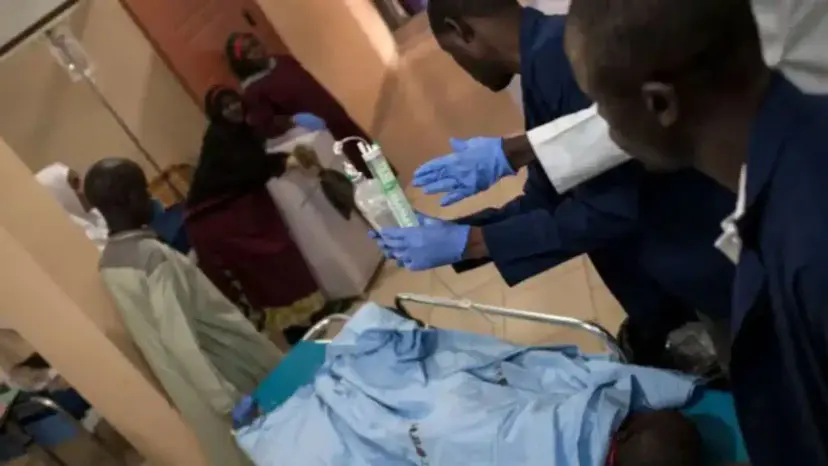
The development follows the passage of a bill for second reading in the Senate on Wednesday, November 4, 2026. Sponsored by Senator Abdulaziz Yar’Adua, representing Katsina Central, the proposed legislation seeks to establish clear standards and timelines for emergency medical care across public and private healthcare facilities.

Under the proposed amendment, hospitals would be required to begin the initial assessment and triage of emergency patients within 15 minutes of their arrival.
Where a licensed medical doctor is unavailable, a trained and certified nurse would be permitted to conduct the initial assessment.
The bill also proposes that hospitals commence basic stabilisation measures, including oxygen therapy, intravenous fluids, pain relief and preliminary diagnostic procedures, within 30 minutes of a patient’s arrival.
Furthermore, life-saving interventions such as cardiopulmonary resuscitation (CPR), airway management and bleeding control would be required to begin immediately once a life-threatening condition is identified.
For patients requiring admission, hospitals would be expected to provide a bed within two hours, provided space is available.

Where a facility lacks the capacity or bed space to admit an emergency patient, it would be required to begin stabilisation immediately and arrange a referral to another healthcare facility.
The proposed legislation further stipulates that the referral process should commence within two hours of arrival, while patient transfers should be completed within three hours, except where circumstances beyond the facility’s control prevent compliance.
Hospitals would also be required to arrange an ambulance or alternative transportation within 30 minutes of communicating a referral decision.
The bill proposes mandatory emergency-care training and certification for healthcare workers at intervals not exceeding 18 months.
However, it provides protection for medical practitioners who cannot meet the stipulated timelines because of resource limitations, provided they document the circumstances, follow the required referral procedures and report the situation to the appropriate authorities.

EXISTING LAW ALREADY PROTECTS EMERGENCY PATIENTS
Although the proposed amendment seeks to strengthen emergency medical services, Section 20 of the existing National Health Act, 2014, already prohibits healthcare providers, workers and medical establishments from refusing emergency treatment for any reason.
The existing provision prescribes a fine of ₦100,000, imprisonment for up to six months, or both for anyone found guilty of violating the provision.
The proposed amendment seeks to increase the financial penalty to ₦300,000 while introducing specific timelines and procedures to improve emergency medical response.
The Senate has referred the bill to the relevant committee for further legislative consideration.
Until the amendment is passed by the National Assembly and receives presidential assent, the existing provisions of the National Health Act remain in force.