

The Federal Government has denied allegations that it spent more than ₦8 trillion outside the approved national budget, maintaining that all government expenditures are made in accordance with the Constitution and relevant financial regulations.
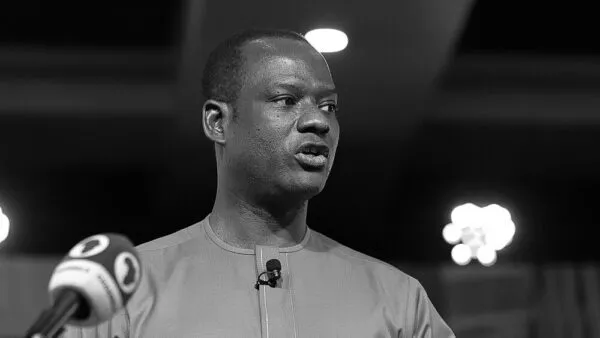
In a statement, the Minister of Finance and Coordinating Minister of the Economy, Taiwo Oyedele, described reports suggesting that about two per cent of Nigeria’s Gross Domestic Product (GDP) was spent outside legislative approval as inaccurate and misleading.

According to the minister, the Federal Government does not operate a “shadow budget,” stressing that all public spending is carried out through duly approved Appropriation Acts, Supplementary Appropriation Acts, and other legally authorised financial instruments passed by the National Assembly.
Oyedele explained that many capital projects span several fiscal years and are executed under existing legal provisions, including approved capital rollovers where necessary. He noted that such arrangements are standard public finance practices and should not be interpreted as unapproved spending.

He challenged those making the allegations to identify specific projects that were allegedly funded without legal appropriation and provide credible evidence to support their claims.
The minister further stated that Nigeria’s fiscal framework includes several statutory expenditures established by law, such as transfers to development commissions, revenue collection costs for government agencies, debt servicing obligations, special intervention programmes, and other first-line charges approved by the National Assembly.
He emphasized that these expenditures are lawful, publicly disclosed, and subject to oversight, auditing, and accountability processes.

Oyedele added that differences between figures contained in fiscal reports and those reflected in annual appropriation documents often result from international financial reporting standards rather than unlawful government spending.
He also dismissed claims that the reported expenditure automatically increased the country’s fiscal deficit, explaining that budget deficits are determined by the relationship between total government revenue and expenditure, not solely by the source of project financing.

According to the minister, the International Monetary Fund’s observations focused primarily on improving the presentation, timing, and comprehensiveness of Nigeria’s fiscal reporting instead of questioning the legality of government expenditure.
He recalled that President Bola Tinubu had previously proposed integrating multiple government budgets into a single, coordinated framework to enhance transparency and efficiency in public finance management.
Reaffirming the administration’s commitment to accountability, Oyedele said ongoing reforms have strengthened budget implementation, revenue collection, treasury operations, and the digitalisation of government financial systems, earning recognition from international financial institutions and global investors.
He concluded by urging public commentators to base discussions on verified facts and a proper understanding of Nigeria’s constitutional and fiscal framework, while assuring that the government would continue working with relevant stakeholders to strengthen fiscal governance.




